Disneys Holotile Invention Is A Multidirectional Vr Walker And Could One Day Supercharge How You Use Headsets Like Apple Vision Pro
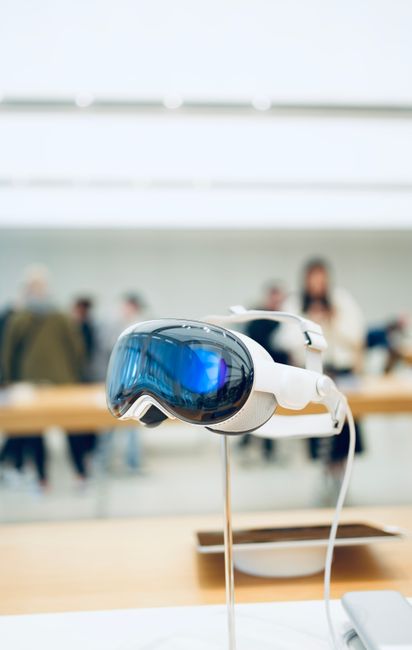
Disney’s HoloTile: Revolutionizing VR Movement with a Multidirectional Omnidirectional Treadmill
Disney Research’s HoloTile invention represents a paradigm shift in virtual reality (VR) locomotion, offering a multidirectional, omnidirectional treadmill capable of simulating expansive movement within virtual environments. This innovative technology holds immense potential to supercharge the user experience of existing and future VR headsets, including the highly anticipated Apple Vision Pro. Unlike traditional VR setups that often confine users to static positions or employ limited, single-direction movement solutions, HoloTile breaks free from these constraints, promising a more immersive and physically engaging interaction with digital worlds. The core concept behind HoloTile is a sophisticated, dynamically controllable surface composed of a vast array of small, independent hexagonal tiles. These tiles can move both laterally and rotationally, allowing a user to walk in any direction – forward, backward, sideways, or at any angle – while remaining physically stationary within a defined footprint. This omnidirectional capability is crucial for overcoming the inherent disconnect between the visual cues of VR and the limited physical movement typically afforded by current VR hardware.
The technical ingenuity of HoloTile lies in its precise synchronization and control of thousands of these individual hexagonal tiles. Each tile can be actuated independently, creating a continuous, flowing surface that mimics the sensation of walking on solid ground. When a user takes a step forward in VR, the tiles beneath their feet move backward, maintaining their relative position to the user’s feet. Similarly, stepping sideways or turning is translated into synchronized tile movements in the opposite direction. This intricate dance of mechanics is managed by advanced algorithms that constantly track the user’s position and intended movement, ensuring a seamless and intuitive experience. The system utilizes sophisticated sensors, likely incorporating optical tracking or inertial measurement units (IMUs) embedded in the user’s footwear or body, to detect their motion with high fidelity. This data is then processed in real-time to orchestrate the complex movements of the tile array. The result is a virtual embodiment that feels far more natural and less disorienting than current VR locomotion methods, such as "teleportation" or "smooth locomotion" which can induce motion sickness for some users.
The implications of HoloTile for enhancing VR headsets like the Apple Vision Pro are profound. Apple Vision Pro, with its advanced eye-tracking, hand-tracking, and high-resolution displays, aims to blend the digital and physical worlds seamlessly. However, without a commensurate advancement in locomotion, its potential for truly immersive experiences remains partially untapped. HoloTile directly addresses this gap. Imagine using Apple Vision Pro to explore ancient ruins, navigate sprawling virtual cities, or participate in dynamic sports simulations. With HoloTile, users would be able to physically walk through these environments, turn their bodies naturally, and interact with virtual objects as if they were physically present. This level of physical immersion can significantly deepen the sense of presence and realism, making experiences more memorable and impactful. The ability to walk around and explore a virtual space without being tethered by a limited movement area is a fundamental requirement for truly convincing virtual experiences, and HoloTile delivers this in spades.
Furthermore, HoloTile’s multidirectional capabilities open up new avenues for application in various sectors. In gaming, it could unlock entirely new genres and gameplay mechanics that are currently impossible. Think of first-person shooters where players can physically dodge bullets, or open-world RPGs where exploration is no longer limited by a short stride. The sense of physical exertion and spatial awareness that HoloTile provides could also be leveraged for fitness applications, transforming VR workouts into more engaging and effective sessions. Imagine cycling through virtual landscapes or practicing martial arts with realistic footwork. In professional training, HoloTile could offer hyper-realistic simulations for surgeons, pilots, or emergency responders, allowing them to practice complex procedures and scenarios in a safe, controlled, and physically accurate environment. The ability to move freely and naturally in a simulated space enhances muscle memory and decision-making under pressure, leading to better preparedness in real-world situations.
The development of HoloTile by Disney Research is not an isolated pursuit but rather a testament to the ongoing efforts within the industry to overcome the physical limitations of VR. Companies are exploring various solutions, from advanced haptic feedback suits to sophisticated motion platforms. However, HoloTile’s approach, by directly addressing locomotion through a dynamic, multidirectional walking surface, offers a particularly compelling solution for natural movement. Its design prioritizes a sense of uninhibited exploration, a critical factor for sustained engagement in VR. The hexagonal tile structure is not merely aesthetic; it offers a highly efficient and mechanically sound way to achieve omnidirectional movement. The interlocking nature of the hexagons allows for smooth transitions and avoids awkward seams or breaks in the walking surface, contributing to the illusion of continuous ground.
The energy requirements for such a system are a significant consideration. Moving thousands of individual actuators in real-time necessitates a robust power infrastructure. Disney Research has undoubtedly invested heavily in optimizing the power efficiency of each tile and the overall system. Future iterations will likely focus on further reducing power consumption to make HoloTile more accessible and practical for broader adoption. The maintenance and durability of such a complex mechanical system are also crucial factors. The continuous movement and weight bearing of a user would place considerable stress on the tiles and their actuators. Rigorous testing and the use of durable materials will be essential for ensuring the longevity and reliability of the HoloTile technology. The cost of manufacturing a system with thousands of precisely controlled moving parts will also be a barrier to entry for widespread consumer adoption in its initial stages. However, as with many advanced technologies, economies of scale and further innovation are likely to drive down costs over time.
For developers building applications for platforms like Apple Vision Pro, the integration of HoloTile would necessitate new approaches to environment design and interaction mechanics. Game designers would need to consider the full range of physical movement available to the user, potentially leading to more dynamic and challenging gameplay. Virtual architects could create more expansive and explorable digital spaces, encouraging users to physically traverse them rather than relying on abstract navigation methods. The potential for a more intuitive and less fatiguing VR experience also means users could spend longer periods immersed in virtual worlds, fostering deeper engagement and a greater appreciation for the content. The seamless integration of physical movement with virtual experiences is the Holy Grail of VR, and HoloTile represents a significant step towards achieving this goal.
The potential impact of HoloTile extends beyond entertainment and gaming. In education, it could revolutionize how students learn about history, geography, and science. Imagine walking through a meticulously recreated ancient Roman city, exploring the human circulatory system from within, or conducting physics experiments in a virtual laboratory. The kinesthetic learning that HoloTile facilitates can lead to improved comprehension and retention. In the realm of social VR, HoloTile could enable more natural and expressive interactions between users. Imagine attending a virtual concert and being able to dance with friends, or participating in a virtual team-building exercise where physical collaboration is key. The ability to move and express oneself physically within a virtual social space will undoubtedly enhance the richness and authenticity of these interactions.
The development and ongoing refinement of Disney’s HoloTile are indicative of a larger trend in the VR industry: the pursuit of true immersion. While advancements in display technology and processing power continue to push the boundaries of visual fidelity, the physical experience of interacting with VR has remained a significant bottleneck. HoloTile directly confronts this challenge by providing a platform for natural, unrestricted movement. As VR technology becomes more sophisticated and ubiquitous, the demand for more intuitive and physically engaging interfaces will only grow. HoloTile, with its omnidirectional capabilities, is poised to be a key enabler of this future, offering a compelling glimpse into how we might one day experience virtual worlds with an unprecedented sense of presence and freedom. Its potential to enhance the capabilities of devices like Apple Vision Pro underscores its significance as a groundbreaking piece of VR locomotion technology. The integration of such advanced hardware with cutting-edge software promises to usher in a new era of immersive digital experiences.


