Google Launches The Small Brief Initiative to Empower Small Businesses Through High-Level Creative Mentorship and AI Technology

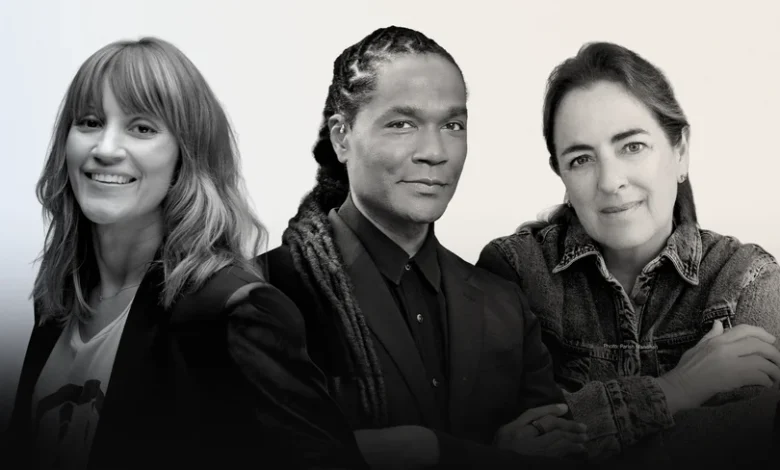
Google has officially announced the launch of The Small Brief, a new strategic initiative designed to pair world-class advertising expertise with local enterprises to demonstrate the transformative potential of artificial intelligence in the creative sector. By enlisting three prominent icons from the global advertising industry, the program aims to develop high-impact, studio-quality marketing campaigns for selected local businesses, utilizing Google’s proprietary AI creative studio, Flow. This initiative represents a significant step in Google’s ongoing efforts to democratize sophisticated marketing tools, allowing smaller entities to compete with the production values typically reserved for multinational corporations with multi-million-dollar budgets.
The Small Brief is structured as both a philanthropic endeavor and a proof-of-concept for the future of digital storytelling. The participating industry veterans have been tasked with identifying local businesses they hold in high regard and applying their decades of strategic experience to elevate these brands. By providing these experts with unlimited access to Flow, Google intends to showcase how generative AI can serve as a force multiplier for human creativity, streamlining the transition from conceptual ideation to final asset production.
The Evolution of AI in the Creative Ecosystem
The introduction of The Small Brief comes at a critical juncture for the advertising industry. For decades, the barrier to entry for high-end television and digital campaigns was defined by the high costs of production crews, studio space, and post-production editing. Google’s Flow AI creative studio aims to dismantle these barriers by offering an integrated environment where users can generate, refine, and deploy complex brand stories with unprecedented speed.
Flow operates as a multimodal platform, allowing creatives to synthesize various elements of a campaign—ranging from visual aesthetics and copywriting to thematic consistency—within a single workflow. By utilizing these tools, the participating "ad icons" are demonstrating that the "studio-quality" label is no longer tethered to physical infrastructure but is instead becoming a product of strategic vision augmented by computational power. This shift allows for a "unique voice and style" to be maintained across various media formats, ensuring that the soul of a small business is not lost in the automation process.
Strategic Chronology and the Path to the June Reveal
The Small Brief is not a singular event but a phased rollout designed to educate and inspire the broader business community. The timeline of the initiative reflects a deliberate approach to transparency and knowledge sharing:
- Phase One: Selection and Onboarding (Completed): Google identified and partnered with three undisclosed titans of the advertising world. These individuals were selected based on their history of disruptive storytelling and their ability to translate complex brand identities into relatable narratives. Simultaneously, local businesses were chosen based on their community impact and growth potential.
- Phase Two: The Creative Process (Current): The creatives are currently embedded in the production phase, utilizing Google Flow to build comprehensive campaign briefs. This stage involves deep-dive sessions where the icons explore the heritage and values of the local businesses to ensure the AI-generated content resonates with authenticity.
- Phase Three: The Reveal (Scheduled for June): Google has announced that the final campaigns will be unveiled in June. This reveal will be accompanied by a comprehensive "behind-the-scenes" look at the creative process. This documentation is intended to serve as a roadmap for other small businesses and creative agencies, detailing how AI can be integrated into traditional workflows without compromising artistic integrity.
Supporting Data: The Economic Imperative for SMB Digital Transformation
The launch of The Small Brief is underpinned by a growing body of data suggesting that small and medium-sized businesses (SMBs) are currently at a disadvantage in the digital attention economy. According to recent industry reports, while SMBs account for approximately 90% of businesses and 50% of employment worldwide, their marketing budgets often lack the "creative runway" needed to produce high-conversion visual content.
Furthermore, data from the Small Business Administration (SBA) and various marketing analytics firms indicate that:
- Visual content is 40 times more likely to be shared on social media, yet the cost of professional videography and graphic design remains a primary pain point for 65% of small business owners.
- The adoption of AI in marketing is projected to grow by nearly 30% annually through 2030, but many small business owners report a "skills gap" that prevents them from utilizing these tools effectively.
- Campaigns that utilize high-fidelity, studio-quality assets see an average of 25-30% higher engagement rates compared to those using stock imagery or low-production-value content.
By positioning The Small Brief as a bridge between these high-end capabilities and local needs, Google is addressing a specific market inefficiency where small businesses possess compelling stories but lack the technical means to broadcast them effectively.
Industry Reactions and the Human-AI Collaborative Model
While the names of the three participating icons have been kept under wraps for the initial announcement, the advertising community has already begun to weigh in on the implications of the project. Industry analysts suggest that this initiative is a response to the growing anxiety regarding AI’s role in the creative arts. Rather than positioning AI as a replacement for the "creative director," The Small Brief highlights AI as a sophisticated "digital paintbrush" that requires an experienced hand to guide it.
"The goal is not to replace the creative spark but to remove the friction between the idea and the execution," noted a digital strategy consultant familiar with Google’s AI roadmap. "When you give a legendary creative director a tool like Flow, you’re seeing what happens when the constraints of budget and time are effectively neutralized. That is a powerful message for a small business owner who has a great product but no way to film a professional-grade commercial."
Small business advocacy groups have also expressed cautious optimism. The focus on "unique voice and style" is particularly relevant, as many SMBs fear that AI-generated content might lead to a homogenization of brand identities. Google’s emphasis on the storytelling power of AI suggests that the tools are being designed to adapt to the user’s specific brand DNA rather than imposing a generic aesthetic.
Broader Impact and Long-Term Implications
The Small Brief represents more than just a marketing campaign for three local shops; it is a laboratory for the future of the agency model. If three individuals can produce studio-quality work for small businesses using AI, the traditional agency structure—often characterized by large teams and long lead times—may face a period of significant restructuring.
For small businesses, the implications are purely democratic. The ability to "find their next customers" through sophisticated, data-driven creative work puts them on a more level playing field with larger competitors. Google’s commitment to streamlining workflows suggests that the end goal is to provide a suite of tools where a business owner can act as their own creative lead, or at least collaborate with a single freelancer to achieve results that previously required a full production house.
As the industry looks toward the June reveal, the focus will remain on the quality of the narratives produced. The success of The Small Brief will be measured not just by the technical proficiency of the AI, but by its ability to evoke emotion and drive local economic growth. By highlighting the "storytelling power of AI," Google is attempting to prove that technology can be used to amplify the most human elements of business: passion, community, and the pursuit of the "American Dream" on a local scale.
The upcoming reveal in June is expected to include a series of case studies and tutorials derived from the icons’ experiences. These resources will likely serve as a foundational curriculum for the next generation of "AI-native" entrepreneurs, marking a shift from the era of manual content creation to an era of creative orchestration. Through The Small Brief, Google is asserting that in the future of advertising, the size of the business will no longer dictate the scale of the story it can tell.