What Is Data Storage
Data Storage: The Foundation of the Digital World
Data storage is the fundamental process of retaining digital information, making it accessible for present and future use. It encompasses the physical devices and logical structures used to preserve, manage, and retrieve data. In essence, every digital interaction, from sending an email to streaming a video, relies on a robust data storage infrastructure. Without it, information would vanish the moment it’s created, rendering the digital realm inert. The evolution of data storage mirrors the exponential growth of data itself, transitioning from rudimentary magnetic tapes to sophisticated cloud-based solutions capable of housing exabytes of information. Understanding data storage is paramount for individuals, businesses, and governments alike, as it directly impacts operational efficiency, security, innovation, and the very fabric of our interconnected society. The increasing reliance on data for decision-making, artificial intelligence, and digital services necessitates a deep appreciation for the mechanisms that keep this information alive and usable.
Data storage can be broadly categorized into several key types, each with distinct characteristics and applications. Primary storage, also known as internal or main memory, is directly accessible by the CPU and is characterized by high speed and volatility. This category includes Random Access Memory (RAM) and cache memory, crucial for running active applications and processing data in real-time. RAM allows for rapid reading and writing of data, enabling quick execution of programs. However, its volatile nature means data is lost when power is removed. Cache memory, a smaller, even faster form of RAM, sits closer to the CPU, storing frequently accessed data to further accelerate processing. While essential for performance, primary storage is typically limited in capacity and expensive, making it unsuitable for long-term data retention.
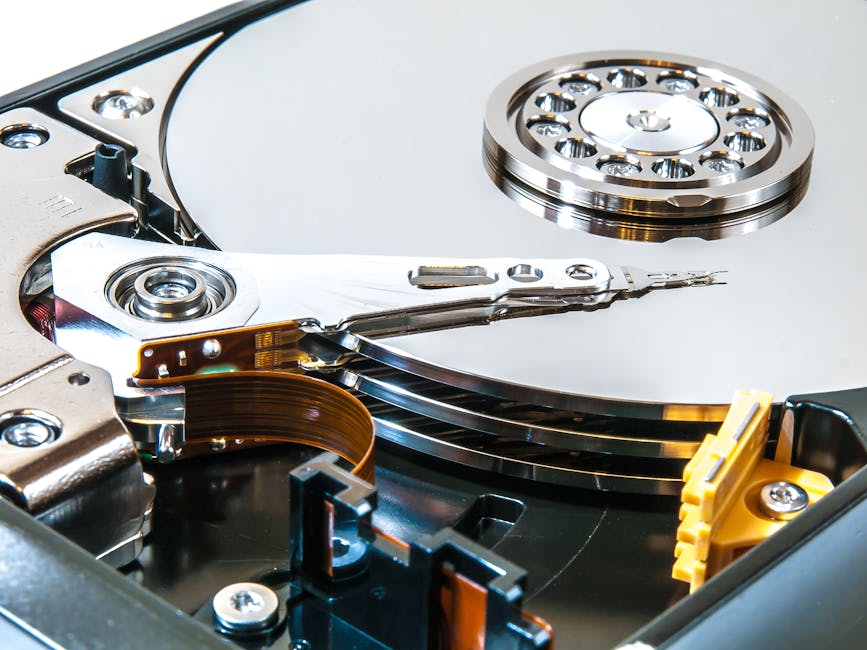
Secondary storage, in contrast, is non-volatile and offers much larger capacities at a lower cost per bit. This is where the bulk of digital data resides for long-term persistence. Examples include Hard Disk Drives (HDDs), Solid-State Drives (SSDs), and optical media like CDs and DVDs. HDDs, using spinning magnetic platters, have historically been the workhorse of secondary storage, offering high capacity at a competitive price. SSDs, utilizing flash memory, offer significantly faster read/write speeds and greater durability than HDDs, though at a higher initial cost. Optical media, while less prevalent for primary storage today, still finds use in archival and distribution. Secondary storage is vital for operating systems, applications, and user files, providing the persistent repository for all digital assets.
Tertiary storage and Offline storage represent solutions for archival and disaster recovery, prioritizing cost-effectiveness and extreme durability over immediate accessibility. Tertiary storage often involves robotic mechanisms that can load and unload removable media like magnetic tapes or optical disks. This "nearline" access means retrieval can take minutes or even hours, making it unsuitable for active data but ideal for infrequently accessed backups and long-term archiving where cost per gigabyte is the primary concern. Offline storage takes this a step further, requiring manual intervention to access data. This could involve storing data on tapes or drives that are physically removed from the system and stored in a secure off-site location. This level of isolation provides excellent protection against cyber threats and physical disasters but comes with the longest retrieval times.
The underlying technologies enabling data storage are diverse and continuously evolving. Magnetic storage is a foundational technology, utilizing the magnetic properties of materials to encode data. HDDs are the prime example, with read/write heads magnetizing tiny areas on spinning platters. Magnetic tape, a linear medium, has been a staple for backups and archiving for decades due to its high capacity and low cost. Solid-state storage, primarily based on NAND flash memory, has revolutionized the industry. Unlike mechanical storage, SSDs have no moving parts, leading to faster performance, greater resilience to shock, and lower power consumption. This technology powers everything from smartphones to high-performance servers.
Optical storage, exemplified by CDs, DVDs, and Blu-ray discs, uses lasers to read and write data by altering the reflective properties of a disc surface. While capacity limitations and slower speeds have diminished their role in mainstream computing, they remain relevant for archival purposes and software distribution. Cloud storage represents a paradigm shift, abstracting physical storage devices and offering data accessibility over the internet. This model allows users to store and retrieve data from remote servers managed by third-party providers. Cloud storage offers scalability, flexibility, and cost-effectiveness, particularly for businesses, as it eliminates the need for significant upfront hardware investment and ongoing maintenance.
The architecture of data storage systems dictates how data is organized, managed, and accessed. Direct-Attached Storage (DAS) is the simplest form, where storage devices are directly connected to a single server. This offers straightforward implementation and good performance for that specific server but lacks scalability and shared access. Network-Attached Storage (NAS) introduces a dedicated storage device that is connected to a network, allowing multiple users and devices to access shared storage resources. NAS devices are typically file-level storage, meaning they present data as shared folders.
Storage Area Networks (SANs) represent a more sophisticated approach, creating a dedicated high-speed network specifically for storage devices. SANs provide block-level access to storage, meaning servers view SAN storage as if it were locally attached. This offers superior performance, scalability, and advanced features like data replication and mirroring, making it ideal for enterprise environments with demanding workloads and critical data. SANs typically employ Fibre Channel or iSCSI protocols for high-speed data transfer.
Object storage is a newer paradigm that stores data as discrete units called objects, each with a unique identifier and metadata. Unlike file systems, which organize data hierarchically, object storage treats data as flat. This makes it highly scalable and cost-effective for large volumes of unstructured data, such as images, videos, and backups. Object storage is often used in cloud environments and for big data applications.
Data storage is not merely about hardware; it involves critical software and protocols. File systems provide the logical structure for organizing data on storage devices, allowing operating systems to manage files and directories. Examples include NTFS (Windows), HFS+ and APFS (macOS), and ext4 (Linux). These systems dictate how data is named, located, and accessed. Block-level storage protocols, such as Fibre Channel and iSCSI, are used in SANs to provide direct access to storage volumes, enabling high-performance data transfer.
Data management software plays a crucial role in optimizing storage utilization, ensuring data integrity, and facilitating access. This includes solutions for backup and recovery, disaster recovery, data deduplication, and data archiving. Data security is paramount, involving encryption, access control, and compliance with regulations like GDPR and HIPAA. Encryption scrambles data, making it unreadable to unauthorized individuals, while access control mechanisms restrict who can view or modify data.
The evolution of data storage is intrinsically linked to the exponential growth of data, often referred to as the "data explosion." The proliferation of digital devices, the internet of things (IoT), social media, and advanced analytics have generated unprecedented volumes of information. This necessitates continuous innovation in storage capacity, speed, and efficiency. The ongoing development of new materials, semiconductor technologies, and architectural approaches is driven by the insatiable demand for storing and processing this ever-increasing data deluge.
Key considerations for choosing data storage solutions include performance requirements, capacity needs, budget constraints, scalability demands, security and compliance obligations, and the level of accessibility required. For example, a high-frequency trading firm will prioritize ultra-low latency and high throughput, opting for NVMe SSDs and high-performance SANs. A small business looking to back up its daily operations might opt for a cost-effective NAS device with cloud backup integration. Archival purposes will prioritize longevity and cost per gigabyte, leaning towards tape libraries or cloud archival services.
The future of data storage is being shaped by several emerging trends. Computational storage aims to move processing closer to the data, reducing data movement and latency by embedding processing capabilities directly within storage devices. DNA data storage is an experimental technology that leverages the vast storage capacity of DNA molecules, offering the potential for incredibly dense and long-lasting data preservation, though still in its nascent stages of development. Edge computing involves processing data closer to its source, often on devices at the "edge" of the network, which in turn requires distributed and efficient storage solutions at these decentralized locations. The continuous drive for more sustainable and energy-efficient storage solutions will also be a significant factor, given the environmental impact of large-scale data centers. The ongoing miniaturization of components and advancements in materials science will continue to push the boundaries of what’s possible in data storage, ensuring the digital world can continue to grow and evolve.