Jennifer Hudson’s Anthem Performance at World Cup Final Sparks Debate Over Americanization of Global Sport

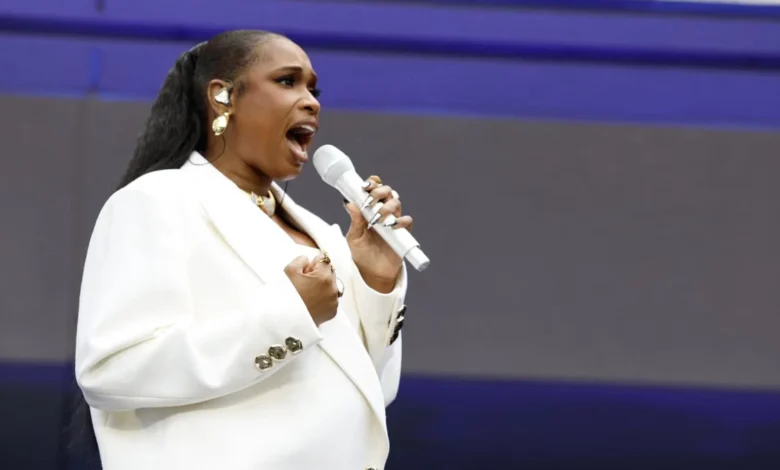
The U.S. national team may not have advanced to the ultimate stage of the FIFA World Cup, but "The Star-Spangled Banner" is set to feature prominently in the tournament’s grand finale. FIFA’s announcement on July 14 confirmed that Grammy Award-winning singer and talk show host Jennifer Hudson will perform a "special rendition" of the American national anthem before the World Cup final on Sunday, July 19. The highly anticipated match, featuring Spain and Argentina, will take place at the New York New Jersey Stadium, commonly known as MetLife Stadium. This decision has immediately ignited a spirited debate among soccer fans and pundits alike, raising questions about the rationale behind featuring the American anthem in a game that does not include the United States, and the broader implications for the global sport.
The Announcement and Its Immediate Aftermath
FIFA’s declaration, issued just days before the final, detailed that Hudson’s performance would be part of an extensive pre-game ceremony. This event, scheduled for 1:30 p.m. ET, approximately 90 minutes before the 3 p.m. ET kickoff, is designed to celebrate the tournament’s journey across its three host countries: Canada, Mexico, and the United States. The choice of Jennifer Hudson, a celebrated vocalist known for her powerful renditions and wide appeal, underscores FIFA’s intent to deliver a memorable and star-studded preamble to the final match. Her performance is positioned not as a prelude to the competing nations’ anthems—Spain and Argentina will still have their respective national anthems played immediately before kickoff—but as a distinct segment of the broader closing ceremony.
However, the announcement was met with a swift and vocal reaction across social media platforms and sports forums. Many fans expressed confusion and even frustration, questioning the necessity and appropriateness of an American anthem performance when neither the U.S. team nor its co-host nations, Canada and Mexico, are contending for the trophy. The sentiment largely centered on the perceived deviation from traditional World Cup protocol, which typically reserves anthem performances strictly for the competing finalists. This immediate backlash highlighted a growing tension between global soccer traditions and the evolving, increasingly entertainment-driven spectacle that major sporting events have become.
FIFA’s Rationale: Honoring the Host Nation and Global Reach
FIFA’s official explanation for Hudson’s performance pivots on the principle of honoring the host nation. Since the final match is being held on American soil, the performance of "The Star-Spangled Banner" is intended to represent the United States as a pivotal part of the tournament’s successful execution. This perspective frames the anthem as a tribute to the logistical and cultural contributions of the host country, rather than a direct connection to the on-field competition. The event itself, as described by FIFA, is a "closing ceremony" designed to reflect on the entirety of the tournament, which spanned multiple cities and countries, culminating in the U.S.
The concept of a host nation’s anthem being played, even when their team isn’t competing in the final, is not entirely unprecedented, though it remains rare for the World Cup. A notable historical parallel can be drawn to the last time the United States hosted the men’s World Cup in 1994. During the closing ceremony of that tournament, saxophonist Kenny G performed "The Star-Spangled Banner" before Brazil and Italy faced off in the final at the Rose Bowl in Pasadena, California. This precedent suggests that while unusual, it falls within a historical framework where the host’s identity is acknowledged during the culminating events. However, critics are quick to point out the distinction between a "closing ceremony" and a pre-game event directly preceding the final match, arguing that the latter carries more symbolic weight in the context of the competition itself.
A Chorus of Dissent: Public and Expert Reactions
Despite FIFA’s justification, the public discourse surrounding Hudson’s performance remains largely critical and skeptical. A significant portion of the backlash stems from the fact that the United States is not a sole host but a co-host alongside Canada and Mexico for the broader 2026 World Cup cycle, which this tournament is a part of. Fans online, and numerous sports commentators, have raised the pertinent question: if the American anthem is being played to honor the host country, why are the national anthems of Canada and Mexico not also included in some capacity, especially given their integral roles in the expanded tournament format? This omission is seen by many as disproportionately privileging the U.S. component of the co-hosting arrangement.
Furthermore, a prevalent theme in the criticism is the notion of "Americanization" of the World Cup. Soccer purists and international fans often express concern over what they perceive as FIFA’s attempts to infuse elements of American sports entertainment—such as elaborate halftime shows and prolonged pre-game spectacles—into the World Cup, potentially diluting its unique global traditions. The World Cup, traditionally, has been celebrated for its focus purely on the sport and the cultural identities of the competing nations. The inclusion of a major pop star performing a non-competing nation’s anthem, alongside an unprecedented, star-studded halftime show, fuels arguments that FIFA is increasingly prioritizing commercial spectacle over sporting integrity and established customs. These critics worry that such moves pander to a specific market, potentially at the expense of the tournament’s universal appeal and historical reverence.
The Grand Spectacle: World Cup 2026’s Entertainment Extravaganza
Jennifer Hudson’s performance is, in fact, just one component of an elaborate entertainment package designed for the World Cup final. The pre-game event itself is a major production, featuring a lineup of global artists. Beyond Hudson, performers scheduled to take the stage include headliner Post Malone, alongside Robbie Williams, Nicole Scherzinger, Laura Pausini, and popular streamer IShowSpeed. Adding to the star power, Hollywood icon Tom Cruise is also slated to make a special, though unspecified, appearance. This ensemble cast signifies a concerted effort by FIFA to transform the final into a multifaceted entertainment event, appealing to a broader audience beyond traditional soccer enthusiasts.
Perhaps the most significant departure from World Cup tradition is the introduction of the first-ever World Cup halftime show. Curated by Coldplay frontman Chris Martin, this 11-minute performance boasts an extraordinary lineup of global superstars: Madonna, Shakira, BTS, and Justin Bieber. They will be joined by Burna Boy, renowned conductor Gustavo Dudamel, the PS22 Chorus featuring Coldplay, and beloved characters from Sesame Street and The Muppets. This ambitious production is not merely for entertainment; it also supports the FIFA Global Citizen Education Fund, an initiative aimed at expanding access to education and soccer programs for children worldwide.
While the charitable aspect is commendable, the extended and star-studded halftime show has drawn considerable criticism. Many soccer fans view it as a direct import of the American Super Bowl model, which prioritizes entertainment over the flow of the game. Concerns have been raised that such a lengthy interruption could disrupt the players’ rhythm, affect game strategy, and ultimately detract from the purity of the sporting contest. This echoes earlier complaints during the tournament regarding entertainment-heavy opening ceremonies and the controversial "hydration breaks," which some viewers believed were strategically placed to create additional television advertising opportunities rather than solely serving player welfare.
The Business of Soccer: FIFA’s North American Strategy
The intensive focus on entertainment and the inclusion of American cultural elements become clearer when viewed through the lens of FIFA’s ambitious financial objectives. The organization expects to generate a record $13 billion during the current World Cup cycle. A substantial portion of this revenue is anticipated to come from the lucrative North American market, particularly the United States, where soccer’s popularity is rapidly expanding.
The U.S. market represents an enormous untapped potential for FIFA. While soccer has a passionate following, it still competes with established major sports like American football, basketball, and baseball for mainstream attention. By injecting elements familiar to American audiences—such as celebrity performances and grand spectacles reminiscent of the Super Bowl—FIFA aims to attract viewers who might not traditionally follow soccer. This strategy is about broadening the sport’s appeal and converting casual observers into dedicated fans, thereby maximizing advertising revenue, broadcast rights, and sponsorship deals.
Early indications suggest this strategy is yielding positive results. Fox’s group-stage broadcasts for this World Cup averaged more than 5 million viewers, nearly doubling the audience for the same stage in 2022. Crucially, matches involving the U.S. team garnered significantly larger Spanish-language audiences on Telemundo and Peacock than during the previous World Cup, highlighting the growing diversity of the American soccer fanbase. This data underscores the immense commercial value FIFA places on cultivating the American audience, recognizing that sustained engagement in this market is vital for achieving its financial targets and ensuring the long-term growth of the sport globally. In this context, Jennifer Hudson singing the American anthem, and the broader entertainment spectacle, serves as a calculated move to solidify FIFA’s foothold and financial future in a critical market.
Historical Precedent and Evolving Traditions
The World Cup has a rich history of evolving traditions. While the core of the tournament—the competition between national teams—has remained sacrosanct, the surrounding ceremonies and spectacles have gradually expanded. From relatively modest opening and closing events in its early decades, the World Cup has grown into a global television phenomenon that demands a visually spectacular and culturally resonant presentation. The 1994 World Cup in the U.S. provides a key reference point for this evolution, demonstrating an early attempt to blend American entertainment sensibilities with the global soccer tradition, albeit in a more understated manner compared to today’s productions. Kenny G’s saxophone rendition of the anthem, performed during the closing ceremony rather than as a pre-match ritual for the final, hints at a precedent for host nation acknowledgement without directly infringing on the solemnity of the competing teams’ anthems.
However, the scale and ambition of the current pre-game and halftime shows mark a significant escalation. This reflects not only FIFA’s commercial aspirations but also the broader trend in global sports where major events are increasingly packaged as comprehensive entertainment experiences. The challenge for FIFA lies in balancing this commercial imperative with the preservation of the tournament’s unique cultural identity and sporting traditions, which are deeply cherished by fans worldwide.
Looking Ahead: Implications for Future Tournaments
The decisions made for this World Cup, particularly regarding the entertainment elements and the host nation’s anthem performance, are likely to set precedents for future tournaments. With the World Cup expanding to 48 teams and adopting a multi-host format more frequently, the question of how to acknowledge host nations culturally and commercially will become even more complex. Will every host nation in a multi-host scenario demand a similar level of recognition in the final? How will FIFA navigate the delicate balance of honoring multiple host identities without diluting the focus on the competing teams?
This tournament serves as a crucial case study in the ongoing tension between sports as a pure athletic contest and sports as a global entertainment product. FIFA’s strategy to maximize revenue and audience engagement, particularly in new markets, is clear. However, the pushback from traditional fans highlights the potential risks of alienating a core demographic that values the sport’s heritage. The success or failure of this entertainment-heavy approach will undoubtedly influence how future World Cups are conceptualized and executed, shaping the experience for both players and fans for decades to come. The debate ultimately revolves around what constitutes the "essence" of the World Cup: a pure footballing spectacle or a broader cultural and commercial festival.
How to Watch the World Cup Final and Closing Ceremony
For those wishing to witness both the controversial pre-game ceremony and the highly anticipated match, the World Cup final between Spain and Argentina is scheduled for Sunday, July 19. The venue is the New York-New Jersey Stadium in East Rutherford, New Jersey. The closing ceremony, featuring Jennifer Hudson’s performance and other acts, is set to begin at 1:30 p.m. ET. The match itself will kick off shortly thereafter at 3 p.m. ET. English-language coverage will be available on Fox, with streaming options via Fox One and the Fox Sports app. Spanish-language viewers can tune into Telemundo or stream the match live on Peacock, which has confirmed coverage for all 104 matches, including the final.
Ultimately, Jennifer Hudson’s performance of "The Star-Spangled Banner" at the World Cup final encapsulates a multifaceted narrative: a celebration of the host nation’s contribution, a strategic move by FIFA to penetrate a vital market, and a flashpoint in the ongoing debate about the commercialization and cultural evolution of the world’s most beloved sport. It is a moment where tradition, commerce, and national pride intersect on the global stage.