Mastering Meta’s Ad Specifications: A Comprehensive Guide to Optimal Performance and User Engagement


The dynamic landscape of digital advertising demands precision, and nowhere is this more evident than in the meticulous adherence to Meta’s advertising specifications. For marketers aiming to maximize reach and impact across Facebook, Instagram, Messenger, and the Audience Network, understanding the precise dimensions, aspect ratios, and file requirements for each ad placement is not merely a technicality but a strategic imperative. This guide delves into the essential guidelines that govern effective advertising within the Meta ecosystem, offering insights into how optimal creative sizing translates directly into enhanced campaign performance and superior user experience.

The Evolving Digital Canvas: Background and Context
Meta platforms, including Facebook, stand as colossal pillars of the global digital advertising market. With billions of users actively engaging with diverse content daily, these platforms offer unparalleled opportunities for brands to connect with their target audiences. However, the sheer volume and variety of content—from static images in the news feed to immersive, full-screen vertical videos in Stories and Reels—necessitate a highly adaptable approach to ad creative. Meta’s ad guidelines have consistently evolved to reflect these changes, continually optimizing for both advertiser effectiveness and a seamless user experience. The persistent shift towards mobile consumption further underscores the importance of correctly formatted ads, as a significant majority of users (over 80% on Facebook alone, according to Statista data cited in industry reports) access these platforms exclusively via mobile devices. This mobile-first paradigm dictates that ads must be visually compelling and functionally flawless across various screen sizes and orientations.

Universal Guidelines for Meta Ad Creatives
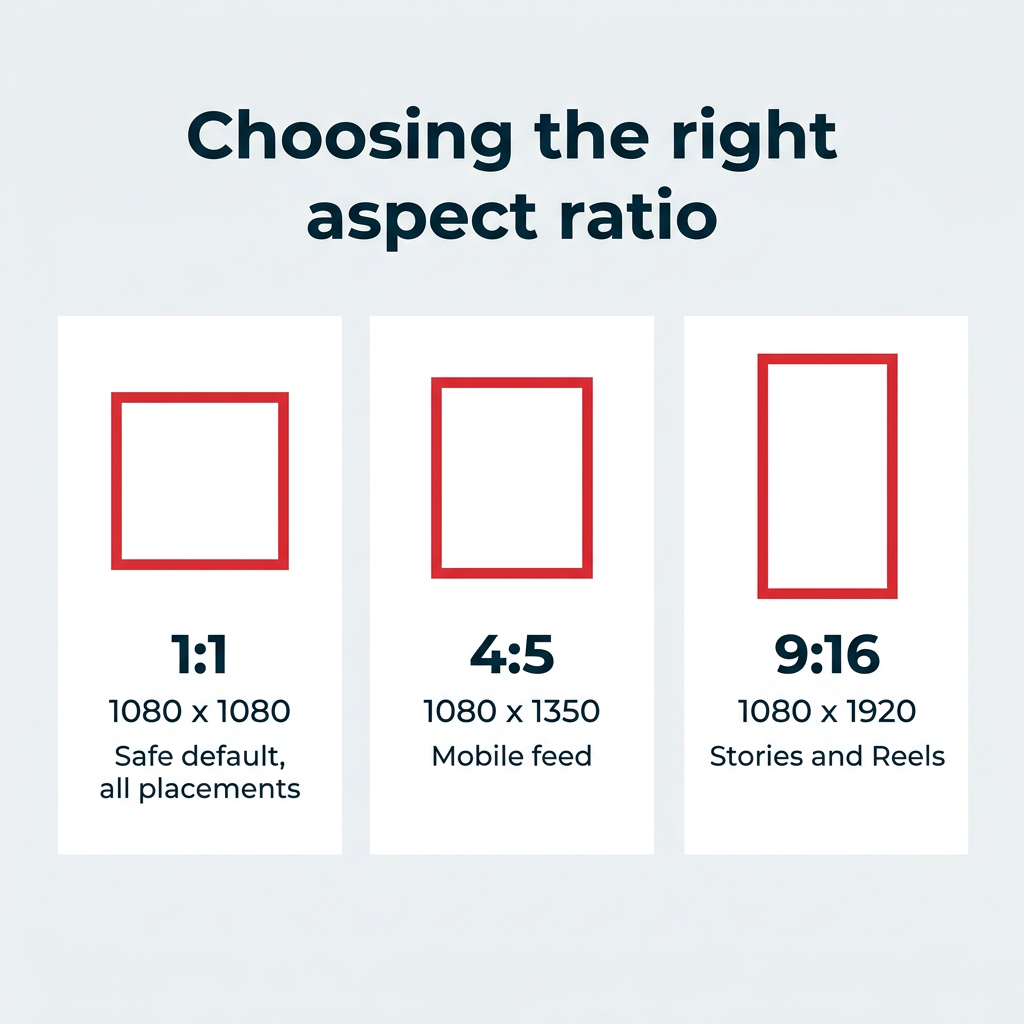
Before exploring placement-specific requirements, several overarching principles apply to nearly all Meta ad formats. It is crucial to note that "Facebook ad sizes" and "Meta ad sizes" are interchangeable terms, referring to the identical specifications applicable across Meta’s family of applications. Adhering to these universal guidelines ensures broader campaign eligibility and prevents common creative rejections. Key considerations include:
- File Types: PNG and JPG are standard for images, while MP4, MOV, and GIF are commonly supported for videos. Using these recommended formats ensures compatibility and proper rendering across devices.
- Maximum File Sizes: Image ads are capped at 30MB, while video ads can be up to 4GB. Exceeding these limits will result in upload failures or reduced quality, impacting load times and user experience.
- Aspect Ratio Flexibility: While specific aspect ratios are highly recommended for each placement, Meta’s system often allows for some flexibility, automatically cropping or scaling creatives. However, manual optimization for each placement is always recommended to maintain creative integrity and prevent unintended visual distortions.
- Text Overlay: Historically, Facebook enforced a "20% text rule" on images, penalizing ads with too much text. While this strict rule has been relaxed in recent years, Meta still advises that ads with less text on the image tend to perform better and receive wider distribution. This indicates an ongoing algorithmic preference for visually dominant creatives that allow the image to speak for itself, with accompanying text in the ad copy.
Deep Dive into Prominent Ad Placements and Their Specifications
Understanding the nuances of each placement is vital for tailoring content that resonates.
1. Facebook Feed Ads: The Scroll-Stopping Essential
The Facebook News Feed remains a primary avenue for ad delivery, blending seamlessly with organic content. Feed ads come in various styles, including single image, single video, and carousel formats. They are typically the second item a user encounters in their feed, with more intermingled with organic content as scrolling continues.

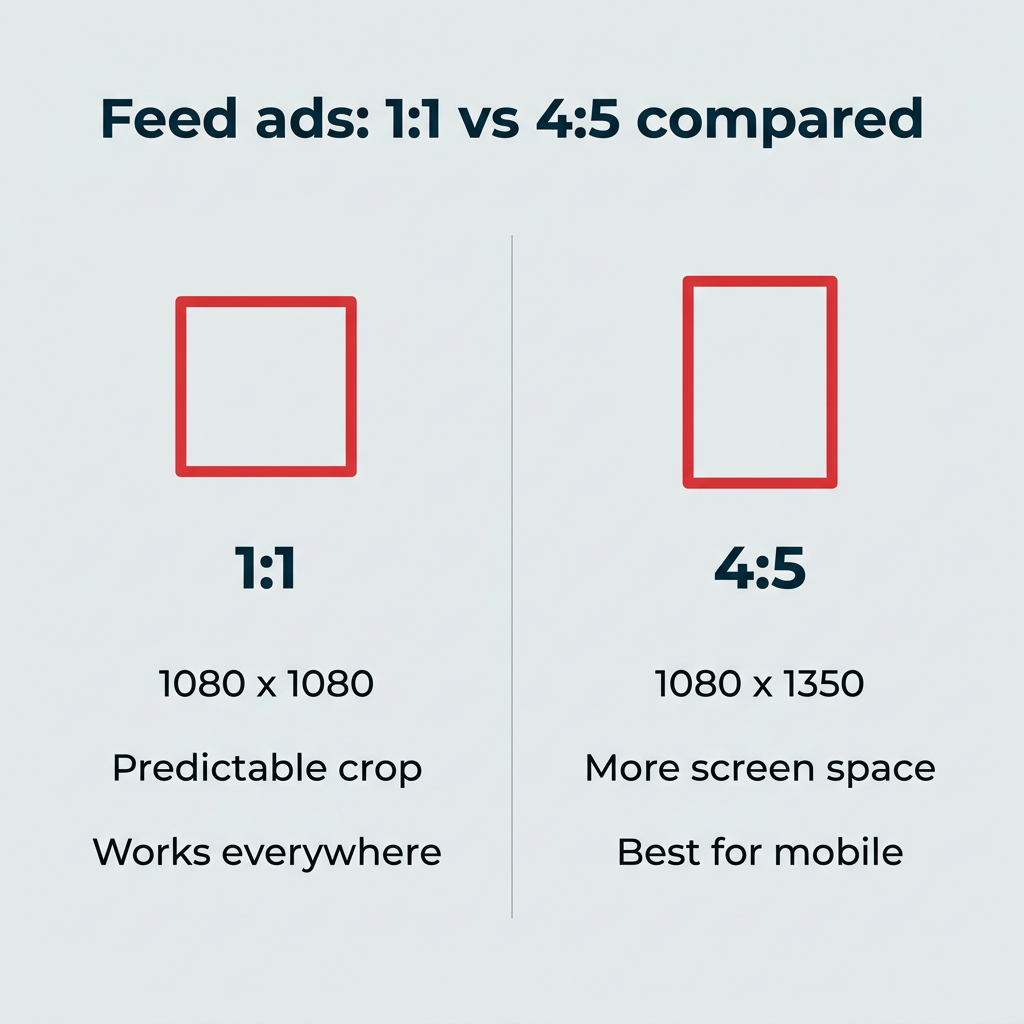
- Image Ads: For feed image ads, recommended sizes are 1440 x 1440 pixels (1:1 aspect ratio) or 1440 x 1800 pixels (4:5 aspect ratio). The 4:5 ratio is often preferred for mobile feeds as it occupies more screen real estate, effectively pushing competing content out of view and capturing greater user attention. For campaigns running across multiple placements, a 1:1 square image (e.g., 1080 x 1080 pixels minimum) offers predictable cropping and universal compatibility. Supported file types include PNG and JPG, with a maximum size of 30MB.
- Video Ads: Similar to image ads, feed video ads also recommend 1:1 or 4:5 aspect ratios (e.g., 1440 x 1440 or 1440 x 1800 pixels). Supported file types are MP4, MOV, and GIF, with a generous maximum file size of 4GB. Video ads in the dedicated video feed (Facebook Watch) follow these same specifications, appearing with a "sponsored" label alongside organic clips.
2. Carousel Ads: Multi-Product Storytelling
Carousel ads are highly versatile, allowing advertisers to showcase between two and ten images, videos, or a combination, each linked to a unique URL or landing page. These are among the most popular ad formats due to their adaptability across Feed, Stories, Reels, and in-stream placements on both desktop and mobile.
- General Specifications: The standard aspect ratio for carousel cards is 1:1 (square), with a recommended minimum resolution of 1080 x 1080 pixels or larger. A 4:5 aspect ratio is also supported, though primarily for Advantage+ catalog-driven carousel ads. File types include PNG, JPG for images (max 30MB), and MP4, MOV, GIF for videos (max 4GB). The ability to link each card to a different destination makes carousel ads particularly effective for e-commerce and showcasing product ranges or diverse messages.
3. Stories Ads: Immersive Vertical Experiences
Facebook Stories ads appear sequentially between organic Stories, offering a full-screen, ephemeral content experience as users scroll through their friends’ updates. These same specifications also apply to Messenger Stories placements, simplifying asset creation.

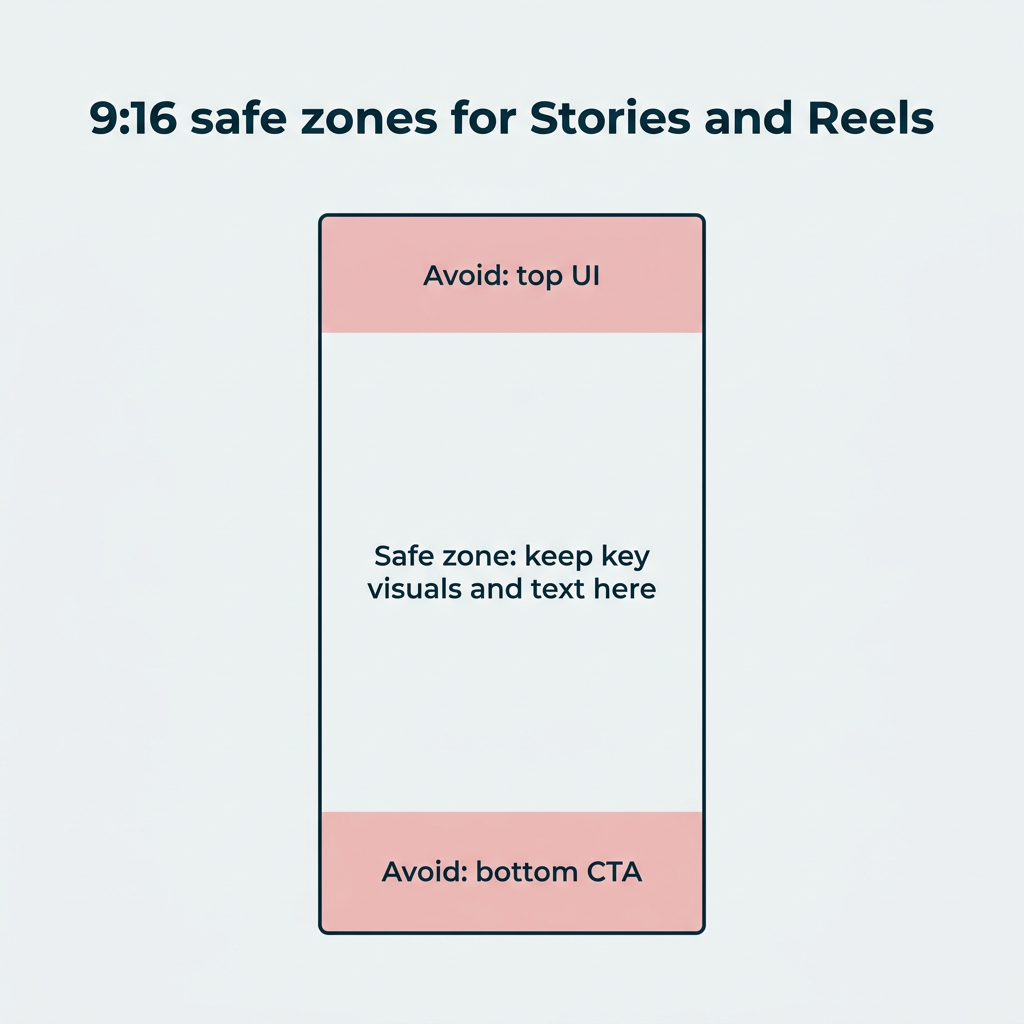
- Image and Video Ads: The definitive aspect ratio for Stories is 9:16, with a recommended size of 1440 x 2560 pixels. This vertical format is specifically designed for mobile-native viewing. Image ads display for five seconds (unless swiped away sooner), while video ads play for up to 10 seconds at a time. Crucially, advertisers must observe "safe zones," keeping critical visuals and call-to-action buttons within the central 1080 x 1420 pixel area to avoid being obscured by UI elements at the top (e.g., profile picture, time) and bottom (e.g., reply box, CTA). File limits are 30MB for images and 4GB for videos.
4. Reels Ads: Short-Form Video Dominance
Reels ads are strategically placed between organic Reels, leveraging the immense popularity of short-form video content within the Reels section on desktop or mobile. Advertisers can promote existing Reels or create ad-specific ones, distinguished by a call-to-action button with a link.

- Video Ads: Like Stories, Reels video ads mandate a 9:16 aspect ratio (1440 x 2560 pixels). The emphasis here is on dynamic, engaging content that fits the fast-paced nature of Reels. Supported file types are MP4, MOV, and GIF, with a 4GB maximum. As with Stories, attention to safe zones is paramount; UI overlays cover approximately the top and bottom 250 pixels of a 9:16 Reel, so important text and visuals should remain centered.
- Image Overlay Ads: A unique format for Reels, these appear at the bottom of an organic Reel as users watch. They are small image ads (1.91:1 to 1:1 aspect ratio, 1080 x 1080 pixels or larger) with accompanying ad copy. The image must be striking to capture attention in this condensed format, with a 30MB limit.
5. In-Stream Video Ads: Contextual Video Placement
In-stream video ads punctuate organic video content, "popping in" at the beginning, during, or end of another video, including live streams. Advertisers can choose between shorter, non-skippable ads or longer, skippable ones (where the user can tap to close it after the first five seconds).

- Specifications: These ads support 16:9 (widescreen) or 1:1 (square) aspect ratios, with a recommended minimum of 1080 x 1080 pixels or larger. Maximum file size is 4GB (MP4, MOV, GIF).
6. Collection Ads: E-commerce Powerhouses
A specialized form of carousel, collection ads are designed for e-commerce, drawing product images and links directly from an Advantage+ product catalog, which can be managed in Commerce Manager. These ads are particularly effective for driving sales by offering a streamlined shopping experience.

- Feed Collection Ads: These appear with a prominent hero image or video (1:1 or 9:16 aspect ratio) followed by a grid of product images (always 1:1). Tapping a product on a mobile device opens an "Instant Experience," functioning as a full-screen, in-app mini-storefront. On desktop, they function more like traditional carousel ads, linking directly to the product’s page on the advertiser’s website. Image cards are 1080 x 1080 pixels minimum (cropped to 1:1 if other sizes are uploaded), with a 30MB limit.
- Reels and Video Collection Ads: This format features up to four products displayed at the bottom of a 9:16 video ad, requiring an Advantage+ product catalog synchronized from platforms like Shopify, WooCommerce, or Big Commerce.
7. Marketplace Ads: Intent-Driven Product Promotion
Facebook Marketplace ads are an image-only format primarily shown within the Marketplace tab but also leverage Meta’s Advantage+ placement algorithm to appear in feeds and other areas across Facebook. Their primary purpose is to sell products and convert users who are already exhibiting purchase intent.

- Specifications: They require a 1:1 aspect ratio (1080 x 1080 pixels or larger, 30MB max PNG/JPG) and always carry a "sponsored" label.
8. Additional Niche Placements
- Right Column Ads: A desktop-only Facebook ad format, these image-only ads (1:1 aspect ratio, 1080 x 1080 pixels or larger, 30MB max PNG/JPG) are best for driving traffic or raising brand awareness. Due to their small visual footprint, Meta recommends against using any text or copy on the image file itself.
- Search Results Ads: Appearing directly on Facebook’s search results page, these can perform exceptionally well if targeting aligns with a user’s immediate intent. They support 1:1 images or videos (1080 x 1080 pixels or larger, 30MB image / 4GB video) and are ideal for promoting products, events, or services directly relevant to a user’s query.
- Business Explore Ads: Exclusive to mobile, these ads show up when someone taps an organic post from a business and then scrolls down to an "Explore more" section. This section displays a mix of organic and paid content from similar businesses. They support 1.91:1 to 1:1 aspect ratios (1080 x 1080 pixels or larger, 30MB image / 4GB video).
- Audience Network Ads: Meta’s Audience Network extends ad reach to apps and sites outside of Facebook and Instagram. It supports banner (320 x 50 pixels) and interstitial (320 x 480 or 480 x 320 pixels, 9:16 or 16:9) formats for images and videos, with similar file size limits (30MB image / 4GB video).
Strategic Implications for Campaign Success

The meticulous application of Meta’s ad specifications is not a mere compliance exercise; it is a fundamental pillar of effective digital advertising.
- Optimized User Experience: Correctly sized and formatted ads integrate seamlessly into the user’s feed or story flow, preventing awkward cropping, pixelation, or distortion. This attention to detail creates a professional and less intrusive experience, reducing ad fatigue and enhancing receptiveness.
- Enhanced Performance Metrics: Ads that adhere to specifications consistently outperform those that do not. Properly formatted visuals typically achieve higher click-through rates (CTRs) and conversion rates, as they present the brand’s message clearly and attractively. A 2023 industry study, for instance, indicated that ads fully optimized for mobile-first vertical placements saw an average of 15-20% higher engagement rates compared to horizontally oriented or poorly cropped alternatives.
- Brand Credibility and Consistency: High-quality, correctly sized creative reinforces brand professionalism and attention to detail. Inconsistent or poorly formatted ads can undermine brand perception and trust, suggesting a lack of care or expertise.
- Algorithmic Favoritism: Meta’s sophisticated algorithms are designed to prioritize and deliver content that offers the best user experience. Ads that meet or exceed recommended specifications are more likely to be favored by these algorithms, leading to broader distribution, lower costs per impression, and ultimately, better return on ad spend (ROAS). The platform’s machine learning continually assesses ad quality, and adherence to technical guidelines is a significant factor in this evaluation.
- Future-Proofing Campaigns: As Meta continues to innovate with new formats and placements, staying updated on current specifications ensures that campaigns remain relevant and effective. The ongoing push towards vertical video and interactive ad experiences means that advertisers must be agile in adapting their creative strategies.
Expert Recommendations for Mastering Meta Ads

Digital marketing experts consistently advocate for a strategy that prioritizes creative quality and technical compliance.
- Mobile-First Design: Given the overwhelming mobile usage, design all ad creatives with mobile screens in mind first. Always test ads on various mobile devices to ensure optimal display and user interaction.
- Embrace Vertical Video: For Stories and Reels, leverage the 9:16 aspect ratio fully. These immersive formats offer unique storytelling opportunities that capture undivided attention.
- Utilize Safe Zones: Always design with UI overlays in mind, especially for full-screen vertical formats. Keeping critical information and Calls-to-Action (CTAs) centered within designated safe zones ensures they are never obscured.
- Prioritize Visuals Over Text on Images: While the 20% text rule is no longer strictly enforced, concise, impactful visuals with minimal text overlays generally perform better and receive wider algorithmic distribution.
- Leverage Carousel and Collection Ads for E-commerce: These formats are highly effective for showcasing multiple products, telling a sequential story, and driving direct conversions, particularly when integrated with Advantage+ catalogs.
- A/B Testing: Continuously test different ad creatives, formats, and aspect ratios to understand what resonates best with your target audience on specific placements. Data-driven optimization is key to improving campaign performance.
- Stay Updated: Meta frequently updates its guidelines and introduces new ad products. Regularly consult official Meta Business Help resources to ensure ongoing compliance and to capitalize on new opportunities.
Conclusion

In the highly competitive arena of social media advertising, precision in creative execution can be the deciding factor
Related posts: