GPT-5.6 First Impressions: A Deep Dive into OpenAI’s Latest Frontier Model and Its Competitive Positioning in the LLM Landscape

The global artificial intelligence sector reached a new milestone this week with the deployment of OpenAI’s GPT-5.6, the latest iteration in the company’s flagship series of large language models. Released following months of industry speculation, GPT-5.6 arrives as an incremental but significant update to the GPT-5 architecture, aiming to solidify OpenAI’s position against increasingly sophisticated offerings from competitors like Anthropic. Early technical evaluations and user reports suggest that while the model does not represent a paradigm shift in raw intelligence, its refined reasoning capabilities and architectural flexibility offer a glimpse into the future of specialized AI workflows.
The Architecture of GPT-5.6: Sol, Terra, and Luna
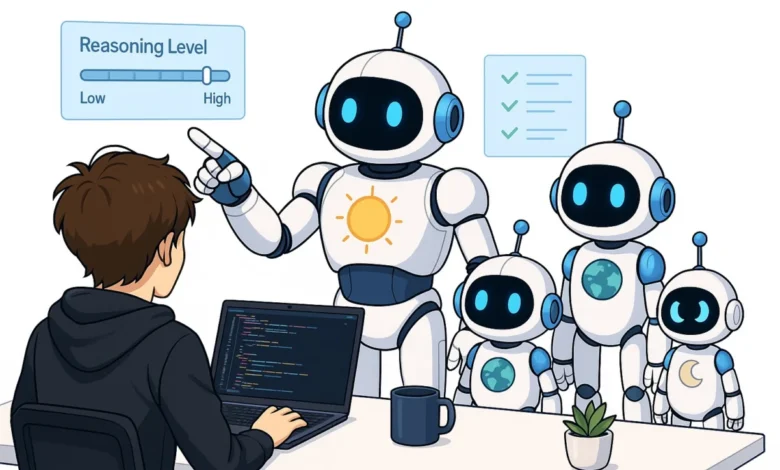
OpenAI has departed from its traditional singular model release strategy by introducing GPT-5.6 in three distinct tiers, categorized by their parameter scale and computational requirements. This celestial-themed nomenclature—Sol, Terra, and Luna—is designed to help enterprise and individual users balance performance with cost and latency.
Sol, the largest of the three, is designated as the "frontier" model. It is engineered for the most complex cognitive tasks, including multi-step architectural planning and deep-system code audits. Terra serves as the mid-tier "workhorse" model, intended to balance speed and accuracy for daily professional tasks. Finally, Luna is the smallest and most efficient version, optimized for high-speed interactions and low-latency edge computing applications.
A defining feature of the GPT-5.6 release is the introduction of "Reasoning Levels." Unlike previous iterations where response times were largely fixed based on token length, GPT-5.6 allows users to toggle between "Medium," "Extra High," and "Ultra" reasoning efforts. This system utilizes test-time compute—a process where the model spends more time "thinking" or exploring multiple internal paths before generating a final answer. While this significantly improves accuracy in logic-heavy tasks, it introduces a direct trade-off in terms of latency and API consumption costs.
Chronology of Development and Market Context
The release of GPT-5.6 marks the fourth major update since the initial GPT-5 launch last year. To understand its significance, one must look at the competitive timeline of the past eighteen months:
- Q1 Release – GPT-5.0: OpenAI sets a new benchmark for multimodal understanding.
- Q3 Rivalry – Opus 4.0: Anthropic releases its Opus 4 series, which many analysts claimed surpassed GPT-5 in creative writing and nuanced instruction following.
- Q4 Iteration – GPT-5.5: OpenAI responds with GPT-5.5, focusing on code generation and mathematical reasoning.
- Current Release – GPT-5.6: The current update focuses on "precision and recall" in technical environments and the integration of sophisticated browser-use capabilities.
The market currently finds itself in a "model-matching" phase, where OpenAI, Anthropic, and Google alternate lead positions every few months. GPT-5.6 is specifically positioned to counter Anthropic’s Fable 5 and Opus 4.8, which have recently gained traction among software engineers for their superior planning capabilities.
Technical Performance: Code Review and Implementation
In practical applications, particularly within the software development life cycle, GPT-5.6 demonstrates a measurable improvement over its predecessor, GPT-5.5. Initial benchmarks indicate that the model has reached a new high in the "precision-recall" matrix for bug detection.
In the context of AI-driven code review, "precision" refers to the model’s ability to ensure that reported bugs are indeed genuine errors, thereby reducing "false positives" that waste developer time. "Recall" refers to the model’s ability to identify every existing bug within a given codebase. GPT-5.6’s "Sol" tier, when set to "Extra High" reasoning, has shown a 12% improvement in recall over GPT-5.5, catching edge-case logic errors that previous versions often overlooked.
However, industry experts note that the improvement in code implementation—the actual writing of new code—is more incremental. While GPT-5.6 is more thorough and less prone to "hallucinating" deprecated libraries, it still faces stiff competition from Anthropic’s Opus 4.8. Many senior developers are adopting a hybrid workflow: utilizing Anthropic’s Fable 5 for initial architectural planning due to its high-level conceptual mapping, and then switching to GPT-5.6 for the final rigorous code review before production deployment.
The Economic Reality: Usage Limits and "Banked Resets"
The increased computational demand of GPT-5.6’s reasoning levels has necessitated a change in OpenAI’s subscription and usage policies. The "Ultra" reasoning mode, while highly accurate, consumes a disproportionate amount of the user’s allocated tokens. In early testing, users found that a handful of "Ultra" queries could exhaust standard daily limits within minutes.
In response, OpenAI has introduced "Banked Resets." Unlike traditional hard limits that refresh on a fixed 24-hour or weekly schedule, banked resets allow users to trigger a manual refresh of their token quota. This feature is particularly valuable for teams facing high-intensity project deadlines. However, the system is not without its caveats; triggering a banked reset also resets the timestamp for the next scheduled automatic refresh, effectively pushing the user further into the next billing cycle’s quota.

Industry analysts suggest this is a necessary step as AI companies move away from "all-you-can-eat" subscription models toward a more granular, compute-based pricing structure. The high energy and hardware costs associated with H100 and B200 GPU clusters mean that "Ultra" reasoning is a premium commodity that OpenAI must ration carefully.
Browser Integration and Tool Access
A standout capability of GPT-5.6 is its advancement in "Computer Use" and browser navigation. The model demonstrates a sophisticated ability to interact with web interfaces, navigate complex DOM (Document Object Model) structures, and execute end-to-end testing protocols.
When granted access via Model Context Protocol (MCP) or native connectors, GPT-5.6 can integrate with a user’s professional ecosystem, including Gmail, Slack, and Google Calendar. This allows the model to act as a semi-autonomous agent. For instance, it can review a pull request on GitHub, cross-reference the requirements mentioned in a Slack thread, and then update a Jira ticket based on the results of the review.
OpenAI has emphasized that for GPT-5.6 to perform at its peak, users must ensure it has comprehensive access to the necessary tools. Evaluations show that the model’s performance drops significantly when it is forced to rely on internal knowledge rather than real-time data retrieved from the user’s specific environment.
Industry Reactions and Analyst Perspectives
The reception of GPT-5.6 among AI researchers has been cautiously optimistic. Dr. Aris Thorne, a senior researcher at the Institute for Digital Intelligence, noted, "GPT-5.6 represents the ‘polishing’ phase of large language models. We are seeing fewer ‘wow’ moments in terms of new capabilities, but we are seeing a massive increase in reliability. For an enterprise, reliability is far more valuable than novelty."
Conversely, some critics argue that the "reasoning levels" are a stop-gap measure to hide the diminishing returns of scaling laws. "By asking the model to think longer, OpenAI is essentially trading electricity for intelligence," says technology analyst Sarah Jenkins. "The question is whether the average user will find the ‘Ultra’ reasoning worth the wait and the cost, or if they will stick to faster, cheaper models for 90% of their needs."
Anthropic has not officially commented on the release of GPT-5.6, though sources close to the company suggest that a "Claude 5" announcement may be moved forward to maintain market parity.
Broader Implications and Future Outlook
The launch of GPT-5.6 signals a shift in the AI industry’s focus from "general intelligence" to "workflow optimization." The model is no longer just a chatbot; it is a specialized tool designed to be one component of a larger multi-model strategy.
The trend of "Multi-Model Orchestration" is becoming the standard for high-level engineering. As documented by early adopters, the most efficient setup currently involves:
- Planning: Utilizing models with high conceptual reasoning (e.g., Claude Fable).
- Execution: Utilizing models with high-speed, accurate token generation (e.g., Opus 4.8 or GPT-5.6 Terra).
- Verification: Utilizing models with the highest precision for auditing (e.g., GPT-5.6 Sol).
As OpenAI continues to iterate, the focus will likely remain on reducing the "hallucination rate" and improving the efficiency of the "Ultra" reasoning modes. For now, GPT-5.6 stands as a powerful, albeit resource-heavy, tool that rewards users who understand how to tune its settings and provide it with the necessary environmental context.
For the broader public, the release confirms that the pace of AI development remains relentless. While GPT-5.6 may be an incremental step, it is one that brings the industry closer to truly autonomous agents capable of handling complex, multi-layered professional responsibilities with minimal human oversight. The next six months will be critical as users determine whether the Sol-tier’s increased accuracy justifies the logistical hurdles of managing "Banked Resets" and high-latency "Ultra" reasoning.