The Architecture of Reliability Why Context Engineering is Replacing Naive RAG in Enterprise AI Systems

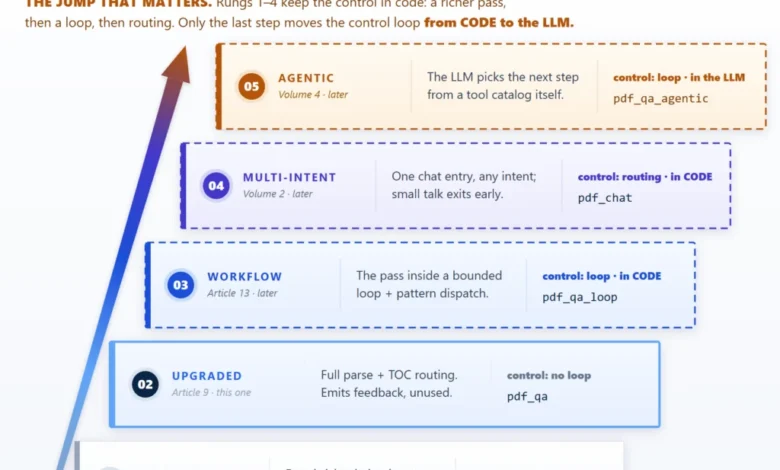
The rapid deployment of Large Language Models (LLMs) across global industries has hit a critical bottleneck: the transition from experimental prototypes to reliable production systems. While Retrieval-Augmented Generation (RAG) was initially hailed as the definitive solution to model hallucinations, recent technical audits reveal that "naive" RAG architectures—the standard baseline for most developers—fail consistently when confronted with complex enterprise documents. These failures are not the result of model incapacity but are rooted in architectural flaws across four critical stages: document parsing, question expansion, retrieval routing, and response generation. By shifting the focus from prompt refinement to "context engineering," engineers are now building a new generation of pipelines capable of handling high-stakes data, such as National Institute of Standards and Technology (NIST) frameworks and World Bank financial reports, with near-perfect accuracy.
The Evolution of Retrieval-Augmented Generation
The journey toward reliable AI-driven document intelligence began in 2017 with the publication of "Attention Is All You Need," which introduced the transformer architecture. This was followed by the 2020 seminal paper on Retrieval-Augmented Generation, which proposed a method for models to consult external knowledge bases before answering. By 2023, the tech industry had standardized a "naive" RAG baseline: a 100-line pipeline that parses PDFs into flat text, converts queries into keywords, retrieves the top few pages via cosine similarity, and asks the model for a prose answer.

However, as organizations began applying these baseline models to specialized PDFs—such as the NIST Cybersecurity Framework 2.0 or the World Bank’s Commodity Markets Outlook—the limitations of this approach became glaring. Technical analysts have identified a consistent pattern of failure where the model provides a confident but incorrect answer because the upstream "bricks" of the pipeline handed it fragmented or irrelevant context. This realization has sparked a transition toward context engineering, a disciplined approach that enforces strict contracts at every stage of the data flow.
The Parsing Crisis: Beyond Flat Text
The first point of failure in the naive RAG stack is document parsing. Most standard libraries utilize basic text extraction that "flattens" a PDF into a continuous stream of characters. For prose-heavy documents, this is often sufficient. However, for enterprise reports built around data tables, flat extraction is catastrophic.
In a recent benchmarking test using the World Bank Commodity Markets Outlook, a naive pipeline was asked for the 2025 annual average price forecast for U.S. natural gas (Henry Hub). The PDF contains this information within a complex grid. A standard parser linearizes the table, often separating the row label "Henry Hub" from its corresponding value "3.5" because of fixed-size chunking limits. When the retrieval brick fetches the chunk containing the number, the label is missing; when it fetches the label, the number is missing.

The model, receiving incomplete context, reported a confidence score of 0.00, stating the information was not available. The solution emerging in professional-grade pipelines is "relational parsing." Instead of flat text, the system returns a data frame where every line of text retains its bounding box and coordinates. This preserves the relational shape of the data, allowing the model to see the label and the value on the same logical line. In side-by-side tests, relational parsing increased model confidence to 0.99, yielding the correct answer of $3.5 per mmbtu.
Question Parsing and the Vocabulary Gap
The second structural failure occurs during question parsing. Naive systems assume that the user’s vocabulary will match the document’s vocabulary. This assumption frequently fails in technical and regulatory environments.
For example, when queried about the "pillars" of zero trust architecture within the NIST SP 800-207 standard, naive RAG systems often return a "not found" response. The document in question never uses the word "pillars"; it refers to them as "tenets." Because the keyword "pillars" scores poorly against the text "tenets" in a basic vector search, the relevant pages are never retrieved.

Context engineering addresses this by adding a query expansion layer. Before the search begins, the pipeline uses a domain-aware LLM to normalize and expand the query, mapping synonyms like "pillars" to "tenets" or "principles." This ensures that retrieval is based on the document’s actual vocabulary rather than the user’s phrasing. This expansion allows for a 95% confidence interval in responses, as the system can successfully anchor the "tenets" section and report the seven core principles of the architecture.
Structural Retrieval: Overcoming the Top-K Cutoff
Retrieval failure is often cited as the primary cause of RAG hallucinations. In a naive setup, retrieval is a "popularity contest" based on frequency or cosine similarity. This works for short documents but fails in massive catalogs like the NIST Cybersecurity Framework 2.0.
In these documents, a term like "Profile" may appear on nearly every page. When a user asks for the definition of a "Profile," a naive search retrieves the top five or ten pages where the word appears most frequently. However, the specific page containing the formal definition might be ranked 15th or 20th, falling below the "top-k" cutoff.

The upgraded approach involves "routing on structure." By utilizing the document’s own Table of Contents (ToC) and reading it through a small, specialized LLM, the pipeline can identify that the section titled "CSF Profiles" is the authoritative source. Instead of scanning the entire 400-page document for keyword frequency, the system routes the retrieval directly to the relevant section. This structural awareness ensures that the defining paragraph is presented to the generation model, resulting in a citable, accurate answer with 0.95 confidence.
Generation Contracts: Eliminating the "Fluent Hallucination"
The final brick in the pipeline is generation. Naive RAG asks for a free-text prose answer. LLMs, by their nature, are programmed to be helpful and fluent, which often leads them to "fill in the gaps" when information is missing.
A test case involving the World Bank’s April 2024 report illustrates this danger. The report provides forecasts up to 2025. When asked for the 2026 forecast for Brent crude oil, a naive pipeline retrieves the energy price table. Seeing no 2026 column, the model frequently grabs the nearest available number—the 2025 forecast of $79—and confidently states that "the 2026 Brent forecast is $79 per barrel."

This is a classic "fluent hallucination." The fix is the implementation of a "typed generation contract." Instead of asking for prose, the system requires the model to fill out a schema that includes:
- A boolean field:
complete_answer_found - An evidence span: A direct quote from the source
- A confidence score: A justification for the answer
When forced to adhere to this schema, the model cannot quietly substitute a 2025 value for 2026. It is forced to set complete_answer_found to false and report that the document only provides data through 2025. This structural constraint makes missing or partial data visible to the end-user, preventing the shipment of incorrect information.
Industry Implications and the Road Ahead
The shift from naive RAG to context engineering marks a maturation of the AI industry. As organizations move away from "chatting with a PDF" toward building "document intelligence engines," the focus is shifting toward the integrity of the data pipeline.

Data-Driven Comparison of RAG Architectures:
| Feature | Naive RAG Baseline | Upgraded Context Engineering |
|---|---|---|
| Parsing | Flat text/Fixed chunks | Relational line_df / Bounding boxes |
| Querying | Raw keyword match | Synonym expansion & Normalization |
| Retrieval | Frequency-based ranking | Table of Contents/Structural routing |
| Output | Free-text prose | Typed schema/Structured outputs |
| Reliability | High on prose; Low on tables | High across all document types |
| Hallucinations | Frequent (due to context gaps) | Rare (flagged by schema constraints) |
Industry analysts suggest that the "hallucination problem" was largely a misnomer. The models were not "lying" so much as they were faithfully answering based on the broken, fragmented context they were provided. By fixing the "four bricks" of the pipeline, developers are finding that current-generation models like GPT-4o or Claude 3.5 are more than capable of providing enterprise-grade accuracy.
The broader impact of this shift is significant for sectors such as legal, finance, and engineering. In these fields, a 90% accuracy rate is considered a failure; 99% is the minimum threshold for adoption. Context engineering provides the roadmap to reach that threshold. As the companion code and runnable notebooks for these upgraded pipelines become open-source, the barrier to entry for high-reliability AI is falling, signaling a new era of precision in automated data analysis.

The move toward structured outputs and relational parsing represents a return to classical data integrity principles, now supercharged by the linguistic capabilities of LLMs. In the coming year, it is expected that "Context Engineering" will become a standard curriculum for AI engineers, replacing the trial-and-error approach of simple prompt engineering.