The Evolving Nexus: Backlinks, AI Answer Engines, and the Future of Digital Authority

The landscape of digital discovery is undergoing a seismic shift, fundamentally altering how consumers find information and how brands build authority online. Roughly 58% of consumers now utilize AI answer engines like ChatGPT, Perplexity, and Google AI Overviews for product research weekly, a figure that continues its rapid ascent. This burgeoning reliance on AI-powered interfaces is prompting content and SEO professionals to critically re-evaluate foundational strategies, particularly the long-held significance of backlinks. The core question at hand is whether backlinks retain their traditional influence in the era of Answer Engine Optimization (AEO), or if a complete overhaul of the digital authority playbook is imminent.
The concise answer points to a nuanced evolution: contextually relevant backlinks now hold greater sway than high-volume, low-relevance links within AEO. However, their role, while still critical, no longer tells the full story of digital visibility. This article delves into the intricate interplay between backlinks and AEO, dissecting the practical distinctions between AEO and traditional SEO, and outlining a balanced, forward-thinking authority strategy essential for navigating the contemporary digital ecosystem. Tools such as HubSpot AEO are emerging to assist marketing teams in tracking and enhancing brand visibility across this evolving AEO landscape, providing crucial insights into performance.
The Paradigm Shift: From Search Results to Synthesized Answers
For decades, search engine optimization (SEO) operated on a relatively consistent premise: secure high rankings in search engine results pages (SERPs) to drive organic traffic. Backlinks, acting as "votes of confidence" from other websites, formed a cornerstone of this strategy. A link from a reputable domain signaled authority and trustworthiness, directly impacting a page’s PageRank and, consequently, its visibility. This logic, rooted in Google’s foundational algorithms, shaped content and link-building practices for an entire generation of digital marketers.
However, the advent of sophisticated generative AI has introduced a new dynamic. AI answer engines are not merely ranking pages; they are synthesizing information from a multitude of sources to provide direct, often conversational, answers to user queries. This represents a significant shift from a "list of links" model to a "curated answer" paradigm. Instead of presenting a user with ten blue links and expecting them to click through and find their own answer, AI Overviews, for instance, aim to deliver a definitive, comprehensive response directly within the search interface. This fundamental change necessitates a re-evaluation of how authority is perceived and measured.
When an AI answer engine constructs a response, it seeks out sources that can reliably "ground" the answer—sources that are not only authoritative in the traditional sense but also clear, concise, and semantically aligned with the query. This means that while a robust backlink profile remains a necessary condition for initial discovery and trust by AI crawlers, it is no longer a sufficient one for achieving direct citation within an AI-generated answer. The gap between being discoverable by an AI and being cited by an AI is precisely what AEO seeks to bridge, and platforms like HubSpot AEO are designed to monitor this specific form of AI visibility.
Backlinks in the AI Era: Quality Over Quantity
The notion that backlinks have lost all relevance in the AI era is a misconception. Rather, their influence has become more refined. Nathaniel Miller, Head of Marketing at Ashbrook Technologies, observed in a "Found in AI" podcast interview that "The companies ranking highest across AI platforms tend to be the ones with both strong authority and strong backlink profiles." He further clarified that "if you’re not getting qualified traffic from that link, it’s basically a logo slap. The real value is in relevance and authority – not just size."
This statement underscores a crucial distinction: while traditional SEO often rewarded sheer volume of backlinks, even from less relevant sources, AEO places a premium on relevance and semantic alignment. A link from a high-authority domain that is topically unrelated to your content provides less value in an AEO context compared to a link from a niche, highly relevant blog, even if that blog has a lower overall domain authority. The AI system’s goal is to find the most accurate and relevant information, not just the most "popular" by link count.
Consider the following breakdown of link types and their influence:
- High-DA, Low-Relevance Link: In classic SEO, this offered a significant domain authority boost. In AEO, its influence is low, providing a weak semantic signal.
- High-DA, High-Relevance Link: This type of link remains profoundly influential in both classic SEO and AEO, as it combines strong authority with contextual accuracy.
- Industry Publication Link: Highly valuable in both contexts, but in AEO, its value is amplified if the publication is recognized as a "grounding source" by AI systems.
- Niche Blog Link with Strong Topical Depth: Moderate influence in classic SEO, but surprisingly high in AEO. Semantic adjacency and deep topical content reinforce entity authority, making it a valuable citation source.
- Directory or Aggregator Link: Generally low-to-moderate in classic SEO, its influence is minimal in AEO, often lacking the contextual depth AI seeks.
- Co-citation in Expert Roundup: Indirect influence in classic SEO, but very high in AEO. It strategically positions a brand alongside recognized authorities, building implicit trust with AI.
Beyond the direct backlink, mentions and co-citations have emerged as equally, if not more, significant. An unlinked brand mention, where your brand name appears in a credible source without a hyperlink, acts as a powerful signal to AI systems. It maps your brand to specific topical contexts, building a form of "entity authority" that makes your brand an obvious choice for AI citation. Charlie Graham, founder of RivalSee, highlighted this in a "Found in AI" podcast, noting that approximately 85% of brands mentioned in ChatGPT responses receive no direct citation link. This implies a "downstream effect" where users remember the brand name and search for it independently, a crucial but often unmeasured authority signal.
Divergent Objectives: SEO’s Ranking vs. AEO’s Answering
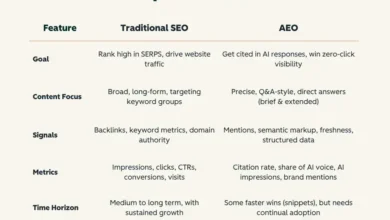
The operational differences between AEO and SEO stem from their distinct primary objectives. SEO is fundamentally about ranking—securing a prominent position in search results to attract clicks and drive traffic. AEO, conversely, is about answering—becoming the trusted source an AI system references, quotes, or paraphrases to directly address a user’s question.
This difference in objectives cascades into various aspects of digital strategy:
| Dimension | SEO | AEO |
|---|---|---|
| Primary Goal | Rank in search results | Earn citations in AI-generated answers |
| Content Structure | Keyword placement, internal linking | Direct answers, fact statements, FAQ blocks, clear entity signals |
| Authority Signal | Backlink profile | Backlinks + mentions + entity clarity + structured data |
| Primary KPIs | Organic traffic, ranking position, CTR | AI citation frequency, brand mention share, grounding query coverage |
| Optimization Target | Individual page, keyword cluster | Brand entity, topic authority across multiple pages, consistent information |
| Measurement Tools | Google Search Console, rank trackers | AI visibility tools (e.g., HubSpot AEO), AI Performance in Bing Webmaster Tools |
Organizations excelling in AEO are not abandoning SEO. Instead, they are refining their SEO programs, prioritizing quality, clarity, and precision over keyword density and volume. They are layering entity and mention strategies on top of a strong SEO foundation, recognizing that AEO extends SEO rather than replacing it. HubSpot AEO, for instance, is designed to provide this integrated view, allowing marketers to measure citation-based visibility alongside traditional search metrics.
Beyond Links: The Criticality of Mentions, Co-citations, and Entity Clarity
AI answer engines evaluate a complex tapestry of signals, including links, brand mentions, entity clarity, and page structure, to determine source reliability. This integrated assessment differs significantly from traditional PageRank.
- Source Parsing: AI systems index content, not just based on backlinks, but also on crawlability, recency, and the semantic structure of the page.
- Authority Weighting: AI doesn’t just count links. It assesses consistent, credible appearances of a brand or content within relevant contexts. A brand cited in numerous authoritative industry publications, mentioned in expert roundups, and consistently associated with a specific topic will possess greater AI authority than one with a strong backlink profile built primarily through generic directories.
- Signal Merging: These signals are merged into a holistic assessment. A page with strong backlinks might still not be cited if its content is ambiguous or poorly structured. Conversely, a clear, well-structured page with modest link authority can outperform technically stronger competitors by earning citations.
Beyond direct links, four signals are paramount for AEO citation:
- Unlinked Brand Mentions: Every instance of your brand name appearing in a credible source without a hyperlink builds "entity authority," mapping your brand to relevant topic clusters and making it an obvious citation choice.
- Co-citations: When your brand is mentioned alongside other recognized authorities or sources in the same content, it signals to AI engines that you belong in authoritative company. This is an often-underutilized AEO tactic for semantic reinforcement.
- Entity Clarity: An entity is a consistently defined and described thing (brand, person, concept). AI engines prioritize brands with strong entity clarity, characterized by consistent naming, structured data (e.g., Organization/Person/sameAs schema), and a clear area of expertise across all digital channels. As Lars Lofgren, SEO consultant, noted, AI engines map relationships among entities, and confusion is an "AEO killer."
- Interplay with Backlinks: No single signal wins in isolation. The most successful brands in AEO have all four signals firing simultaneously: authoritative links, consistent mentions, strong co-citation associations, and a clearly defined entity. Quality content remains the ultimate foundation, as Miller aptly put it: "If your content isn’t great, no number of backlinks will help."
Structuring Content for AI Extraction

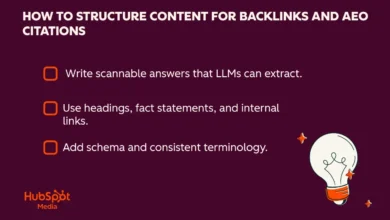
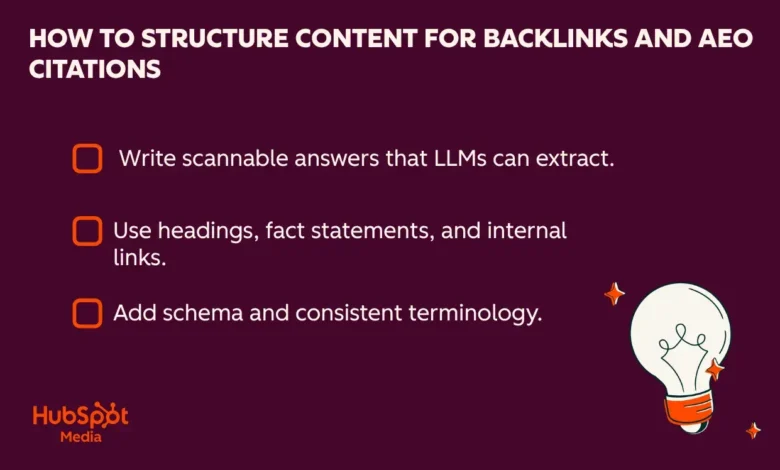
To maximize AEO citations, content must be structured for easy extraction by large language models (LLMs). This means moving beyond keyword density to focus on clarity, direct answers, and logical organization.
- Write Scannable, Direct Answers: Every major section should immediately answer the question implied by its heading. Lead with the answer, then provide supporting context, data, or examples. This "Answer first, evidence second" structure significantly increases citation likelihood. This includes using clear introductory sentences, brief summary statements, and concise bullet points. HubSpot AEO helps validate this by showing which content types and source categories are driving citations.
- Leverage Headings, Fact Statements, and Internal Links: Employing H2s, H3s, and other headings to segment content logically is crucial. Incorporate explicit fact statements that LLMs can easily extract. A dense, logical internal linking structure around a topic cluster signals topical depth, a key component of the "FSA framework" (Freshness, Structure, Authority) for AI relevance.
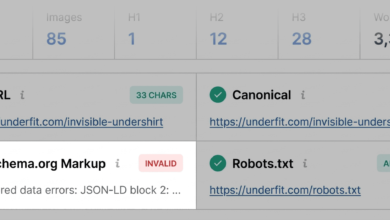
- Implement Schema Markup and Consistent Terminology: Schema markup (e.g., Organization, Person, Article, FAQPage schema) provides machine-readable metadata that clarifies page purpose and content structure for AI systems. Equally important is consistent terminology. Using a canonical term for each concept across all channels, from your website to social profiles, prevents entity confusion and strengthens AI’s ability to confidently associate your brand with specific topics. HubSpot AEO can then monitor if these structured pages are earning citations.
Building a Holistic Authority Strategy: Links and Mentions in Concert
Effective AEO strategies integrate link building and mention building into a single, cohesive effort. Every outreach action should aim to produce both a structural link signal and a brand mention that AI systems can index.
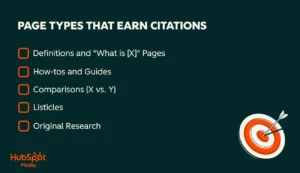
- Prioritize AI-Friendly Content Formats: Certain content types are disproportionately favored by AI for citation. These include original research, data reports, expert interviews, FAQs, and definitions. For instance, including a "Key Findings" section with clearly labeled statistics in original research dramatically boosts extractability and citation likelihood.
- Earn Relevant Links and Co-citations with Original Research and Digital PR: Original research is arguably the most efficient way to generate both high-quality backlinks and co-citations. A unique study provides a compelling reason for other publishers to link to your brand as a primary source. Simultaneously, media coverage often mentions your brand alongside other respected voices, creating valuable co-citation signals. Digital PR, encompassing earned media placements, expert commentary, and podcast appearances, offers a similar dual benefit, generating both link authority and authentic mentions that strengthen AI’s trust signals. As Miller affirmed, "Digital PR is the fastest way to start building momentum."
- Participate Where Answers Form: AI systems draw information from a wide array of sources beyond brand-owned content. Actively participating in forums, Q&A sites (like Quora, Reddit), industry publications, professional social networks (LinkedIn), and podcasts expands a brand’s footprint across trusted AI training sources. Contributing expert commentary, publishing thought leadership, and engaging in these channels builds credibility and fosters relationships that can lead to organic third-party mentions. Platforms like Qwoted and HARO are particularly valuable for connecting with journalists seeking expert input, directly generating mentions and links. HubSpot AEO’s citation analysis can then track which third-party placements are contributing most to AI visibility.
Measuring AEO Impact: A Repeatable Loop for Continuous Improvement
Success in AEO hinges on aggressive experimentation coupled with rigorous measurement. Without a clear feedback loop linking content publication, changes in authority signals, and actual AI citations, optimization remains guesswork. HubSpot’s "Loop Marketing" framework provides a useful lens, advocating for every content and outreach action to feed data back into the next iteration. This applies directly to AEO measurement, structured around three stages: benchmarking, tying changes to activity, and reporting for scalability.
- Benchmark AI Visibility and Citations: Before any optimization, establish a baseline. This involves identifying which pages are currently earning AI citations, monitoring brand mention frequency, and assessing how often the brand appears as a "grounding source" for AI answers. HubSpot AEO is specifically designed for this, offering a unified dashboard for SEO and AEO metrics, making it easier to pinpoint effective strategies and identify gaps.
- Tie Changes to Content and Outreach Activity: For measurement to be actionable, changes in AI visibility must be directly linked to specific content or outreach actions. This requires disciplined logging of activities such as new content publication, significant content updates, backlink acquisition, digital PR placements, and schema implementation. Over time, this meticulous tracking reveals patterns, such as which content types or link-building efforts correlate with increased AI citations.
- Report What to Scale and What to Stop: The final stage involves translating measurement data into strategic prioritization. Regular (e.g., monthly) reviews should address key questions: What content types are driving the most AI citations? Which authority signals (links, mentions, entity clarity) are having the greatest impact? Which outreach activities are yielding the highest ROI for AEO? And, crucially, what strategies should be scaled up, and which should be deprioritized? This continuous feedback loop transforms AEO from a one-off project into a compounding strategy, refining inputs with each cycle.
Frequently Asked Questions About Backlinks and AEO
- Do unlinked mentions help answer engine optimization? Yes, unlinked brand mentions are a significant AEO signal. They help AI systems map your brand to specific topic areas, strengthening your entity association and increasing the likelihood of citation.
- Do nofollow links matter for AEO? While nofollow links contribute less to traditional PageRank, they can still carry meaningful entity and mention signals in an AEO context. AI systems parse the content regardless of the nofollow attribute, recognizing the reference to your brand. Prioritize relevance and source authority over the follow/nofollow status.
- How long does it take to see AEO impact from link building? AEO impact from sustained link building typically aligns with traditional SEO timelines, showing meaningful movement in three to six months, with compounding results over 12 months. However, strong entity and mention-based signals, especially from high-visibility placements, can sometimes surface faster.
- Should I stop classic link building in favor of AEO? Absolutely not. Classic link building remains foundational for AEO. The correct approach is to evolve your link-building strategy to prioritize relevance, co-citation opportunities, and entity-reinforcing placements, rather than abandoning it. SEO and AEO are complementary, working in tandem to build comprehensive digital authority.
Conclusion: Backlinks Still Have Their Place in a Broader Authority Infrastructure
The future of digital visibility is not a zero-sum game between backlinks and AEO. Instead, they represent different, yet interconnected, layers of a unified authority infrastructure. Backlinks provide the fundamental structural credibility that enables content to be indexed, trusted, and recognized as a grounding source by AI systems. Simultaneously, unlinked brand mentions, co-citations, clear entity definition, and well-structured content collectively build the broader signal that convinces an AI system your brand is the definitive source for an answer.
Content teams making tangible progress in AI visibility are those that have not abandoned their established SEO programs. Rather, they have refined them, infusing them with greater precision, entity awareness, and a commitment to consistently structured, answer-first content. For organizations seeking to measure their standing and iterate effectively in this evolving landscape, tools like HubSpot AEO offer the crucial visibility data required to move beyond guesswork and towards strategic, data-driven optimization. The synergistic interplay of robust SEO practices with targeted AEO strategies is paramount for securing enduring digital authority in the age of AI.