The Architecture of Modern Inference: A Deep Dive into the Development of the Annotated LLM Runtime for NVIDIA Hopper GPUs

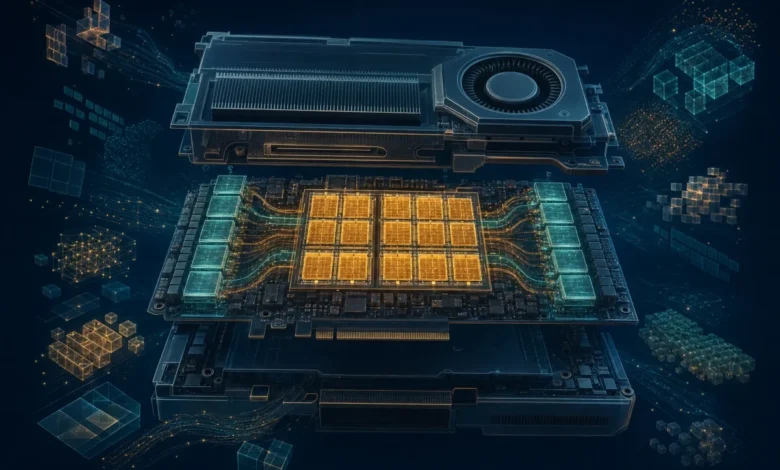
The Architecture of Modern Inference: A Deep Dive into the Development of the Annotated LLM Runtime for NVIDIA Hopper GPUs. In an era where large language model (LLM) inference is largely dominated by established, high-level frameworks such as llama.cpp and vLLM, a new technical initiative titled annotated-llm-runtime has emerged, providing a rare, granular perspective on the complexities of building a high-performance inference engine from the ground up. Developed specifically for the NVIDIA H100 "Hopper" architecture (sm_90) and the Qwen2.5-Coder-7B model, this project represents a significant departure from "black box" solutions, offering developers full ownership of the decode stack—from weight packing to CUDA graph capture.
The initiative, spearheaded by engineer Anubhab Banerjee, serves as both a functional runtime and a pedagogical tool. By distilling the inference process into roughly two dozen C++/CUDA source files, the project clarifies the "why" behind critical performance decisions that are often obscured in larger, production-grade codebases. The development of this runtime highlights a growing trend among specialized AI engineers: the pursuit of "bare-metal" understanding to optimize for specific hardware architectures and novel model variants.
The Strategic Shift Toward Bare-Metal Inference
The current landscape of LLM deployment is characterized by a reliance on highly optimized but complex libraries. While tools like llama.cpp have democratized access to AI by supporting a vast array of hardware, they often involve tens of thousands of lines of code, making it difficult for developers to implement custom quantization formats or novel attention mechanisms.
Industry analysts suggest that as AI hardware becomes more specialized, the value of owning the full inference stack increases. For enterprises and researchers working on the edge of hardware performance, the ability to manipulate kernels directly is no longer a luxury but a necessity. The annotated-llm-runtime addresses this by focusing on the NVIDIA H100, a flagship enterprise GPU that introduced several architectural innovations, including the Tensor Memory Accelerator (TMA) and enhanced warp-specialization capabilities.
By building a runtime specifically for the Hopper architecture, the project demonstrates how to leverage sm_90-specific features that general-purpose libraries may not fully exploit. This approach allows for a more direct interaction with the GPU’s L2 cache lines and arithmetic pipes, providing a blueprint for high-efficiency, specialized deployments.
Technical Specifications and Benchmarking Data
To evaluate the efficacy of the annotated-llm-runtime, the developer conducted a series of end-to-end benchmarks using the Qwen2.5-Coder-7B-Instruct model. The testing protocol involved a batch size of one, a 512-token prompt, and a 128-token generation phase. The results were compared against a reference implementation using llama.cpp (commit b3040) with standard offload flags.
Performance Comparison Table
| Metric | Annotated LLM Runtime | llama.cpp (Q4_K_M) |
|---|---|---|
| Time to First Token (TTFT) | 128 ms | 43 ms |
| Decode Inter-Token Latency (ITL) | 16.7 ms/token | 4.95 ms/token |
| Throughput | 60 tokens/sec | 200 tokens/sec |
While the custom runtime currently trails llama.cpp in raw throughput, the developer emphasizes that the project is a "yardstick" for understanding reasonable behavior rather than a direct competitor to a project with thousands of contributors. The data reveals a critical insight into the impact of CUDA graphs: without graph capture, the eager per-token decode latency was approximately 119 ms/token. The implementation of CUDA graphs reduced this to 17 ms/token, a nearly 7x improvement achieved solely through more efficient command submission.

Chronology of Development: Three Critical Engineering Challenges
The development of the annotated-llm-runtime was marked by three significant technical hurdles, described by the developer as "war stories." These challenges illustrate the pitfalls of high-performance GPU programming and the precision required to maintain both correctness and speed.
1. The Synchronization Barrier and the KV Cache
The first major obstacle involved the implementation of a warp-specialized paged attention kernel. In this design, a single "producer" warp issues bulk TMA copies to move Key and Value (KV) pages from High Bandwidth Memory (HBM) to Shared Memory (SMEM), while six "consumer" warps handle the softmax and weighted-V accumulation.
A critical bug emerged when a __syncthreads() call was placed incorrectly inside a conditional branch reserved for the producer warp. Because __syncthreads() is a block-wide barrier, the consumer warps skipped it entirely, leading to a race condition. The consumer warps would attempt to read data before the TMA transfer was complete, resulting in "confident but wrong" tokens, particularly at the tails of KV pages. The fix involved utilizing Hopper’s mbarriers—transaction-aware objects that ensure hardware-level confirmation of data transfers before consumers are released.
2. Eliminating Host Overhead with CUDA Graphs
The second challenge was the massive overhead associated with eager kernel launches. A single decode step for a 28-layer model involves over 280 individual kernel launches. At 119 ms/token, the GPU was largely idle, waiting for the CPU to issue the next command.
The solution was the capture of deterministic decode steps into a cudaGraphExec_t. However, because the paged-KV mechanism behaves differently when crossing a page boundary (every 16 tokens), a single static graph was insufficient. The developer implemented a dual-graph system, pre-capturing both a "page-boundary" and a "no-page-boundary" variant. The runtime dynamically selects the appropriate graph at each step using a simple modulo operation, effectively bypassing the driver overhead and bringing latency down to 17 ms.
3. The Performance Paradox: INT8 vs. FP16 Activations
The third "war story" focused on quantization strategy. Conventional wisdom suggests that INT8 activations, being smaller than FP16, should provide a bandwidth advantage in memory-bound operations. However, testing on the H100 proved otherwise.
The developer compared two paths: Path A used __dp4a (INT8 dot product), which required an extra kernel to quantize activations, while Path B used prmt.b32 (Hopper’s byte-permute instruction) to unpack INT4 weights directly into FP16/FP32 accumulators. Counter-intuitively, the FP16 path (Path B) outperformed the INT8 path even on large MLP shapes. This finding highlights the importance of empirical testing over theoretical assumptions in the Hopper era, as the overhead of additional quantization kernels can outweigh the savings in memory bandwidth.
Data Integrity and Serialization: The .nanoqwen Format
A cornerstone of the project is the creation of a custom weight format dubbed .nanoqwen. This format is a mmap-able binary blob designed to eliminate the need for complex parsers (like YAML or JSON) on the hot path of the inference engine.

The format includes:
- A 256-byte Header: Starting with the magic string "NANOQWEN" to ensure file integrity.
- ValueShuffle Layout: A specific packing of INT4 nibbles that interleaves even and odd lanes. This layout is optimized for the
prmt.b32datapath, allowing for efficient register-file mapping. - Symmetric Group-wise Quantization: Weights are stored in INT4 with a group size of 128, while sensitive components like the embedding tokens and RMS normalization layers remain in raw FP16 to minimize numerical drift.
By hardcoding dimensions into C++ constexpr values, the compiler is able to optimize the binary specifically for the Qwen2.5-Coder-7B architecture, ensuring that no heap allocation occurs during the critical generation phase.
Validation and Reliability Protocols
To ensure the engine’s output remains accurate, the project employs a multi-tiered validation ladder. The runtime refuses to proceed unless it passes a series of rigorous checks:
- Unit Tests: Verification of individual mathematical operations.
- Layer Tests: Comparing the output of a single decoder block against a reference PyTorch implementation.
- Graph-Tier Tests: Generating tokens for 100 prompts and ensuring they match the expected results of the simulation.
Furthermore, the developer adopted a "no-root" benchmarking policy. By refusing to lock GPU clocks via nvidia-smi (which requires sudo access), the project ensures that the reported performance figures are reproducible on standard production systems without specialized administrative privileges.
Broader Impact and Industry Implications
The release of the annotated-llm-runtime comes at a time when the "democratization" of AI is shifting from model access to architectural understanding. As large-scale providers like OpenAI and Google move toward increasingly opaque systems, open-source initiatives that "show the work" are becoming vital for the technical community.
The project demonstrates that while building a competitive LLM runtime is an immense undertaking, it is accessible to individual engineers who are willing to engage with the intricacies of CUDA and hardware architecture. This has significant implications for:
- Customization: Developers can now more easily experiment with non-standard attention mechanisms or experimental quantization schemes.
- Education: The dense annotations provide a roadmap for the next generation of HPC engineers transitioning from traditional software roles to AI infrastructure.
- Hardware Optimization: The focus on Hopper-specific features provides a template for how software will need to evolve as we move toward NVIDIA’s Blackwell architecture and beyond.
In conclusion, the annotated-llm-runtime is more than just a piece of software; it is a documented journey through the current state of high-performance AI engineering. It underscores the fact that in the world of bare-metal GPU programming, there are no shortcuts—only barriers to be understood and graphs to be captured. As the industry continues to scale, the lessons learned from such granular implementations will likely inform the next generation of global AI infrastructure.