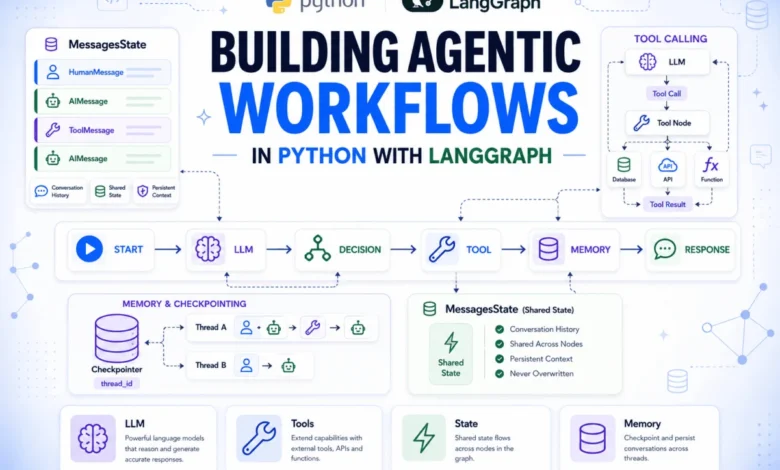
The evolution of artificial intelligence has transitioned from simple chat interfaces to sophisticated agentic workflows, where Large Language Models (LLMs) are no longer just passive responders but active participants in complex problem-solving. As developers seek more control over the behavior of these agents, LangGraph has emerged as a critical framework within the Python ecosystem. By treating an agentic process as a directed graph, LangGraph allows for the creation of systems that can maintain state, utilize external tools, and persist memory across multiple interactions. This structural approach addresses the primary limitations of early AI frameworks, which often struggled with "black box" logic and the inability to handle cyclic processes where an agent must revisit a previous step based on new information.
The Architecture of Modern AI Agents: State, Nodes, and Edges
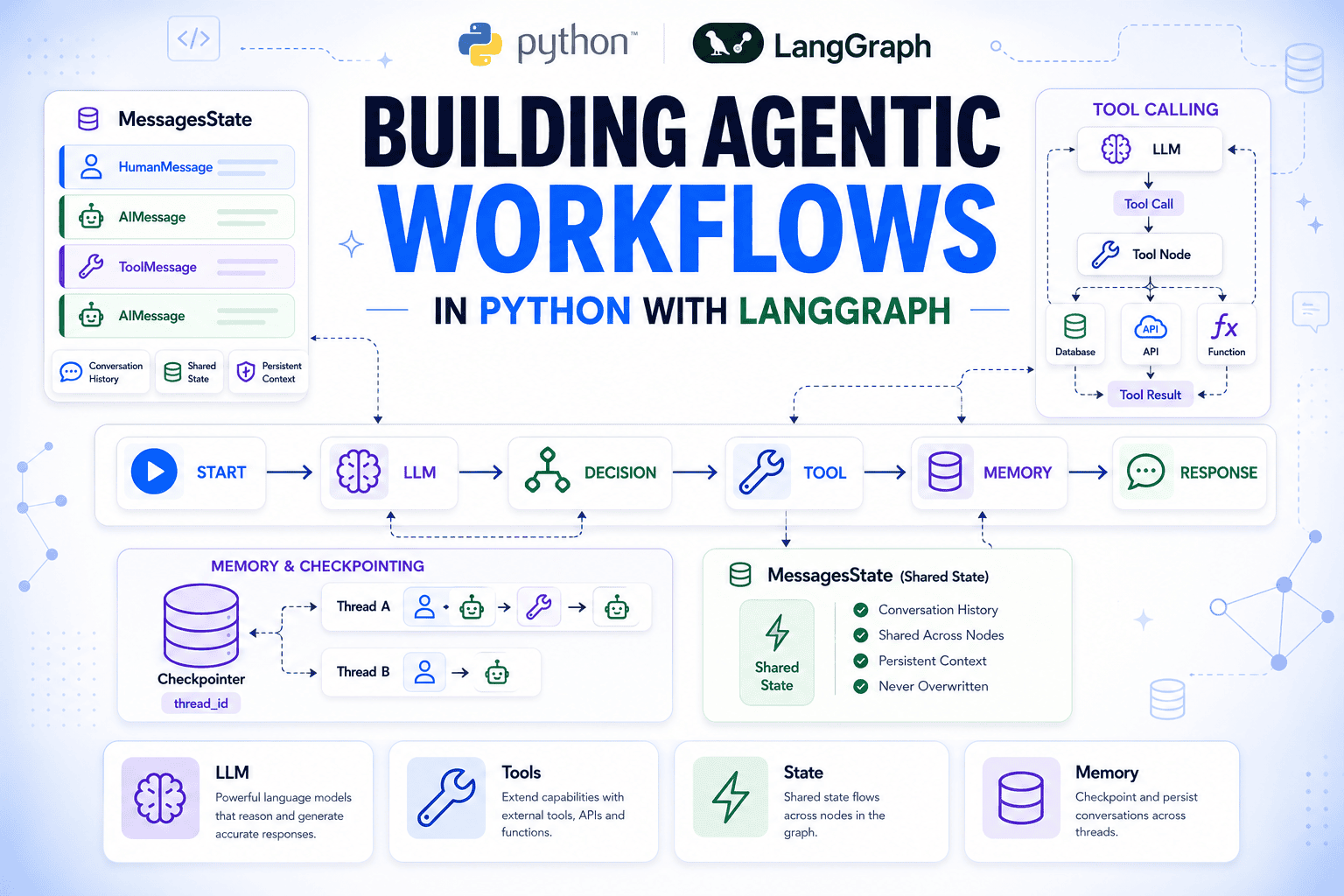
To understand the shift toward LangGraph, one must first recognize the three fundamental components that define its architecture: state, nodes, and edges. In a traditional programming environment, managing the flow of a conversation involves complex "if-else" logic and manual history tracking. LangGraph simplifies this by utilizing a shared State object, typically a Python TypedDict. This state acts as the "single source of truth" for the entire graph. Every node in the system reads from this state and returns updates to it, ensuring that no information is lost as the execution moves from one functional unit to another.
Nodes are the workhorses of the graph. In Python, these are represented as standard functions that perform a specific task—such as calling an LLM, querying a database, or processing user input. By registering these functions as nodes using the add_node method, developers can modularize their agentic logic. This modularity is essential for debugging, as it allows developers to isolate specific behaviors without disrupting the entire workflow.
The execution order is dictated by edges. While basic edges define a linear progression from Node A to Node B, "conditional edges" introduce the element of decision-making. Through conditional edges, a graph can route execution based on the current state—for example, directing the flow to a tool-using node if the model determines a database lookup is necessary, or to the end of the process if the task is complete. This cyclic capability is what distinguishes LangGraph from traditional "chains," which are strictly linear and often insufficient for complex reasoning.
Chronology of Development in Agentic Frameworks
The development of agentic workflows has followed a rapid timeline since the public release of advanced LLMs:
- Late 2022 – Early 2023: The rise of "Zero-Shot" and "Few-Shot" prompting. Developers primarily interacted with LLMs through single-turn completions.
- Mid 2023: Introduction of basic "Chains" (e.g., early LangChain). This allowed for sequential tasks but lacked a robust way to handle loops or complex state management.
- Late 2023: The emergence of autonomous agents like AutoGPT and BabyAGI. While groundbreaking, these systems often suffered from "infinite loops" and lacked the precision required for production environments.
- 2024: The shift toward "Controllable Agents." LangGraph was introduced to provide a framework where the developer maintains high-level control over the agent’s path while allowing the LLM to handle the reasoning within defined nodes.
Technical Implementation: Setting Up the Agentic Environment
Building a production-ready agent begins with a robust environment setup. Developers utilize Python libraries such as langgraph, langchain-openai, and python-dotenv to bridge the gap between local code and cloud-based LLMs. The integration process typically begins with the configuration of API keys and the initialization of the model.
from dotenv import load_dotenv
import os

load_dotenv()
# The OPENAI_API_KEY is now accessible to the LangChain wrappers.
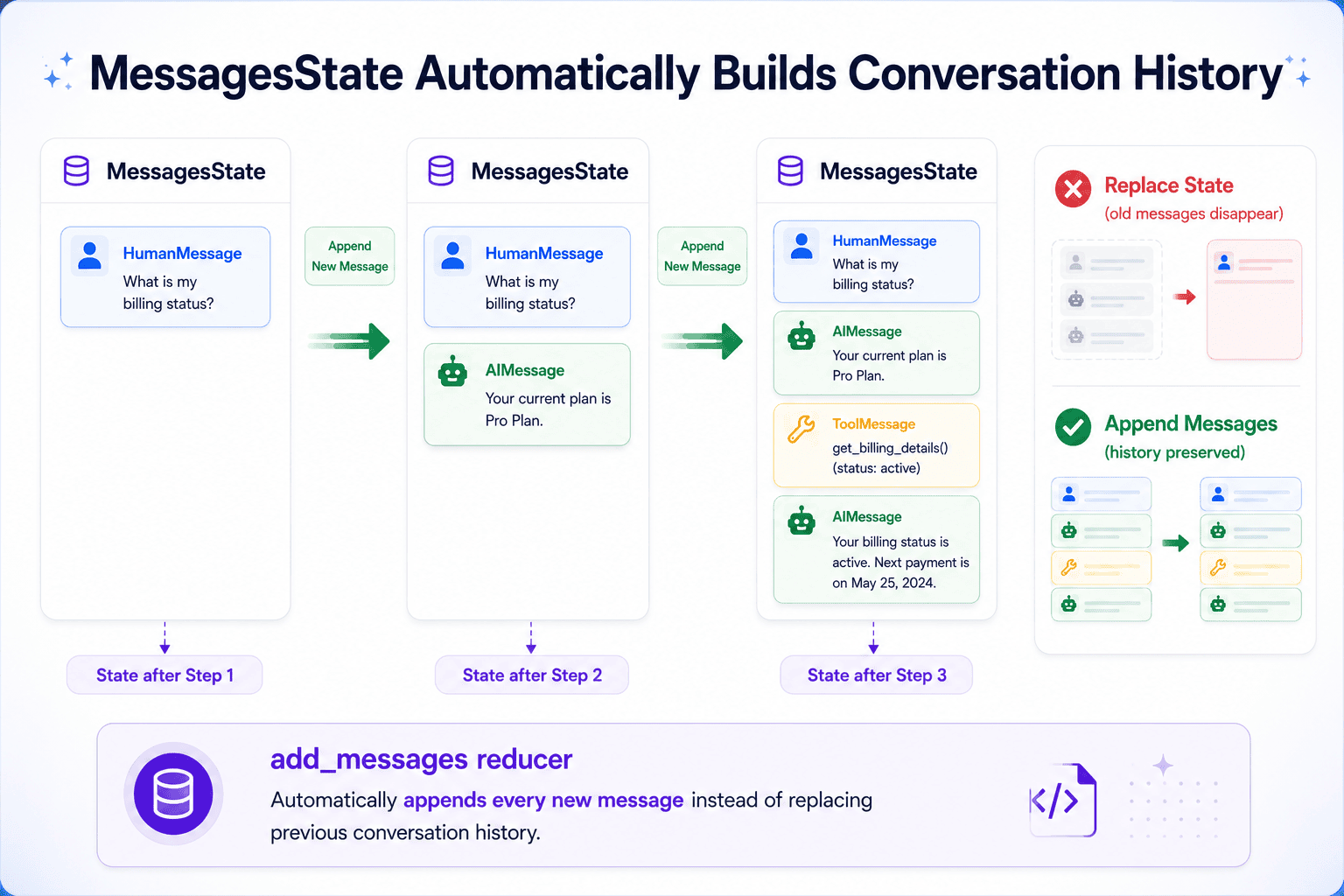
The core of the conversation management lies in MessagesState. Unlike a standard dictionary that might overwrite data, MessagesState uses a specialized "reducer" function. This ensures that every new message—whether from a human, an AI, or a tool—is appended to the conversation history rather than replacing the previous entry. This mechanism is vital for maintaining context, as it allows the LLM to "remember" the user’s initial query even after several rounds of tool usage.
The ReAct Pattern: Reasoning and Acting in Practice
At the heart of most LangGraph agents is the ReAct (Reasoning and Acting) pattern. This pattern describes a loop where the model first reasons about the task, decides to take an action (such as calling a tool), observes the result of that action, and then reasons again to provide a final response.
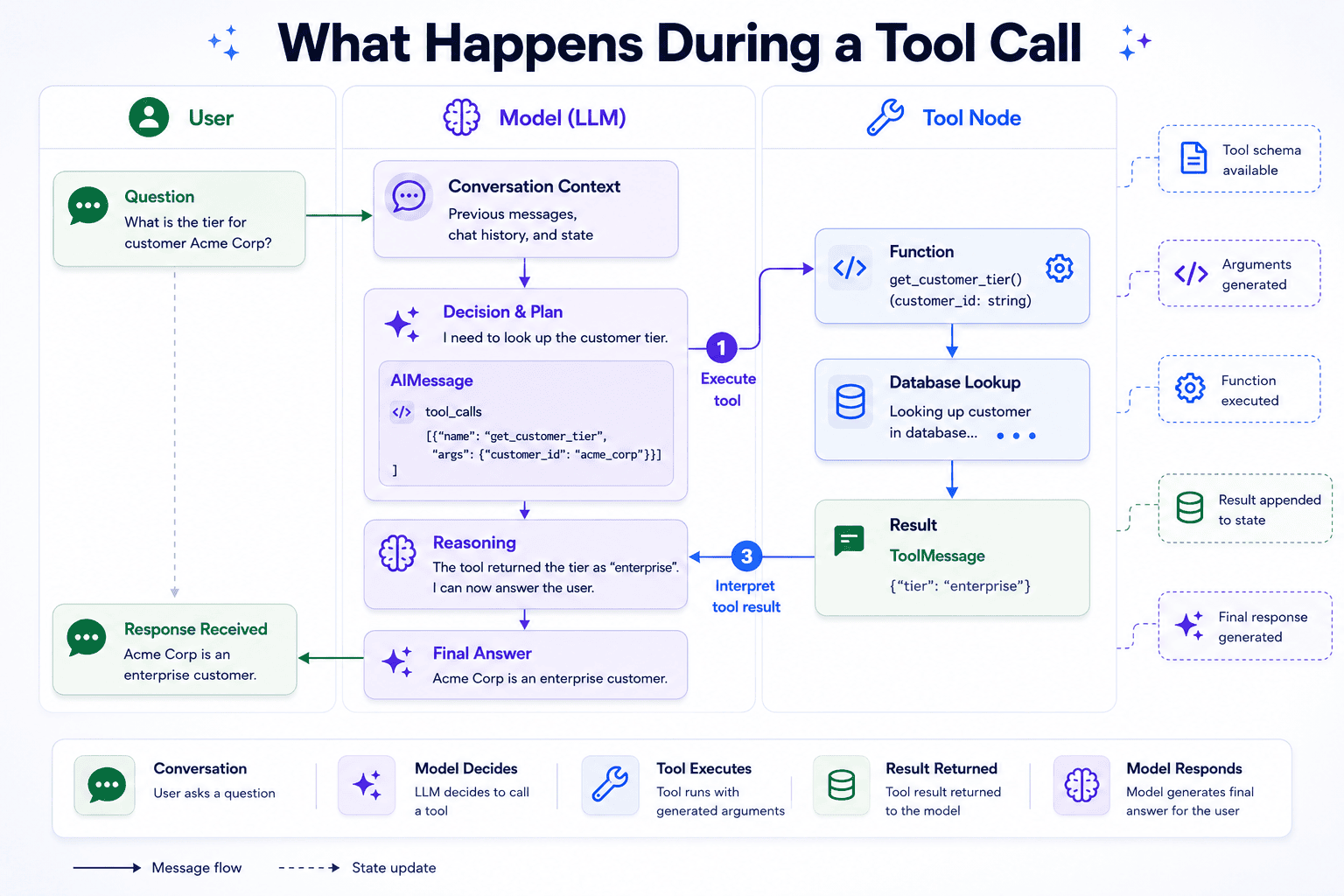
In a support agent scenario, a model might not have access to a customer’s subscription tier. By defining a tool using the @tool decorator, the developer provides the model with a specific capability. When the model is "bound" to these tools using the bind_tools method, it gains the ability to output a "tool call" instead of a text response.
The implementation of a ToolNode and a tools_condition routing function automates this loop. If the model’s output contains a tool call, the graph routes to the ToolNode, executes the function, and then—crucially—routes back to the model. This allows the model to see the output of the tool (e.g., "Customer is on the Enterprise plan") and incorporate that data into its final answer. Industry data suggests that this multi-turn reasoning significantly reduces "hallucinations," as the model relies on factual tool outputs rather than internal training data for specific queries.
Persistence and Memory: Bridging the Gap Between Sessions
One of the most significant challenges in AI development is the stateless nature of LLMs. Without a persistence layer, every call to an agent is a "first meeting." LangGraph addresses this through the use of "checkpointers."
A checkpointer, such as InMemorySaver, creates a snapshot of the graph’s state after every node execution. By associating these snapshots with a thread_id, developers can maintain long-term conversations. If a user returns to a chat after an hour, the developer simply provides the same thread_id, and LangGraph restores the entire message history and state from the last checkpoint.
While InMemorySaver is suitable for development, the architecture is designed to scale. In production environments, these can be swapped for persistent databases like PostgreSQL or Redis. This capability is transformative for SaaS applications, where a support agent must maintain the context of a "ticket" across multiple days and user interactions.
Industry Impact and Official Responses
The shift toward graph-based agentic workflows has drawn significant attention from enterprise software leaders. During recent developer conferences, industry experts have noted that the "reliability gap" is the primary hurdle for AI adoption. LangGraph’s ability to provide a "traceable" reasoning path is seen as a direct solution to this.
"We are seeing a move away from ‘magic’ agents that try to do everything autonomously toward ‘structured’ agents where the developer defines the guardrails," noted one senior AI architect. "LangGraph provides the scaffolding for that structure."
Furthermore, the "ReAct" pattern implemented in these workflows has become the standard for tool-integrated AI. By forcing a model to "stop and think" before answering, enterprises are finding that they can deploy AI in high-stakes environments, such as financial analysis or medical record retrieval, with higher confidence levels.
Broader Impact and Future Implications
The implications of accessible agentic workflows extend far beyond simple chatbots. As these systems become easier to build and more reliable to deploy, we are likely to see a rise in "Multi-Agent Systems." In such a setup, a "Supervisor" agent might manage a team of "Specialist" agents—one for coding, one for research, and one for quality assurance. Each specialist is a graph, and the supervisor is a higher-level graph that routes tasks between them.
The economic impact of this technology is also substantial. By automating the "reasoning loops" of common business processes—such as lead qualification, invoice reconciliation, and customer onboarding—companies can significantly reduce operational overhead. However, this also necessitates a new set of skills for Python developers, who must now think in terms of "state management" and "graph topology" rather than just prompt engineering.
In conclusion, LangGraph represents a maturation of the AI development stack. By providing the tools to manage state, execute complex logic, and persist memory, it enables the creation of agents that are not just conversational, but truly functional. As the technology continues to evolve, the ability to build and maintain these agentic workflows will be a defining characteristic of the next generation of software engineering.