The Math and Mechanics Behind Airline Overbooking Why Your Seat Might Not Be Yours

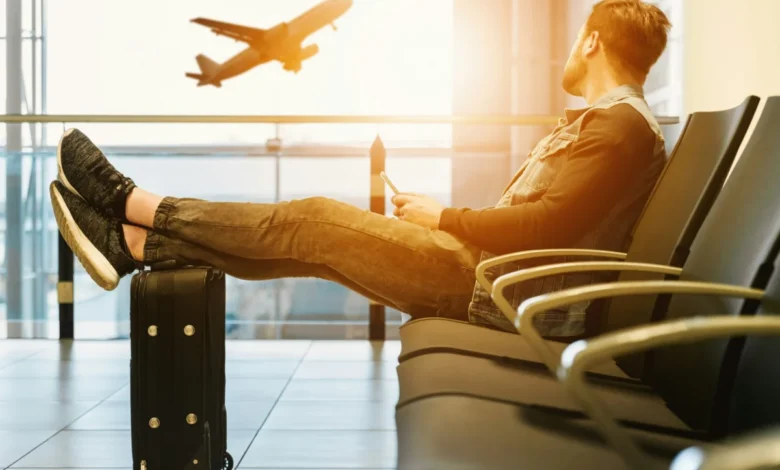
The phenomenon of the "bumped" passenger has become a staple of social media discourse, often characterized by viral videos of frustrated travelers at boarding gates or heated negotiations over travel vouchers. To the casual observer, being denied boarding despite possessing a confirmed ticket appears to be a clerical error or a symptom of operational incompetence. However, within the aviation industry, overbooking is neither a mistake nor a glitch; it is a sophisticated, data-driven strategy designed to solve one of the most persistent financial challenges in transport economics: the "perishable inventory" problem. When a plane takes off with an empty seat, the potential revenue from that seat vanishes forever, a loss known in the industry as spoilage. To mitigate this, airlines leverage complex mathematical models to sell more tickets than there are physical seats on the aircraft.
The Strategic Logic of Overbooking
The decision to overbook is a calculated risk aimed at maximizing load factors—the percentage of available seating capacity that is filled. Airlines operate on notoriously thin profit margins, often ranging between 1% and 3% per passenger. In such a competitive environment, the difference between a profitable flight and a loss-making one often depends on filling the last few seats. Historical data indicates that on almost every flight, a small percentage of passengers will fail to show up due to missed connections, personal emergencies, or simple changes in plans. If an airline sells exactly the number of seats available, these "no-shows" result in empty chairs and lost revenue.

To combat this, airlines employ data scientists to predict exactly how many people will fail to appear for a specific flight. This is not a guess; it is a statistically predictable trade-off based on probability distributions. By selling extra tickets, the airline essentially bets that the number of no-shows will equal or exceed the number of extra tickets sold. When the math works, the airline flies at 100% capacity with maximum revenue. When it fails, the airline faces the "denied boarding" scenario, which carries both financial and reputational costs.
A Case Study in Probability: The DS Airlines Model
To understand the mechanics of this system, consider a hypothetical carrier, DS Airlines, operating a flight with a capacity of 300 seats. Based on years of historical flight data, the airline knows that the probability of any individual passenger showing up for this specific route is 95%. To maximize profit, DS Airlines decides to sell 304 tickets—four more than the plane can hold.
The fundamental tool used to analyze this risk is the Binomial Distribution. This probability model is used to count "successes" (passengers showing up) in a series of repeated, identical, and independent events. For the model to be valid, two primary conditions must be met: the outcome must be binary (the passenger either shows up or they do not), and the events must be independent (one passenger’s decision to travel does not influence another’s).

In reality, the independence assumption is often strained. Families traveling together or corporate groups act as clusters; if one member of a family of four misses the flight, all four likely will. However, for the purposes of high-level fleet management, treating passengers as independent units provides a reliable baseline for calculating risk.
Calculating the Risk of Overbooking
Using the DS Airlines example, the airline must determine the probability of more than 300 passengers arriving at the gate. If 301, 302, 303, or 304 passengers show up, the flight is overbooked, and the airline must "bump" the excess travelers.
The probability of exactly $k$ passengers showing up out of $n$ tickets sold is calculated using the binomial formula, which incorporates the "combination" of ways those passengers can be selected and the individual probabilities of showing up versus not showing up. When DS Airlines calculates the probability of overbooking (the sum of the probabilities for 301 through 304 passengers showing up), the result is approximately 0.000139, or 0.014%. This means that for this specific configuration, there is only a 1-in-7,200 chance that the airline will have more passengers than seats.

This leads to the concept of "Expected Value," a critical metric for any data analyst. Expected value is the long-run average outcome of a random variable if the experiment is repeated many times. For DS Airlines, the expected value of the number of overbooked passengers is roughly 0.000166 per flight. Scaled up to 10,000 flights, the airline would expect to have only 1.66 passengers combined who are actually denied boarding.
The Economics of Revenue versus Liability
The financial incentive for this practice becomes clear when looking at the broader balance sheet. If DS Airlines sells four extra tickets on every one of those 10,000 flights at an average price of $200, it generates $8,000,000 in additional revenue. This is revenue that would have been lost if the airline had capped sales at 300 and seats remained empty due to no-shows.
Against this $8 million gain, the airline must weigh the cost of compensating the 1.66 bumped passengers. Under regulatory frameworks like those managed by the U.S. Department of Transportation (DOT) or the European Union’s EC 261/2004, the cost of an "involuntary denied boarding" is significant. In the United States, if an airline cannot get a passenger to their destination within one to two hours of their original arrival time, they may owe the passenger 200% of the one-way fare (up to $775). If the delay is over two hours, the compensation jumps to 400% of the fare (up to $1,550).

Even with these penalties, plus the cost of hotel vouchers and meals, the total liability for 1.66 passengers over 10,000 flights is negligible—likely under $5,000. From a purely financial perspective, risking $5,000 to earn $8 million is an easy decision for any corporation.
The Regulatory Framework and Passenger Rights
While the math favors the airlines, governments have stepped in to ensure that the "risk" taken by the airline does not unfairly burden the consumer. The U.S. Department of Transportation requires airlines to follow a specific protocol when a flight is overbooked.
First, the airline must solicit volunteers to give up their seats in exchange for compensation. This is often where the "reverse auction" comes into play. Gate agents will offer a $200 voucher, then $400, then $800, increasing the bid until enough people agree to take a later flight. Only if there are no volunteers can the airline move to "involuntary" bumping.

Involuntary denied boarding is the scenario airlines desperately want to avoid, not just because of the high mandatory cash payouts, but because of the potential for public relations disasters. Following a high-profile incident in 2017 involving United Airlines, where a passenger was forcibly removed from a plane, many carriers revised their policies. Some, like Delta Air Lines, authorized gate agents to offer volunteers up to $9,950 to avoid involuntary bumps. This shift acknowledges that while the math of overbooking is sound, the "social cost" of a viral video can far outweigh the revenue of a few extra tickets.
Evolution of Overbooking: AI and Real-Time Analytics
Modern airlines are moving beyond simple binomial distributions. Today, they employ sophisticated machine learning algorithms that consider hundreds of variables to predict no-show rates. These include:
- Historical Route Data: Certain routes (e.g., business-heavy Monday morning flights) have different no-show patterns than leisure-heavy holiday routes.
- Weather and Traffic: Real-time monitoring of weather patterns and airport congestion helps predict if connecting passengers will make it.
- Passenger Profiles: Algorithms analyze the "type" of ticket sold. A non-refundable, low-cost fare has a different no-show probability than a high-flexibility business class ticket.
- Economic Indicators: Changes in fuel prices or currency fluctuations can influence travel demand and cancellation rates.
This evolution in data science has allowed airlines to become much more precise. According to DOT statistics, the rate of involuntary denied boardings has dropped significantly over the last decade, even as planes have become more crowded. This is largely because airlines have become better at predicting exactly who will show up and better at incentivizing volunteers through mobile app notifications before the passenger even arrives at the airport.

The Broader Impact on the Travel Industry
The practice of overbooking is a microcosm of the modern "yield management" philosophy that governs the travel industry. It is the same logic that drives dynamic pricing for hotels and surge pricing for ride-sharing services. By using math to bridge the gap between supply and demand, airlines argue they can keep overall ticket prices lower for everyone. If overbooking were banned, airlines would likely raise base fares to compensate for the lost revenue from empty seats.
However, the ethical debate remains. Critics argue that a ticket is a contract and that selling the same physical space to two different people is fundamentally deceptive. The industry counters that as long as the "bumped" passengers are made whole through generous compensation and alternative transport, the system provides a net benefit by maximizing the efficiency of the global transport network.
As data science continues to advance, the "bumped" passenger may eventually become a relic of the past. Future systems may be able to predict no-shows with such accuracy that the need for involuntary removals disappears entirely, replaced by a seamless, automated system of voluntary seat-swapping. Until then, the math of DS Airlines remains the standard: a high-stakes game of probability where the house almost always wins, provided it can keep its passengers happy and its gate operations out of the social media spotlight.