A Comprehensive Roadmap for Mastering Voice Agent Development and AI Integration

Voice interfaces have transcended their origins as mere novelties to become the primary medium through which humans interact with advanced artificial intelligence. From sophisticated customer support automation to specialized healthcare diagnostic assistants and the pervasive integration of smart home ecosystems, voice agents are fundamentally reshaping the user experience. While the underlying architecture of these systems shares significant DNA with large language models (LLMs) and text-based generative AI, the transition to audio introduces a complex layer of real-time processing that demands a rigorous, structured engineering approach.
The Evolution of Conversational AI
The development of voice-first systems is not a recent phenomenon; it is the culmination of decades of research in computational linguistics and signal processing. In the 1990s and early 2000s, voice interaction was restricted to rigid, rule-based Interactive Voice Response (IVR) systems. These systems relied on pre-scripted logic trees that often left users frustrated by their inability to interpret nuanced human intent.
The modern paradigm shift began in the mid-2010s with the rise of virtual assistants like Amazon Alexa and Google Assistant, which utilized cloud-based neural networks to improve speech recognition. However, the current era, characterized by generative AI and transformer-based architectures, has moved beyond simple command-and-control interactions. Today, voice agents are expected to hold context-aware, multi-turn, and emotionally intelligent conversations. This evolution has shifted the industry focus from simple command recognition to sophisticated, low-latency, full-duplex communication systems.
Anatomy of the Voice Pipeline
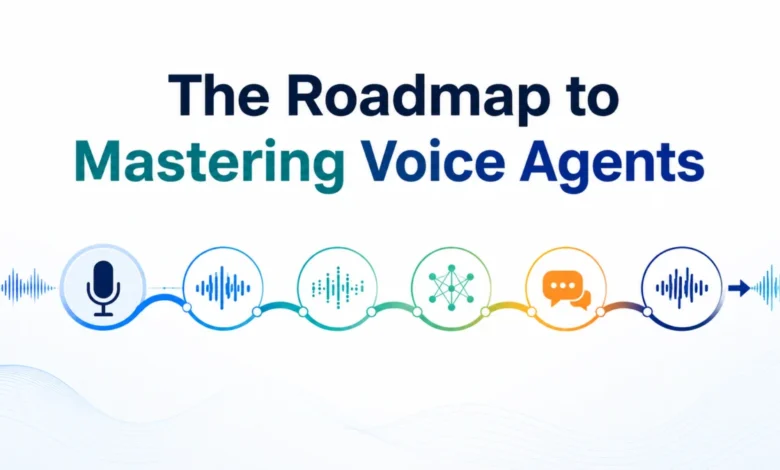
To build a functional voice agent, developers must integrate three distinct, high-performance technological pillars. The interaction begins with Automatic Speech Recognition (ASR), also known as Speech-to-Text (STT), which converts acoustic signals into text tokens. This is followed by the core reasoning engine—an LLM—which interprets the intent and generates a semantic response. Finally, Text-to-Speech (TTS) synthesis converts the digital output back into natural-sounding audio.
The challenge, however, lies in the orchestration of these stages. In a text-based environment, a latency of two to three seconds is often acceptable. In a voice interaction, a delay exceeding 500 to 800 milliseconds is perceived by the human brain as an unnatural "lag," which severely degrades user trust and engagement. Achieving this level of performance requires streaming architectures where the LLM begins generating tokens before the user has even finished their sentence, a process often facilitated by "time-to-first-token" (TTFT) optimization.
A Structured Seven-Stage Development Roadmap
For professionals aiming to master the end-to-end development of voice agents, the following roadmap provides a systematic approach to navigating the field’s technical hurdles.
Stage 1: Establishing the Foundational Pipeline
Developers must first achieve a granular understanding of the audio processing pipeline. This includes mastering codecs, sampling rates, and the mechanics of Word Error Rate (WER) as a metric for transcription accuracy. Understanding how noise-cancellation algorithms and acoustic echo cancellation (AEC) influence the STT layer is critical for real-world deployment.
Stage 2: Mastering LLM Integration for Audio
While language models function identically regardless of input modality, the constraints of voice change everything. LLMs for voice must be prompted for conciseness. Because the user cannot see a screen, the agent must provide information linearly and intuitively. Developing skills in prompt engineering specifically tailored for spoken output—such as avoiding markdown, special characters, or complex bullet points—is essential.
Stage 3: Engineering for Real-Time Latency
This stage involves the transition from batch processing to streaming. Developers must implement architectures that utilize WebSocket or gRPC protocols to maintain persistent connections between the client and the inference server. Minimizing the round-trip time (RTT) is the primary engineering objective here, often requiring edge-computing strategies or optimized local-inference models.
Stage 4: Conversation Design and Human-Computer Interaction
The most technically impressive model will fail if the conversation design is flawed. This discipline, derived from psychology and linguistics, dictates how an agent handles turn-taking, barge-in (interruptions), and social cues. A well-designed agent must know when to pause, how to use filler words (like "um" or "well") to manage expectations, and how to signal to the user that it is still "listening."
Stage 5: Integrating Persistent Memory and Tool Use
A modern voice agent must act as an orchestrator. By integrating Function Calling (Tool Use), agents can interact with external APIs—such as checking a CRM for a customer’s order status or triggering a smart light. Memory management—the ability to store and recall long-term user preferences while maintaining short-term conversational context—is what distinguishes a rudimentary chatbot from a helpful virtual assistant.
Stage 6: Deployment, Telephony, and Evaluation
Deploying at scale introduces complexities like SIP (Session Initiation Protocol) integration for phone lines, infrastructure monitoring, and cost management. Furthermore, evaluation shifts from static benchmarks to "human-in-the-loop" testing. Analyzing audio logs to identify where users hang up or express frustration is a vital feedback loop for iterative improvement.
Stage 7: Advanced Frontiers
The final stage focuses on innovation. This includes implementing emotion detection to adjust the agent’s tone in real-time, integrating voice cloning for personalized brand identities, and enabling multi-lingual, multi-modal support where the agent can interpret both text and audio simultaneously.
Economic and Industrial Implications
The shift toward voice-enabled AI is supported by significant industry growth. According to recent market analysis, the global conversational AI market is projected to grow at a compound annual growth rate (CAGR) of over 20% through the remainder of the decade. The primary drivers are the demand for automated customer service, labor shortages in human-operated call centers, and the increasing accuracy of neural-based TTS models, which now produce speech nearly indistinguishable from humans.
From an organizational perspective, the adoption of voice agents is not merely a technical upgrade; it is a strategic shift in customer acquisition and support costs. By automating complex, multi-step queries, organizations can significantly reduce overhead. However, this carries a risk: if the agent’s performance is poor, it can lead to immediate customer attrition. This reality reinforces the necessity of the "End-to-End" thinking model—the idea that a failure in the STT layer will inevitably cause a failure in the final brand experience.
Conclusion: The Future of Interaction
The integration of voice agents into the global tech stack marks a significant milestone in the history of human-computer interaction. By moving beyond the limitations of the keyboard and mouse, developers are creating systems that are more accessible, efficient, and intuitive.
For those entering the field, success requires a balanced approach. While technical proficiency in LLMs, streaming architectures, and telephony infrastructure is mandatory, it is the mastery of conversation design that will ultimately determine the utility of these systems. As the industry matures, the focus will likely shift from simply "making it work" to perfecting the nuances of natural, low-latency, and emotionally responsive communication. Developers who prioritize this holistic development path will be well-positioned to lead in an increasingly voice-first world.