In the contemporary landscape of artificial intelligence, the ability to generate a prediction is no longer the sole metric of success; the ability to explain the reasoning behind that prediction has become a fundamental operational requirement. As organizations increasingly deploy complex algorithms to manage high-stakes decisions—from credit scoring and medical diagnostics to customer churn management—the "black box" nature of advanced machine learning models has transitioned from a technical curiosity into a significant regulatory and ethical liability. With the introduction of frameworks such as the European Union’s AI Act, specifically Article 13, organizations are now legally compelled to ensure that high-risk AI systems provide sufficient transparency to allow human operators to interpret their outputs.
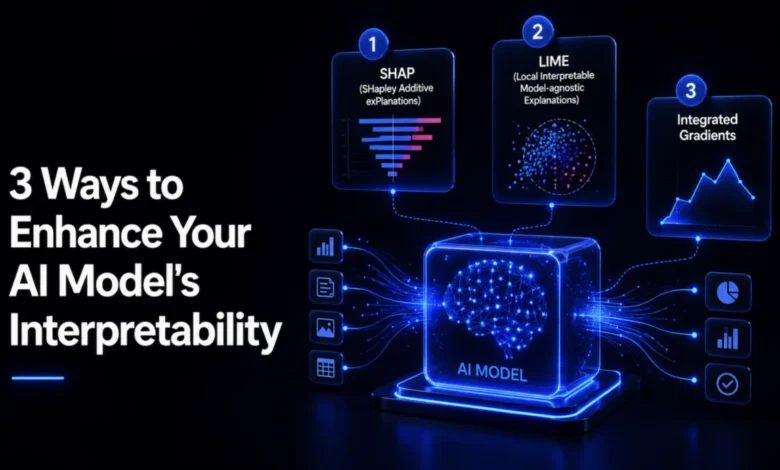
The challenge lies in the dichotomy between model performance and transparency. A churn model that correctly identifies a long-term, loyal customer as high-risk is a failure of logic if the underlying rationale remains opaque. Without an explanation, this prediction cannot be defended to stakeholders, customers, or regulators. To bridge this gap, data scientists are increasingly moving beyond traditional, built-in feature importance metrics toward more robust, mathematically grounded techniques: SHAP (SHapley Additive exPlanations), LIME (Local Interpretable Model-agnostic Explanations), and Integrated Gradients.
The Limits of Traditional Feature Importance
For years, the industry standard for interpreting tree-based models, such as Random Forests or Gradient Boosted Trees, relied on the .featureimportances attribute provided by libraries like scikit-learn. This method offers a rapid, one-line summary of which variables contribute most to a model’s global predictions. However, this approach is fundamentally limited. It provides a global view that ignores the nuance of individual predictions. Furthermore, researchers have identified that this traditional method is frequently biased toward high-cardinality features—variables with many unique values—which can artificially inflate their perceived importance. Most critically, this method fails entirely when applied to complex, non-tree-based architectures like deep neural networks.
The Evolution of Interpretability Frameworks
The shift toward more sophisticated interpretability tools has been driven by the need for "local" explanations—the ability to zoom in on a single, specific decision. The timeline of this transition reflects the broader maturation of the AI field. In the early 2010s, interpretability was largely a research concern. By 2017, the formalization of SHAP and LIME moved these concepts into the mainstream developer toolkit. Today, as of mid-2026, these tools are integrated into enterprise-grade MLOps pipelines to meet the compliance demands of emerging global AI regulations.
Method 1: SHAP (SHapley Additive exPlanations)
SHAP represents the gold standard for model-agnostic interpretability. Rooted in cooperative game theory, it treats each feature as a "player" in a game where the model output is the total payout. By calculating the marginal contribution of each feature across all possible combinations of inputs, SHAP provides a mathematically consistent and "fair" distribution of credit.
In practical application, SHAP’s power lies in its ability to generate both global summaries and local, instance-specific breakdowns. For a customer flagged for churn, SHAP can explicitly quantify how much the individual’s tenure, monthly charges, and support ticket history contributed to the specific risk probability. While TreeSHAP offers a highly efficient implementation for tree-based models, the computational cost of KernelSHAP for other model types remains a consideration for real-time systems.
Method 2: LIME (Local Interpretable Model-agnostic Explanations)
When computational latency is a primary constraint, LIME offers a pragmatic alternative. Rather than attempting a mathematically exhaustive analysis, LIME creates a local surrogate model. It perturbs the input data around a specific prediction, observes the model’s behavior in that immediate neighborhood, and fits a simple, interpretable linear model to approximate that local decision boundary.
LIME is particularly effective for "black-box" scenarios where the internal structure of the model is entirely inaccessible or proprietary. However, because it relies on random sampling to generate its perturbations, LIME lacks the perfect mathematical stability of SHAP. It serves as a vital diagnostic tool when speed is critical, though practitioners are advised to monitor for variance in explanations over repeated runs.
Method 3: Integrated Gradients
While SHAP and LIME treat models as opaque functions, Integrated Gradients leverages the internal structure of differentiable models, such as deep neural networks. By calculating the gradients of the model’s output with respect to its inputs along a path from a neutral baseline, this technique provides a precise attribution of the model’s decision-making process.
This method is highly favored in computer vision and natural language processing, where the relationship between inputs and outputs is continuous. By utilizing a "convergence delta" metric, developers can verify the numerical integrity of their explanations, ensuring that the attributions sum up accurately to the final output. It is the most technically rigorous choice for organizations relying on modern, deep-learning architectures.
Implications and Regulatory Alignment
The move toward these interpretability techniques is not merely a technical upgrade; it is a defensive strategy for corporate governance. Regulators are increasingly demanding "algorithmic accountability." In sectors like finance and healthcare, the inability to explain an automated decision can lead to severe penalties.
Data scientists often face the "accuracy vs. interpretability" trade-off. However, the use of SHAP, LIME, and Integrated Gradients suggests that this trade-off is becoming less severe. By using these tools to audit model performance, teams can identify "shortcut learning"—where a model achieves high accuracy by latching onto spurious correlations rather than genuine causal patterns. For instance, if a churn model prioritizes a customer’s zip code over their actual usage patterns due to a hidden bias in the data, interpretability tools will expose this, allowing for corrective retraining.
Comparative Analysis: Choosing the Right Tool
The decision of which method to employ should be dictated by the architecture of the model and the specific business constraints:
- SHAP is the preferred choice for tree-based ensembles where a rigorous, theoretically grounded, and consistent explanation is required for audit purposes.
- LIME is the tool of choice for real-time production environments where milliseconds of latency matter, or when working with proprietary third-party APIs where model internals are unknown.
- Integrated Gradients is the standard for neural networks and differentiable architectures, providing the deepest possible insight into the weighted contributions of high-dimensional input data.
Conclusion: Building Trust Through Transparency
The era of blind trust in predictive modeling is over. As AI systems become more deeply integrated into the fabric of social and economic life, the demand for transparency will only intensify. The traditional metrics of model performance—precision, recall, and F1-scores—remain vital, but they are no longer sufficient for professional deployment.
By adopting tools like SHAP, LIME, and Integrated Gradients, organizations can move from simply "running" models to "understanding" them. These frameworks provide the vocabulary necessary to communicate with regulators, the clarity required to debug complex errors, and the transparency needed to foster trust with the customers whose data powers these systems. The path forward for AI is one where the "why" of a prediction is treated with as much gravity as the "what." For teams looking to future-proof their AI initiatives, mastering these interpretability techniques is no longer an optional research project—it is a mandatory component of responsible innovation. Through the consistent application of these methods, the industry can ensure that as AI becomes more powerful, it also remains inherently understandable, defensible, and reliable.