The Definitive Guide to XLR and Jack Cables: Essential Infrastructure for Film, Video, and Audio Production


In the modern landscape of film, video, and audio production, the invisible infrastructure of cabling often determines the success or failure of a high-stakes recording. Whether working on a sprawling cinematic set, inside a bustling broadcast studio, or in a localized mobile rig, media professionals rely heavily on two primary audio connectors: the XLR cable and the Jack cable. Understanding the nuances, technical specifications, and ideal use cases of these two industry standards is critical for achieving pristine audio fidelity. While both serve the fundamental purpose of transmitting electrical audio signals between equipment—such as microphones, mixing consoles, audio interfaces, and loudspeakers—their underlying engineering, signal paths, and real-world applications differ significantly.
The Genesis and Evolution of Audio Transmission Technology
To comprehend the modern significance of XLR and Jack cables, one must examine their historical evolution within the telecommunications and broadcast industries. The lineage of the Jack cable traces back to the early 19th century, originating as a switching mechanism utilized in manual telephone switchboards. Operators used these single-conductor plugs to route telegraph and voice signals across vast networks. By the early 20th century, the technology transitioned into the emerging consumer and professional audio markets, becoming the standard connector for musical instruments, headphones, and early amplification systems.
Conversely, the XLR connector boasts a more specialized industrial heritage. Developed in the 1940s by James H. Cannon, the visionary founder of Cannon Electric (subsequently acquired by ITT), the connector was originally designated as the Cannon X series. Over successive iterations, a latching mechanism was added (becoming the XL series), followed by the integration of a synthetic rubber insulating compound around the contacts, which finalized the acronym as XLR, standing for External Line Return. Originally engineered to withstand the rigorous demands of military, aviation, and broadcast environments, the XLR design quickly permeated professional recording studios and live performance venues due to its mechanical ruggedness and superior electrical shielding.
Technical Anatomy: Balanced vs. Unbalanced Architecture

The most critical distinction between XLR and Jack cables lies in their electrical architecture: specifically, whether they transmit balanced or unbalanced signals. This technical divergence directly impacts their susceptibility to environmental electromagnetic interference (EMI) and radio frequency interference (RFI).
XLR cables are universally designed as balanced connectors. A standard XLR configuration utilizes a three-pin layout encased in a robust circular metallic shell. Inside the cable, three distinct conductors are deployed: one for a positive signal phase, one for a negative signal phase, and a third conductor dedicated to grounding. When audio travels through a balanced cable, the source equipment duplicates the audio waveform, inverting the polarity of one copy. As the signals travel down the line, any external environmental noise—such as interference from power lines, lighting rigs, or wireless devices—simultaneously affects both signal wires equally. Upon reaching the destination input, the receiving device inverts the negative signal back to its original phase. Because the external interference was mirrored across both wires, this phase inversion causes the noise to cancel itself out—a process known as common-mode rejection. This phenomenon allows XLR cables to maintain signal integrity over exceptionally long cable runs, often exceeding 100 feet, without signal degradation.
Jack cables, by contrast, frequently operate as unbalanced connections, though balanced variations do exist. Typically referred to as phone plugs or TS (Tip-Sleeve) connectors, standard Jack cables utilize only two conductors: a tip carrying the positive audio signal and a sleeve acting as the ground return. Because there is no second conductor to carry an inverted phase copy, any environmental interference picked up along the cable path is introduced directly into the final audio signal. Consequently, unbalanced Jack cables are highly susceptible to hum, buzz, and RF interference, particularly when deployed across long distances. However, TRS (Tip-Ring-Sleeve) Jack variants can support balanced mono or unbalanced stereo signals by introducing a middle ring conductor, bridging some of the performance gap in professional monitoring environments.
Standardized Dimensions and Industry Classifications
Both cable types feature distinct size classifications that dictate their deployment across various sectors of media production. XLR cables maintain a standardized physical connector size across professional audio hardware, though manufacturers offer varying lengths, shielding thicknesses, and conductor metals (such as oxygen-free copper). The consistency of the three-pin XLR design ensures universal compatibility across global film sets and recording studios.
Jack cables exhibit greater physical diversity, categorized primarily by barrel diameter:

- 1/4-inch (6.35mm) connectors: Widely utilized in professional music production, connecting electric guitars, synthesizers, studio monitor speakers, and professional mixing desks. They are available in both TS (unbalanced) and TRS (balanced/stereo) configurations.
- 3.5mm (1/8-inch) connectors: Dominant in consumer electronics, portable recording gear, consumer headphones, and compact DSLR or mirrorless camera microphone inputs. While highly space-efficient, 3.5mm connectors lack the mechanical locking mechanisms of XLR cables, making them vulnerable to accidental disconnection on fast-paced film sets.
Application Analysis in Professional Filmmaking
In the realm of professional filmmaking, audio quality is often considered equally important to visual composition. The choice between XLR and Jack cabling on a film set is dictated by the production environment and the critical nature of dialogue capture.
XLR cables are the undisputed gold standard for production sound mixing on narrative film sets, documentary shoots, and television broadcasts. Boom operators and sound recordists rely on XLR cables to link directional shotgun and hypercardioid microphones to multi-channel field recorders. Because film sets are frequently saturated with high-draw lighting units, power distribution generators, and wireless transmission systems, the inherent noise-rejection capabilities of balanced XLR connections are vital. Furthermore, XLR connectors feature a physical locking latch that prevents cables from being pulled loose during intense physical movement or dynamic camera tracking shots.
Jack cables occupy a more specialized, auxiliary role in filmmaking workflows. A 3.5mm Jack connection is frequently found linking a wireless lavalier receiver to a DSLR or mirrorless camera body, or connecting a pair of reference monitoring headphones to an audio interface. While modern filmmakers frequently utilize 3.5mm cables due to the compact nature of hybrid video cameras, production sound mixers exercise caution with these connections. The lack of a locking mechanism, combined with the unbalanced nature of standard 3.5mm lines, makes them prone to handling noise, crackle, and accidental dropouts. To mitigate these risks, professional videographers often invest in locking 3.5mm adapters or external field recorders that utilize locking mini-XLR alternatives.
Economic Considerations and Accessibility
Beyond technical performance, economic factors heavily influence the adoption and distribution of audio cabling in media production. Jack cables, due to their ubiquitous presence in consumer electronics and musical instruments, are exceptionally cost-effective and readily available at nearly any consumer electronics retailer or online marketplace. This accessibility makes Jack cables an attractive entry point for amateur creators, podcasters, and independent musicians working with tight initial equipment budgets.
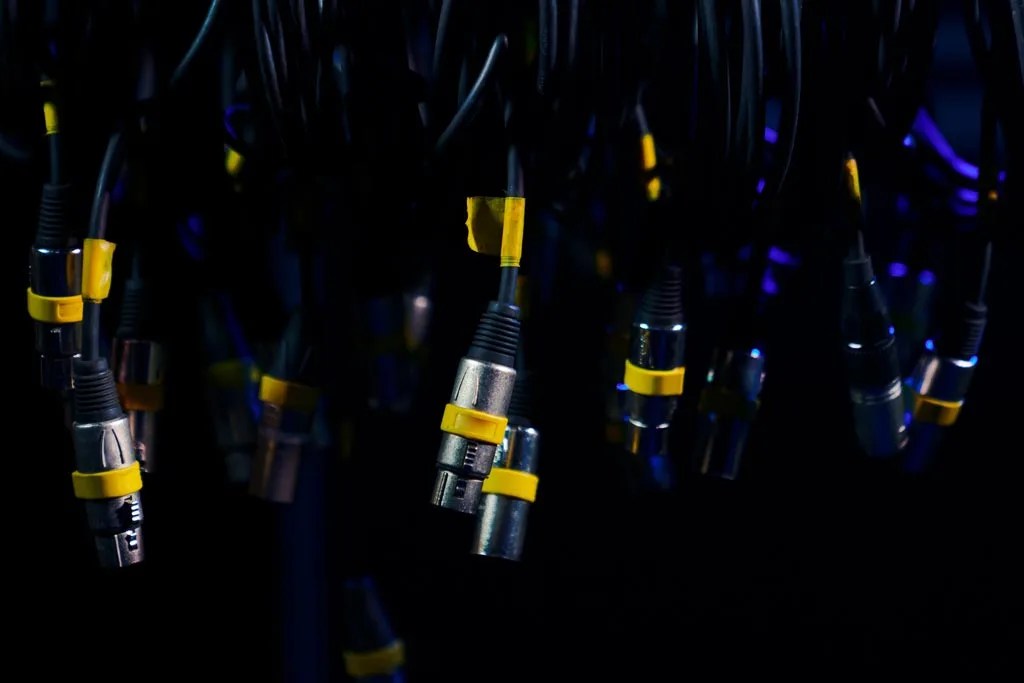
XLR cables and their associated hardware represent a higher capital investment. The precision engineering required for heavy-duty metal housings, gold-plated contacts, multi-layered spiral shielding, and reliable locking mechanisms elevates manufacturing costs. However, industry analysts and veteran audio engineers emphasize that investing in professional-grade XLR infrastructure yields a lower total cost of ownership over time. XLR cables are designed for field serviceability, often featuring modular housings that allow technicians to repair damaged solder joints rather than discarding the entire cable. This durability is essential for touring musicians, live event production companies, and mobile film crews operating in adverse weather conditions.
Strategic Integration and Best Practices for Media Producers
For media producers, directors, and audio engineers navigating the complexities of modern signal flow, a hybrid approach is often necessary. Understanding when to deploy XLR versus Jack cabling can significantly streamline production workflows and eliminate post-production audio repair overhead.
When configuring a stationary studio environment or capturing primary dialogue on a film set, engineers should prioritize balanced XLR connections wherever possible. This minimizes the risk of introducing irreversible noise floors during the initial recording phase. Conversely, when routing signals within a compact desktop editing suite, connecting portable monitoring headphones, or interfacing with consumer-grade playback devices, Jack cables provide the necessary flexibility and cost efficiency.
Ultimately, mastering the mechanical and electrical properties of XLR and Jack cables empowers production teams to design robust, interference-free audio chains. By matching the appropriate connector to the specific demands of the environment—balancing signal integrity, physical security, and budget constraints—content creators can ensure their productions achieve the highest standard of sonic clarity.