The rapid proliferation of sophisticated generative artificial intelligence has fundamentally altered the landscape of digital media, presenting an unprecedented challenge to the authentication of visual information. As synthetic image generators—such as Midjourney, DALL-E 3, and Stable Diffusion—attain near-photorealistic quality, the ability of the average observer to discern between reality and algorithmic artifice has reached a critical breaking point. This shift has ignited a race between AI developers, who are creating increasingly convincing imagery, and a burgeoning sector of detection software developers, all while major social media platforms struggle to maintain the integrity of their information ecosystems.
The central issue, according to industry experts, is not merely the technical capacity to create fake images, but the downstream effects on the democratic process. Andrey Doronichev, CEO and cofounder of Optic.xyz, a platform specializing in the detection of AI-generated content, highlights the gravity of the situation. “It has become increasingly challenging for the average human eye to distinguish between AI-generated and real photos,” Doronichev states. “This has the potential to manipulate public opinion, undermine the credibility of news sources, and ultimately threaten the democratic process by promoting disinformation.”
A Chronology of Synthetic Media Development
The evolution of generative AI has occurred at an accelerated pace, moving from rudimentary, abstract shapes to highly detailed human figures in less than three years. In early 2021, tools like DALL-E 1 introduced the concept of text-to-image synthesis, though the results were often surreal and easily identifiable as artificial. By the summer of 2022, the release of Midjourney and the public rollout of Stable Diffusion marked a watershed moment. Suddenly, high-fidelity images could be generated in seconds, often requiring little more than a descriptive prompt.
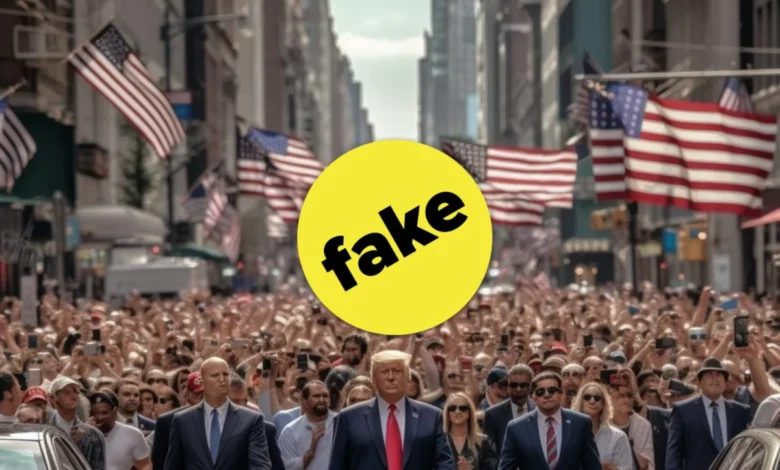
The year 2023 served as a testing ground for these technologies in the public sphere. High-profile incidents, such as the viral imagery of Pope Francis in a designer puffer jacket or the fabricated depictions of the arrest of former President Donald Trump, demonstrated how quickly synthetic images could permeate social media. These events served as a litmus test for the public’s ability to verify content and exposed the vulnerability of digital discourse to rapid-fire misinformation.
The Technical Limitations of Detection and Verification
In response to the surge of synthetic media, a variety of detection tools—including Optic, Hive Moderation, and various academic research projects—have emerged. These tools generally utilize deep learning classifiers trained on millions of AI-generated images to spot patterns invisible to the human eye, such as specific noise distributions or artifacts in high-frequency data.
However, these tools are far from infallible. As generative models improve, they are trained to minimize the very artifacts that detection tools rely on to identify them. Furthermore, the "arms race" dynamic ensures that for every new detection layer, a more sophisticated generator is developed to bypass it.
Beyond software, experts suggest that human intuition remains a vital, albeit limited, line of defense. The "uncanny valley" effect—where human-like figures look almost, but not quite, right—is frequently observed in AI images. Common "tells" include:
- Anatomical Inconsistencies: AI models historically struggle with the geometry of human hands, often rendering extra fingers, fused digits, or unnatural joint structures.
- Background Artifacts: Complex backgrounds, such as text on signs, distant crowds, or architectural details, often appear "melted" or mathematically incoherent.
- Illumination Discrepancies: AI often struggles to maintain consistent light sources, leading to shadows that do not align with the objects they are meant to originate from.
Regulatory and Platform Challenges
The responsibility of moderating synthetic content falls largely on the shoulders of social media platforms, yet current enforcement mechanisms appear fragmented. Companies like Meta, Google, and X (formerly Twitter) have implemented policies against "manipulated media," but the implementation remains inconsistent.
Kayla Gogarty, deputy research director at Media Matters for America, emphasizes that the platform architecture itself is currently ill-equipped to handle the scale of this challenge. “As there has been a recent rise of AI-generated media, it has become clear that platforms are unprepared for this moment in which fake images and misinformation could lead to real-world harm,” Gogarty notes.
The situation is further complicated by changes in content moderation strategies across major tech firms. On X, the overhaul of the verification system—which replaced identity-based authentication with a subscription-based model—has made it significantly harder for users to distinguish between official news sources and parody or malicious impersonator accounts. When a synthetic image is paired with a blue checkmark, the psychological barrier to believing the image is authentic is lowered, a phenomenon known as "automation bias."
Data and Implications for Public Discourse
The broader implications of this technological shift are profound. A 2023 study by researchers at Stanford University and the University of Washington found that participants were unable to identify AI-generated images as fake more than 40% of the time. When the images were presented within the context of a news story, that number climbed significantly.
The economic and social costs of this trend include:
- Market Volatility: Fabricated images, such as a fake photo of an explosion near a government building, have already been shown to cause momentary dips in stock market indices.
- Reputational Damage: The ease of creating "deepfake" imagery allows for the rapid character assassination of public figures, which, even when debunked, leaves a lingering impression on the public consciousness.
- The "Liar’s Dividend": Perhaps most dangerously, the proliferation of fake images allows bad actors to claim that real photos or videos of their own misconduct are actually AI-generated fabrications. This creates an environment where objective truth becomes a matter of opinion rather than fact.
Toward a Framework of Digital Literacy
As the technology behind generative AI continues to mature, the burden of verification is shifting toward the end-user. Media literacy experts recommend a multi-step approach to consuming visual information online:
- Source Verification: Always trace the image to its origin. Does it appear on a reputable news organization’s website, or is it only circulating on social media accounts with unverified credentials?
- Reverse Image Searching: Tools like Google Lens or TinEye can help determine if an image has appeared elsewhere on the web, often revealing if it was recently created or if it has been taken out of context.
- Cross-Referencing: If an image depicts a major news event, check if multiple, independent, and trusted sources are reporting on that same event with visual evidence of their own. If an image is "too good to be true"—or too dramatic to have gone unnoticed by major news agencies—it is prudent to treat it with extreme skepticism.
Conclusion: The Future of Verification
The challenge of synthetic media is not a temporary glitch; it is a permanent feature of the modern information landscape. While the tech industry moves toward "watermarking" AI-generated files—a process where metadata is embedded into the image to signify its origins—such measures are not yet universal or tamper-proof.
Ultimately, the defense against AI-driven disinformation relies on a combination of better detection technology, stronger platform accountability, and a more critical public. As the line between the virtual and the physical continues to blur, the most effective tool for navigating this new reality remains the discerning, informed, and skeptical mind of the individual user. Until robust, industry-wide standards for content provenance are established, the recommendation remains clear: when in doubt, rely on verified, established news outlets and exercise caution before sharing content that could have significant real-world consequences.