The Strategic Evolution of Digital Visibility: Mastering Answer Engine Optimization in the Age of Artificial Intelligence

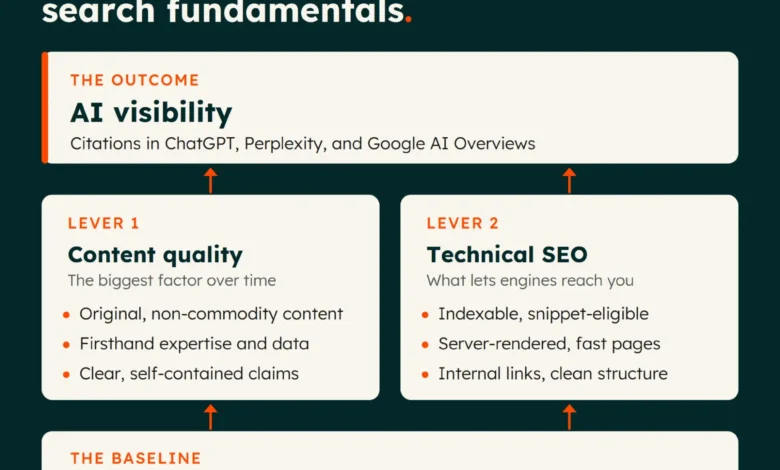
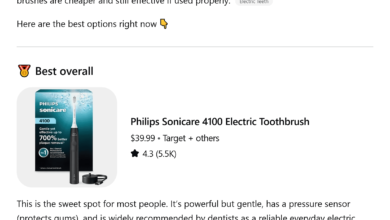
The landscape of search engine marketing is undergoing its most significant transformation since the inception of the World Wide Web, driven by the rapid adoption of generative AI and Large Language Model (LLM)-powered answer engines. Between the first quarter of 2025 and the first quarter of 2026, monthly unique visitors to major answer engines surged from 634 million to 904 million, a staggering 40% increase that has forced marketing departments to pivot their digital strategies. This shift has given rise to Answer Engine Optimization (AEO), a discipline that, while distinct in its execution, remains fundamentally anchored to the technical architecture of traditional Search Engine Optimization (SEO).
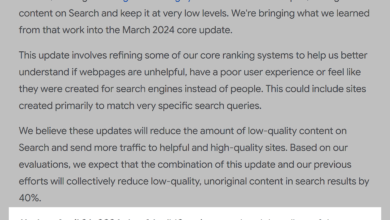
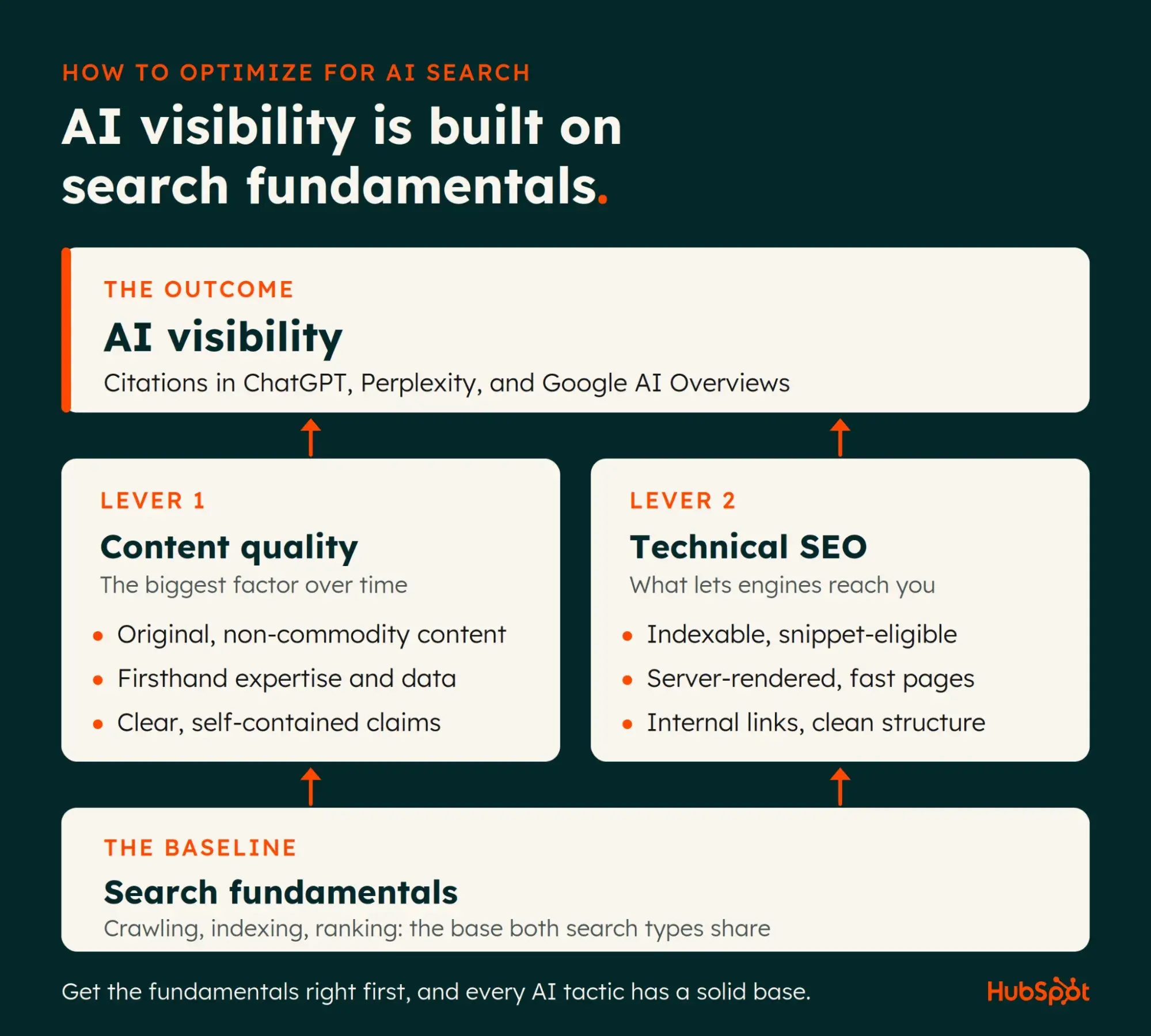
The transition from keyword-driven search to conversational, intent-based discovery is not a displacement of legacy systems but rather an evolution of how information is indexed, retrieved, and presented to users. Major industry players, including Google and OpenAI, have signaled that the infrastructure powering AI-generated responses relies heavily on the established mechanisms of web crawling, rendering, and indexing. Consequently, businesses failing to maintain rigorous SEO standards—such as crawlability, site speed, and structured data hygiene—are finding themselves excluded from the citation loops that define modern search results.
The Chronology and Technical Context of AI Search
The integration of AI into search began in earnest with the testing of Google’s Search Generative Experience (SGE) in 2023, which evolved into AI Overviews. Throughout 2024 and 2025, this technology was refined to incorporate Gemini, a multimodal model capable of synthesizing vast datasets. By early 2026, the industry reached a critical juncture where "answer engines" such as Perplexity and ChatGPT’s Search became primary gateways for information retrieval.
The technical requirement for appearance in these engines is straightforward: a page must be indexed and eligible for standard search snippets. According to Google’s latest documentation, there is no "secret" AI schema. Instead, the models utilize the same underlying systems that determine rank in traditional search. For instance, pages with a First Contentful Paint (FCP) speed under 0.4 seconds have been observed to earn roughly 6.7 citations in ChatGPT, compared to just 2.1 for sites with an FCP exceeding 1.13 seconds. This data underscores that speed is no longer just a user-experience metric; it is a prerequisite for machine-readability and citation eligibility.
The Primacy of People-First Content
In the hierarchy of ranking factors, "non-commodity content" has emerged as the definitive differentiator. As LLMs become increasingly adept at summarizing common knowledge, they face a diminishing incentive to cite sources that merely rehash information available in their training data. Original data, firsthand subject-matter expertise, and unique human perspectives are the only assets that maintain high value in an AI-dominated ecosystem.
Research conducted by SE Ranking across a sample of over 216,000 pages demonstrates a clear correlation between content depth and citation frequency. Pages containing 19 or more data points averaged 5.4 citations, while data-light pages struggled to reach 2.8. Furthermore, content that explicitly quotes human experts achieves nearly double the citation rate of generic copy. This suggests that AI systems are programmed to prioritize "authoritative" signals, essentially looking for human validation of the information being synthesized.
Divergent Engine Behaviors: Perplexity vs. ChatGPT
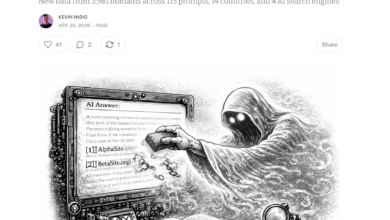
A critical insight for digital strategists is that not all answer engines prioritize the same sources. Perplexity, known for its research-heavy approach, acts as an aggregator that cites an average of 10.8 sources per query. It shows a distinct preference for discussion-based platforms, such as Reddit, LinkedIn, and G2, which account for over 17% of its citations. In contrast, ChatGPT exhibits a more selective behavior, averaging approximately 3.3 citations per query and favoring long-form, authoritative articles.

Data from the 2026 industry landscape suggests that the overlap between cited URLs across different engines is remarkably low—often under 8%. This lack of parity implies that an "AI SEO" strategy must be tailored to the specific nature of each engine. A strategy that secures a citation on Perplexity may be entirely ignored by ChatGPT, necessitating a multi-faceted approach to content distribution.
Technical Foundations and Structured Data
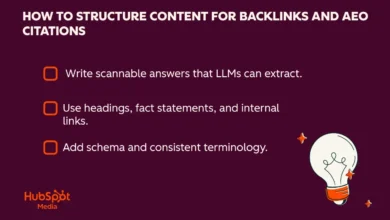
While structured data (Schema) does not force an engine to cite a page, it acts as a crucial "map" that allows algorithms to parse content with higher confidence. The consensus among industry experts is that schema must be strictly additive; it should reflect the information visible to the human user. Attempting to mask content or provide conflicting information via schema—a practice bordering on "cloaking"—is a violation of search guidelines that can lead to de-indexing.
Furthermore, snippet controls remain the primary mechanism for managing how a brand appears in AI results. The use of data-nosnippet attributes or max-snippet directives in robots meta tags allows organizations to prevent specific passages from being lifted by an AI. However, there is a risk of over-correction. Restricting snippets often results in the total exclusion of the page from AI-driven answers, as the model lacks sufficient context to trust or verify the content.
The Role of Multimodal Content
Visual and interactive media, such as videos and product listings, are increasingly integrated into generative search responses. YouTube, in particular, has established itself as a massive citation engine. Studies indicate that nearly 14% of citations in certain B2B SaaS queries point to specific, timestamped moments within a video. This necessitates a shift in video production: descriptions, transcripts, and metadata must be as optimized as written text. For retailers, the synchronization of Merchant Center feeds with AI-friendly indexing is the difference between appearing in a commercial response or being entirely omitted.
Future-Proofing the Strategy
As we move into the latter half of 2026, the consensus among search analysts is that the "AI search" era is effectively an extension of the "user-centric" era. The most resilient strategy is one that treats the AI engine as a sophisticated reader. This involves:
- Resolution-First Writing: Answering the user’s query within the first 60 words of a document.
- Question-Led Subheading Structure: Using H2 and H3 tags to frame content as direct answers to common user inquiries.
- Entity Mapping: Building a robust internal knowledge graph that connects brand products, services, and core topics, helping the AI understand the relationship between disparate pieces of content.
- Continuous Auditing: Establishing a fixed cadence for content refreshes. Stale statistics and outdated claims are quickly penalized by models that prioritize recency and factual accuracy.
Broader Implications
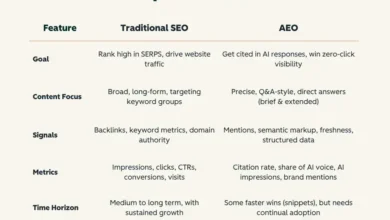
The rise of AI search represents a structural shift in the digital economy. The reliance on "organic traffic" is being replaced by a reliance on "citation visibility." While this changes the metrics for success, the core business objective remains unchanged: establishing authority and relevance.
The industry has largely moved past the experimental phase where "llms.txt" files or other specialized markup were considered "hacks" to force AI recognition. Empirical evidence has shown these methods to be largely ineffective. Instead, the path forward lies in the rigorous application of classic SEO fundamentals, refined for an era where machines are the primary intermediaries between information and the consumer. Organizations that view AEO as a technical burden to be managed alongside their content strategy—rather than a separate, fleeting trend—will be the ones that sustain visibility in the evolving information ecosystem.