Navigating the AI SEO Landscape: Essential Tools for Small Businesses to Thrive in a Competitive Digital Era

The rapid integration of Artificial Intelligence (AI) into digital marketing has made AI SEO tools indispensable for small businesses aiming to maintain competitiveness and relevance in an ever-evolving online ecosystem. While the market is flooded with a plethora of tools promising comprehensive solutions, the critical challenge for lean teams lies in discerning which AI functionalities genuinely deliver value and warrant investment in terms of time and capital. This shift is not merely a trend but a fundamental transformation, underscored by significant industry data pointing to the widespread adoption of AI in marketing.
The Imperative of AI in Modern Marketing
Recent reports highlight the undeniable ascendancy of AI in marketing strategies. According to HubSpot’s latest AI Trends for Marketers report, a substantial two-thirds of marketers globally now leverage AI in their professional roles, with this figure climbing to an even more pronounced 74% among American marketers. This data signals a clear mandate for small businesses: engaging with AI-powered SEO tools is no longer optional but a strategic necessity. The alternative risks being outmaneuvered by competitors who are actively harnessing AI to optimize their digital presence.
The digital landscape has dramatically transformed over the past decade. Traditional SEO, once a domain heavily reliant on manual keyword research and technical audits, has evolved into a sophisticated, data-driven discipline. The advent of AI has accelerated this evolution, introducing capabilities that automate complex tasks, generate insightful analytics, and even co-create content. For small businesses, often operating with limited resources and expertise, AI SEO tools offer a crucial equalizer, enabling them to punch above their weight in highly competitive markets. These tools assist across various SEO facets, including comprehensive keyword research, dynamic content creation, on-page optimization, proactive technical issue resolution, and precise visibility tracking.
Strategic Considerations for AI SEO Tool Selection

Selecting the right AI SEO tools requires a judicious approach, prioritizing factors that align with the lean operational models of small businesses. The primary considerations should encompass time-to-value, the inherent learning curve, cost-effectiveness, and ease of integration into existing workflows.
Time-to-Value: This metric assesses the speed at which a tool delivers tangible, useful output post-implementation. For small teams without dedicated SEO specialists, a tool that demands extensive configuration or external consultation can quickly become a burden rather than a benefit. The ideal tool should offer rapid deployment and actionable insights, ideally within 24 hours of setup. For instance, free tools like Google Search Console (GSC) offer immediate, invaluable data on website performance with minimal setup, making them essential for any online presence. In contrast, more comprehensive platforms like HubSpot, while requiring a greater initial investment of time and potentially capital for advanced features, can deliver sophisticated, integrated capabilities that are business-critical for long-term growth. The decision hinges on whether the projected impact on workflows, marketing conversions, and overall business growth justifies the initial investment.
Learning Curve: The utility of any tool is directly proportional to a team’s ability to use it consistently and effectively. Overly complex platforms, often designed for enterprise-level agencies, can overwhelm small business users with an abundance of features they may never utilize. The most effective AI SEO tools for small teams provide intuitive interfaces, guided workflows, clear, plain-language recommendations, and explicit next steps, rather than raw data that necessitates expert interpretation. This ensures that even non-SEO specialists can leverage the tools to improve their digital footprint.
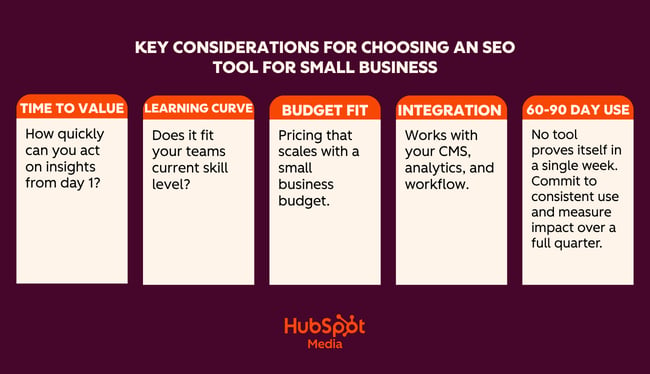
Cost and Budget Fit: The optimal AI SEO solutions for small businesses reside at the confluence of affordability, practical utility, and scalability. Tools must address a unique pain point, be affordable, and integrate seamlessly into the team’s workflow. Furthermore, it is crucial to consider future cost implications. A tool that becomes prohibitively expensive upon scaling might lead to the costly and time-consuming process of switching platforms down the line. A pragmatic approach involves identifying the top three time-consuming SEO tasks not currently addressed by existing tools and evaluating potential platforms specifically against these bottlenecks. A tool that effectively resolves a single significant bottleneck can often deliver more value than one that superficially addresses multiple issues.
Integration Ease: The ability of an AI SEO tool to integrate with existing systems significantly boosts its adoption rate and overall efficacy. Seamless connectivity with a Content Management System (CMS) or Customer Relationship Management (CRM) platform means the new tool augments existing workflows rather than creating isolated, siloed operations. As highlighted by MuleSoft, 86% of IT leaders agree that AI agents can introduce complexity rather than value without proper integration. Integrated solutions enhance data flow, improve workflow efficiency, and are inherently more motivating for teams to engage with.
The 60- to 90-Day Usage Test: Initial enthusiasm and demo performance are often misleading. The true measure of a tool’s value emerges between the 60- and 90-day mark, when consistent usage and quantifiable outcomes can be assessed. Small businesses should negotiate trial periods or opt for monthly subscriptions initially to conduct a realistic evaluation before committing to annual plans.
The Evolving Role of AI in Small Business SEO: Capabilities and Limitations
While AI promises significant advancements, it is crucial for small businesses to understand its strengths and, equally important, its limitations in the realm of SEO.
Drafting and Scaling Content Quickly (With Caution): AI excels at generating initial drafts of various content types, including blog posts, FAQs, service page copy, and meta descriptions, in a fraction of the time a human would require. This capability is a significant time-saver for businesses struggling with consistent content publication. AI can efficiently handle objective information or straightforward questions. However, for thought leadership pieces, content requiring novel perspectives, or expert opinions, human oversight remains critical. AI-generated content may lack the nuanced understanding of a business’s unique audience, brand voice, or specific industry insights. Editors must meticulously review and personalize AI drafts to ensure factual accuracy, prevent generic tones, and infuse genuine expertise – qualities that Google increasingly rewards through its E-E-A-T (Experience, Expertise, Authoritativeness, Trustworthiness) guidelines.
Finding Keyword and Topic Ideas: AI tools are powerful ideation engines. They can suggest keyword clusters, generate customer-centric questions, and identify related topics that might otherwise be overlooked. This can drastically reduce the manual research hours for small teams. Nevertheless, human validation is indispensable. AI often generates keyword suggestions without real search volume data. Marketers should cross-reference these ideas with tools like Google Keyword Planner to confirm demand and perform human sense checks to ensure relevance and strategic fit. While AI can brainstorm keywords, its current capabilities for sophisticated content clustering or in-depth Search Engine Results Page (SERP) analysis are still developing.
Optimizing Existing Pages: AI tools can efficiently analyze existing webpages and offer actionable recommendations for improving title tags, meta descriptions, heading structures, and overall readability. For small businesses with a backlog of underperforming pages, this audit-and-improve workflow can yield meaningful results without requiring a substantial budget. For critical pages, however, a layer of human review is advisable to ensure that AI-generated optimizations align with strategic goals and brand messaging. For less critical pages where SEO impact is minimal, AI-generated title tags or descriptions can be a perfectly acceptable and efficient solution.
Essential AI SEO Tools for Small Businesses
The market offers a range of AI SEO tools, each with unique strengths. This guide focuses on those that solve specific problems for lean teams and integrate genuinely useful AI functionalities.
Tools for SEO and Technical Audits:
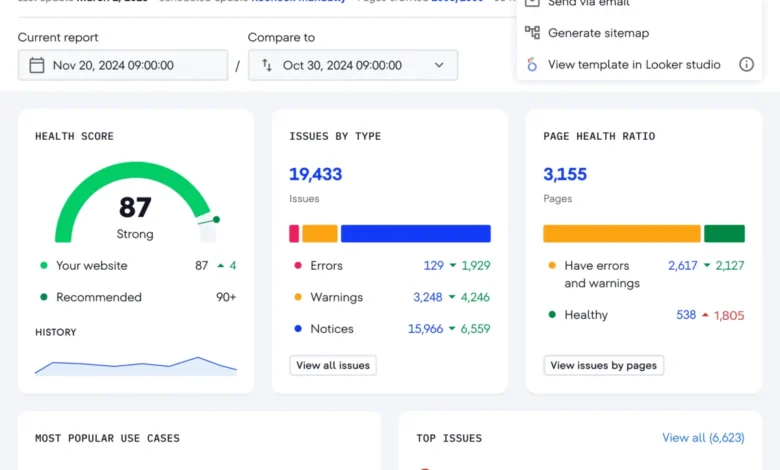
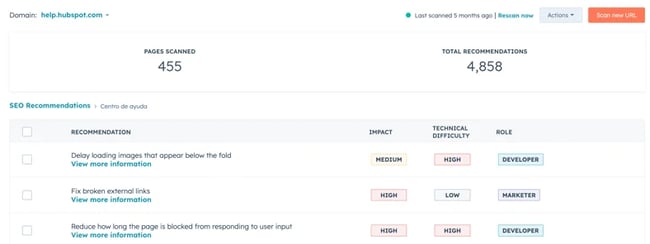
HubSpot SEO Recommendations: Integrated within Marketing Hub, HubSpot’s SEO recommendation tools offer a unified approach to SEO. Unlike standalone platforms that present a raw list of issues, HubSpot connects recommendations directly to the content editor, CRM, and reporting dashboard. This integration means every optimization, piece of content, and ranking improvement can be tied back to tangible business outcomes. The platform prioritizes on-page updates for non-experts, explaining why an issue is flagged, its impact on search performance, and the specific action required for resolution. This clarity is invaluable for small teams without dedicated technical SEO specialists. HubSpot’s tools scan for common ranking suppressors such as broken links, missing meta descriptions, alt text issues, HTTPS problems, slow loading pages, and heading structure inconsistencies. Its value proposition is further amplified by its integration within a broader marketing stack, encompassing email marketing, landing pages, social media, ads, and a free CRM, allowing for end-to-end tracking from organic search to closed deals. For B2B businesses, this CRM connection is particularly powerful, enabling direct attribution of organic traffic to pipeline and revenue.
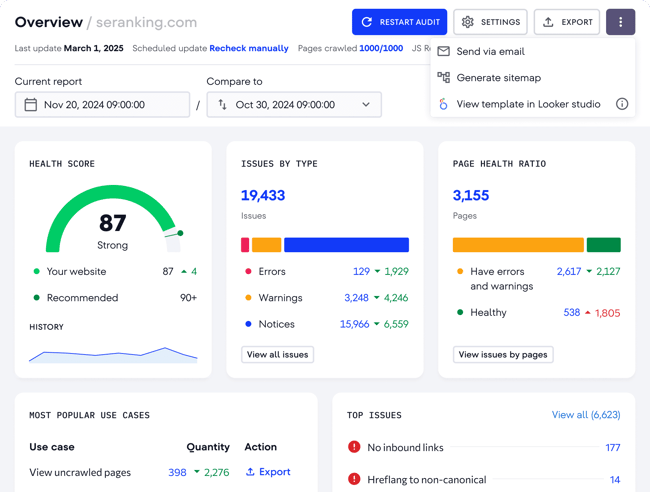
SE Ranking: SE Ranking stands out as a comprehensive, AI-powered platform offering keyword tracking, site audits, competitive research, and AI-specific insights. Its well-rounded feature set includes keyword research, backlink analysis, competitor monitoring, and content gap identification. It serves as an accessible, full-featured alternative to higher-priced enterprise tools like Semrush or Ahrefs, providing depth of functionality without the prohibitive cost. SE Ranking’s clear interface and actionable recommendations make it suitable for small businesses lacking in-house SEO expertise.
Tools for Automated Content Optimization:
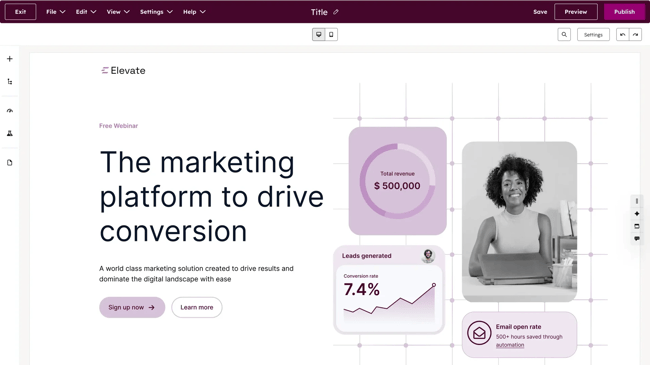
HubSpot Content Hub: Content Hub is a centralized platform where content strategy, creation, optimization, and performance measurement converge. Its topic cluster tool is particularly valuable for small businesses, enabling them to build authoritative content around core pillar pages supported by interconnected cluster content. This structured approach signals topical authority to search engines and is a reliable strategy for compounding organic traffic. Breeze, HubSpot’s AI layer within Content Hub, functions as a co-pilot for content creators. It assists in drafting and refining on-brand content, generating structured drafts, suggesting internal links, and reformatting content for readability. Breeze’s Brand Voice capability ensures AI-generated content adheres to defined tone and language parameters, maintaining brand consistency. Crucially, Content Hub’s integration with HubSpot’s CRM allows for performance tracking tied directly to leads, pipeline, and revenue, providing concrete justification for content investments.
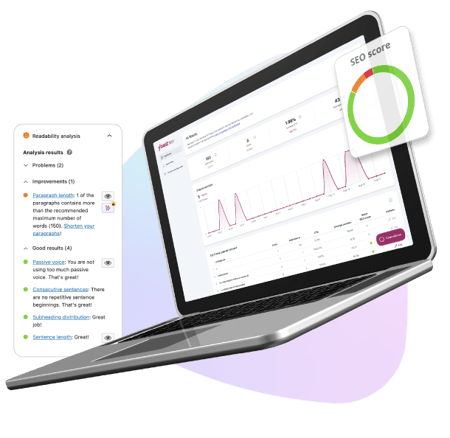
Yoast: For small businesses operating on WordPress, Yoast is a long-standing, low-friction SEO plugin. It integrates real-time, AI-assisted SEO recommendations directly into the WordPress editor, offering immediate guidance on focus keyphrases, readability, internal linking, and technical SEO elements like XML sitemaps. While its free version provides robust on-page analysis, premium versions offer more advanced features. It’s important to note that Yoast is primarily an optimization assistant, complementing comprehensive SEO platforms rather than replacing them for tasks like keyword research or competitor analysis.
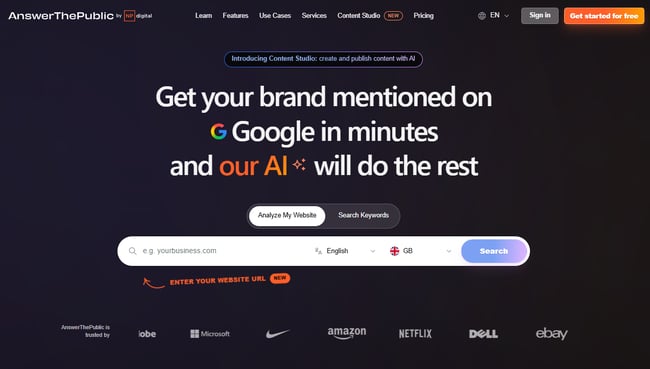
AnswerThePublic: This content ideation tool leverages Google autocomplete data to generate visual maps of questions, prepositions, comparisons, and related searches surrounding a given keyword or topic. For lean teams, it rapidly identifies what their audience is actively searching for, making content calendar planning significantly more efficient. The visual format is particularly useful for spotting content ideas that naturally lend themselves to a topic cluster structure. While excellent for ideation, it’s a complementary tool and not a replacement for full-fledged keyword research platforms.
Tools for Tracking Rankings and AI Visibility:
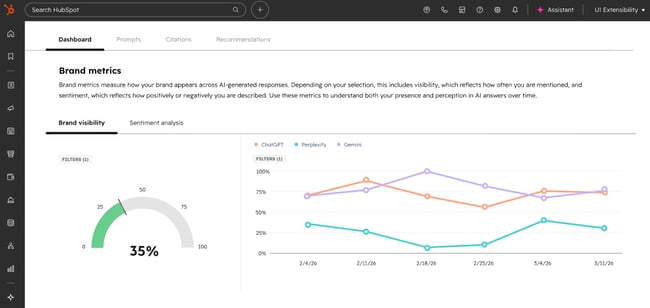
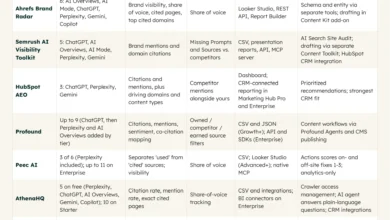
HubSpot AEO (Answer Engine Optimization): In the age of generative AI, tracking how a brand appears in AI-generated answers is as crucial as traditional keyword rankings. HubSpot AEO is designed to monitor brand visibility within AI answer engines like ChatGPT, Perplexity, and Gemini. Its unique CRM integration allows it to suggest prompts based on industry, competitors, and customer segments, providing contextualized insights. The platform tracks brand mentions, descriptions, competitor comparisons, and identifies visibility gaps, offering actionable steps for improvement. This allows marketers to move from identifying a visibility gap to publishing targeted content directly within the Marketing Hub.
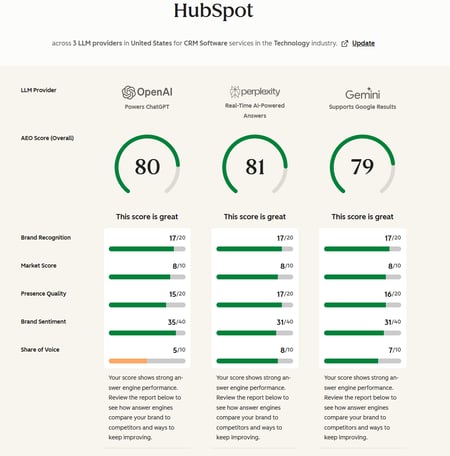
HubSpot AEO Grader: As a free, fast, and diagnostic tool, the HubSpot AEO Grader provides an instant snapshot of how AI engines perceive a brand. By inputting company name, location, industry, and product/service description, it analyzes AI visibility across ChatGPT, Perplexity, and Gemini, generating a composite score out of 100. This score is broken down across five dimensions: brand awareness, reputation, comparison, expertise, and accuracy. It serves as an excellent starting point for businesses to understand their current AI presence before considering ongoing monitoring solutions.
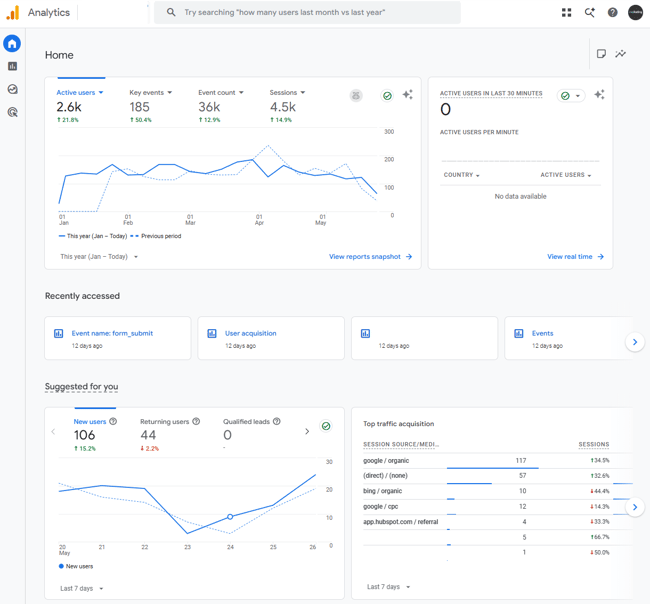
Google Analytics (GA4): Indispensable for any website, Google Analytics (GA4) forms the bedrock of a small business’s analytics setup. It is a free, Google-built tool that tracks traffic sources, visitor behavior, and conversion outcomes. GA4’s AI-powered insights, anomaly detection, and predictive metrics help small businesses understand user engagement and the impact of their digital efforts. Critically, it allows for segmenting audiences by AI referral source, enabling direct measurement of AI traffic’s impact on conversions.
Google Search Console (GSC): GSC is a non-negotiable tool for any website, providing direct data from Google itself. It tracks pre-arrival search behavior, showing exactly which queries generate impressions and clicks, indexed pages, technical issues flagged by Google, and Core Web Vitals performance. GSC uses AI to present these insights in plain English, making it accessible even for teams without deep SEO expertise. It is categorically more reliable than third-party rank trackers for understanding actual search performance.
The Future of Small Business SEO: An Integrated Approach
The question for small businesses is not whether to adopt AI SEO tools, but how to strategically integrate them. While individual tools offer specialized functions, the most compelling value proposition for lean teams often lies in unified platforms. HubSpot, for instance, provides an all-in-one solution, encompassing technical recommendations, on-page optimization, content strategy, performance tracking, and AI visibility monitoring through its Marketing Hub, Content Hub, and AEO features, all underpinned by its free CRM. This integrated approach replaces the need to cobble together functionalities from multiple disparate tools, streamlining workflows and providing a holistic view of marketing performance tied directly to revenue.
For small businesses, embracing AI in SEO is a journey of continuous learning and adaptation. The key is to select tools that offer high time-to-value, have manageable learning curves, fit within budget constraints, and integrate seamlessly. By prioritizing these factors, small businesses can effectively leverage AI to enhance their digital footprint, compete more effectively, and drive sustainable growth in an increasingly AI-driven digital landscape.