Apple Watch Series 12 Hands-On: Refining Health Intelligence and Durability Standards

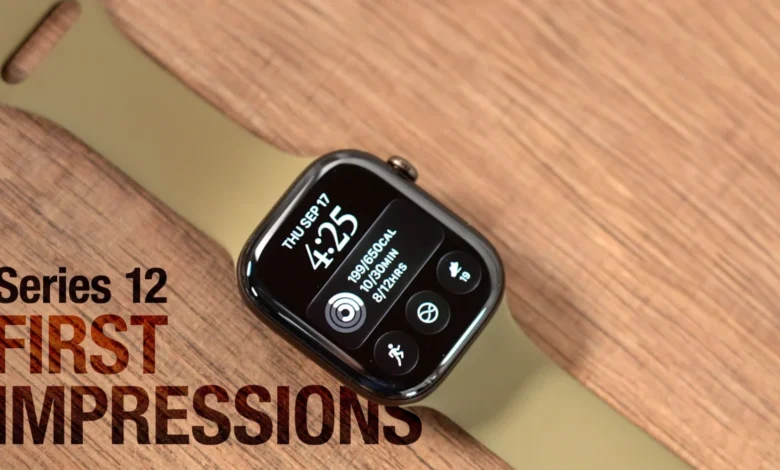
The Apple Watch Series 12 has officially arrived, marking the latest iteration in Cupertino’s decade-plus journey to dominate the wearable health technology sector. Following the highly anticipated "Surprise and Shine" event held on September 9, 2026, the device became available for purchase today, September 18, 2026. While the aesthetic silhouette of the Series 12 remains familiar to those who utilized the Series 11, the internal architecture has undergone a comprehensive overhaul designed to position the device as a diagnostic-grade health companion rather than a simple notification hub.
A Decade of Design Evolution
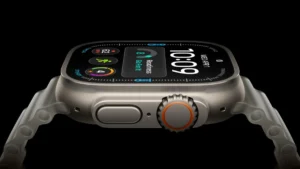
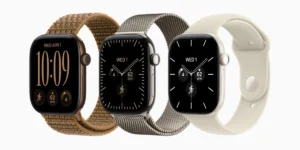
Since the launch of the original Apple Watch in 2015, Apple has consistently prioritized a consistent design language. The Series 12 maintains this trajectory, eschewing a radical chassis redesign in favor of material innovation and sensor density. The aluminum models, which serve as the entry point for the lineup, now introduce a nuanced color palette, including a light gold variant that distinguishes itself from the previous year’s rose gold, alongside dark bronze, classic black, and space gray.
For users seeking premium aesthetics, the expanded lineup includes ceramic models in pearl white and night blue, as well as polished titanium options in radiant gold and natural finishes. Perhaps the most significant structural improvement for the everyday user is the migration from Ion-X glass to Ceramic Shield 2 on all aluminum models. Internal stress testing suggests this transition provides a 60 percent increase in durability, a critical upgrade for a device intended for continuous wear in rugged environments.
The S11 Silicon and Health Sensing Architecture
At the core of the Series 12 is the S11 system-in-package (SiP). This new silicon architecture serves as the engine for the revamped Health Sensing System. By integrating a more powerful processor with advanced photoplethysmography (PPG) sensors, Apple has achieved a significant leap in data sampling density.
The device now performs heart rate monitoring at five-second intervals, a substantial increase over the previous generation’s sampling frequency. Furthermore, heart rate variability (HRV) is captured every five minutes. Despite this increase in data throughput, the Series 12 maintains its industry-standard "all-day" battery rating. This efficiency is achieved through the S11’s superior power management, which handles intensive sensor tasks without compromising the 18-hour usage cycle typically expected by the Apple ecosystem.
Charging speed has also seen a practical improvement. Utilizing the proprietary charger included in the box, users can achieve a rapid power-up, reaching 12 hours of operational time from a 15-minute charge. It is imperative to note that this functionality is hardware-locked to the new charging apparatus; legacy chargers will not support the accelerated power delivery protocol.
Introducing the Readiness Score
The most user-facing evolution in this year’s software update is the introduction of the "Readiness Score." This feature synthesizes a wealth of biometric data—including recent activity levels, overnight vitals, and sleep architecture—into a single, actionable metric.
The intent behind the Readiness Score is to guide users toward an optimal balance between exertion and recovery. By analyzing the interplay between strain and rest, the watch provides a recommendation on whether a user should engage in high-intensity training or prioritize recuperation. Consistent with Apple’s focus on data-driven health, the feature requires a seven-day calibration period to establish a personal baseline for each user, ensuring that the guidance is tailored to individual physiology rather than generic fitness standards.
The Road to the Series 12
The path to the Series 12 launch was paved with extensive speculation and high-level leaks. The "Surprise and Shine" event, which also featured the debut of the iPhone 18 Pro and the innovative foldable iPhone Duo, served as the formal unveiling of Apple’s autumn hardware suite.
Chronologically, the momentum for the Series 12 began building in late August, when industry analysts—most notably Mark Gurman—confirmed that Apple would forgo major exterior changes to focus on sensor accuracy and internal performance. While rumors of a Touch ID-integrated display on the wrist persisted for months, the final product reflects a strategic decision to prioritize sensor reliability and battery longevity over adding authentication hardware that might compromise space or thermal efficiency.
Future-Proofing with AI
A notable component of the Series 12 experience will be the integration of advanced artificial intelligence features, specifically "Live Rewind" and "Siri Recap." Powered by the S11 chip, these tools are designed to parse audio and data streams to provide users with summaries of meetings, conversations, and environmental triggers. While these features were highlighted during the keynote, they are slated for a post-launch software update later this year. This approach reflects Apple’s current strategy of shipping high-performance hardware and rolling out "Apple Intelligence" features as the software ecosystem matures.
Market Implications and Upgrade Strategy
For consumers currently using an Apple Watch Series 10 or 11, the Series 12 represents an incremental shift rather than a foundational disruption. The decision to upgrade for these users likely hinges on the necessity of the new Health Sensing System’s increased accuracy or the physical durability of the Ceramic Shield 2.
Conversely, for those utilizing devices older than three years—such as the Series 7, 8, or 9—the transition to the Series 12 is a significant leap. The accumulation of faster processing speeds, improved sensor fidelity, and enhanced charging capabilities makes the Series 12 a comprehensive upgrade that addresses the natural degradation of older hardware.
Starting at $399 for the 42mm and 46mm configurations, the Series 12 maintains Apple’s mid-to-high-tier pricing strategy. By keeping the price stable while improving the internal specifications, Apple is betting that consumers will continue to value the integration of health metrics into their daily workflows over the potential appeal of a radical aesthetic redesign.
Analyst Perspectives and Industry Context
Industry observers note that the wearable market has moved past the phase of "feature chasing" and into a phase of "clinical validation." By focusing on the precision of heart rate sensing and the predictive power of the Readiness Score, Apple is signaling its intent to compete more directly with dedicated recovery trackers like Oura or Whoop.
"Apple is moving toward becoming a primary node in a user’s personal health network," says an industry analyst. "By increasing sampling rates and adding intelligence-based summaries, they are ensuring the watch remains the indispensable center of the ecosystem, even as the hardware form factor reaches a point of maturity."
The success of the Series 12 will likely be measured by how many users adopt the Readiness Score and how effectively the S11 chip handles the upcoming AI software updates. With the device now in the hands of the public, the transition from marketing promises to real-world performance begins. The Series 12 is not an attempt to reinvent the wearable; it is an exercise in perfecting the foundation that Apple has built over the last decade, ensuring that for those who wear it, the data captured is as precise as it is actionable.