Blender 5.3 Brings Native Gaussian Splat Support to the Industry-Leading Open-Source 3D Suite

The landscape of 3D computer graphics and animation is once again shifting as the development team behind Blender prepares for the official release of Blender 5.3. Currently available in its alpha testing phase and slated for a stable public rollout in November, this forthcoming iteration of the universally acclaimed open-source software introduces a feature that has rapidly become the talk of the digital art community: native support for 3D Gaussian splatting. Long celebrated as a powerhouse for both 2D and 3D animation, Blender’s integration of this cutting-edge photorealistic capture technology marks a significant milestone in bridging the gap between traditional polygon modeling and neural rendering techniques.
Understanding 3D Gaussian Splatting and Its Industry Impact
To fully appreciate the weight of Blender 5.3’s new capability, one must examine the evolution of 3D asset creation over the past several years. Traditional 3D graphics rely heavily on rigid geometric structures composed of vertices, edges, polygons, and triangles. While robust, this workflow requires meticulous manual modeling, texturing, and rigging to replicate real-world objects or spaces, often demanding hours of labor from skilled artists.
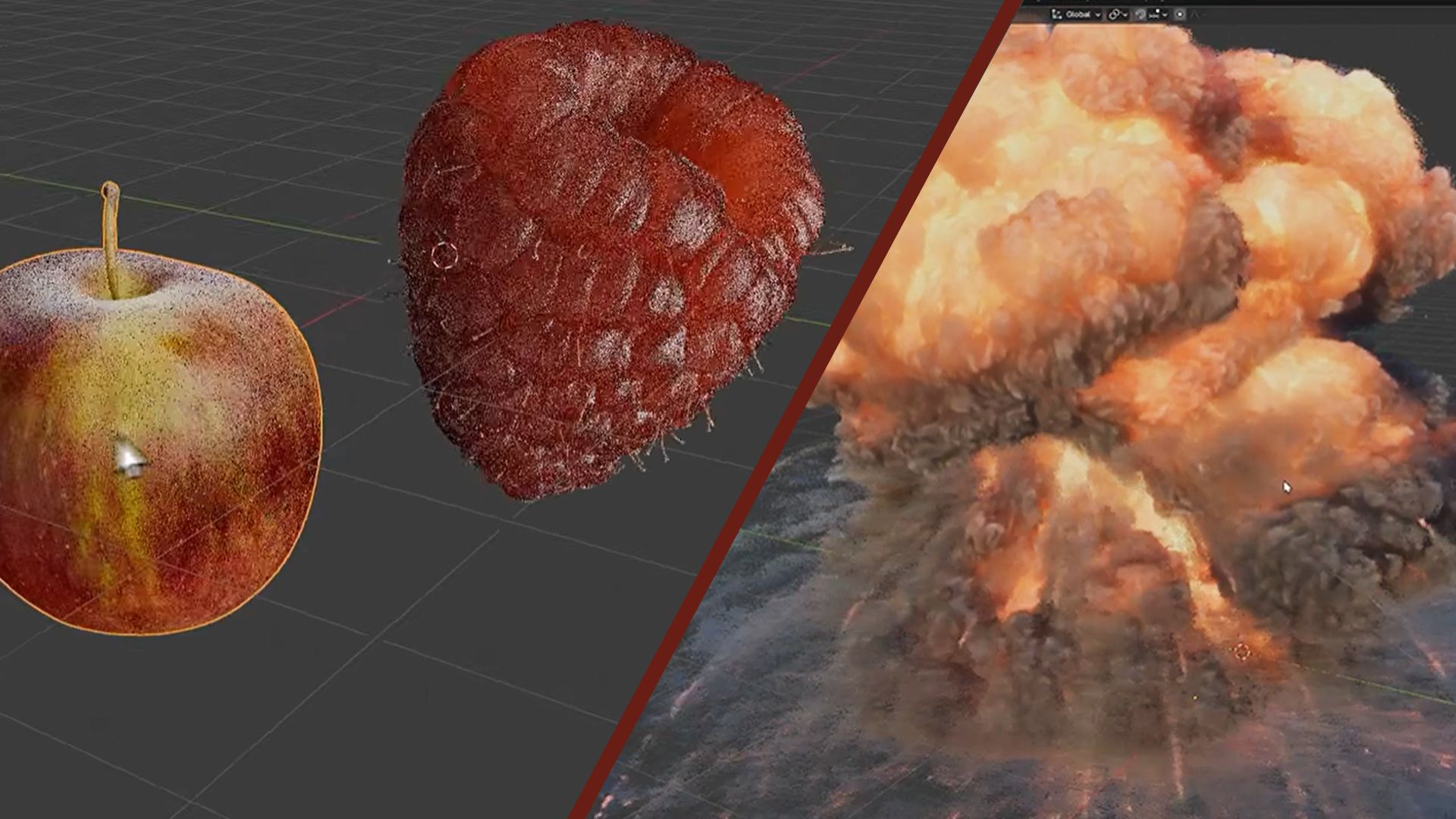
In contrast, 3D Gaussian splatting is an advanced rasterization technique that emerged as a breakthrough in computer vision and graphics research. By processing a collection of ordinary photographs or video frames captured from various angles, algorithms can reconstruct real-world environments and objects into interactive, hyper-realistic 3D scenes. Rather than using solid polygons, a Gaussian splat consists of millions of microscopic, overlapping, three-dimensional colored volumetric "blobs." Each of these points dynamically stores precise data regarding its spatial position, scale, orientation, color spectrum, and transparency.
The result is a lightweight yet breathtakingly detailed visual representation that can be rendered in real-time. Until now, incorporating these sophisticated assets into a standard digital content creation (DCC) pipeline required artists to rely on external, specialized software solutions—such as COLMAP for structure-from-motion processing or specialized utilities like Brush—and then manually convert and import the resulting point-cloud files (.ply format) into Blender using third-party add-ons.
Chronology and Integration Details in Blender 5.3
The integration of Gaussian splats into Blender has been an incremental process driven by the open-source community’s demand for modern rendering workflows. The preliminary groundwork began months ago as developers sought ways to handle the massive datasets generated by neural rendering pipelines.
With the arrival of the Blender 5.3 alpha build, the software now features native import capabilities for both .PLY and .SPZ file formats. While the current alpha implementation does not yet support exporting Gaussian splats directly from Blender, the ability to bring them natively into the workspace opens up immediate compositional possibilities. Once imported, users can render these complex neural scenes using Blender’s robust internal rendering engines, including the real-time viewport renderer Workbench, the real-time ray tracing engine EEVEE, and the physically based path tracer Cycles.
Official documentation from the Blender Foundation highlights that while the feature is a massive leap forward, it is currently debuting with several acknowledged limitations inherent to early-stage implementation. First, overall viewport and rendering performance is not yet optimized for massive, high-density splat files, meaning hardware demands will remain high. Second, the current rendering pipeline assumes an sRGB color space by default. Because Blender’s advanced engines like Cycles and EEVEE natively operate in a linear color space, specific areas characterized by low opacity or high radiance can occasionally render incorrectly or exhibit visual artifacts. Additionally, performing basic transformations—such as the "Apply Transform" command—fails to function correctly on Gaussian splat objects because the current system does not yet appropriately handle the newly introduced scale, rotation, and spherical harmonics attributes.
Wider Industry Context and Competitive Landscapes
The adoption of native Gaussian splats within Blender arrives at a time of intense competition and rapid technological evolution across the entire 3D software ecosystem. Major industry players and third-party developers alike are scrambling to accommodate neural rendering workflows as consumer demand for virtual production, architectural visualization, and digital archiving skyrockets.
For instance, rendering technology developers such as Chaos have recently introduced proprietary solutions to solve persistent pain points within the Gaussian splat ecosystem, most notably addressing the historical difficulty of relighting static splat scenes with dynamic scene lights. By bringing native support into a free, open-source giant like Blender, the barrier to entry for independent creators, students, and boutique studios is drastically lowered. Artists no longer need to depend on fragmented, paid ecosystem plug-ins to experiment with cutting-edge photogrammetry and neural capture formats.
Community Reception and Early Demonstrations
The announcement and subsequent alpha release of Blender 5.3 have generated substantial buzz across social media and developer forums. Well-known technical content creators, including the prominent 3D educator CGMatter, have published detailed video breakdowns demonstrating how the new import capabilities function in practice. Similarly, visual effects artists such as Jason Key have taken to platforms like X (formerly Twitter) to share experimental tests showcasing how seamlessly imported PLY files interact with Blender’s lighting and camera systems.
These early community tests emphasize the creative potential of the tool. Filmmakers and game developers can now quickly capture physical locations—ranging from historical architecture to intricate natural landscapes—using consumer smartphones or DSLR cameras, process the data into Gaussian splats, and drop them directly into Blender as background plates or environmental foundations for CGI integration.
Implications and Future Outlook for Digital Creators
The inclusion of native Gaussian splatting in Blender 5.3 signals a broader philosophical shift in the 3D industry: the merging of traditional polygonal geometry with data-driven neural rendering. As hardware capabilities continue to advance—necessitating high-performance setups such as specialized graphics cards and robust RAM configurations—the ability of open-source software to democratize these emerging technologies cannot be overstated.
As the Blender development team moves from the alpha phase toward the official stable release scheduled for November, community contributors are expected to address current performance bottlenecks, refine color-space conversions for Cycles and EEVEE, and eventually expand functionality to include native export tools. For now, Blender 5.3 solidifies its position not just as a cost-effective alternative to proprietary suites, but as a fearless innovator at the forefront of modern computer graphics.