Nimble SharePower 10,000mAh Power Bank Review: The Innovative Split-Battery Charger Solving Group Travel Power Struggles

The modern consumer travel landscape has evolved into an ecosystem heavily reliant on mobile technology, where a depleted smartphone battery can transform from a minor inconvenience into a logistical hazard. Navigating unfamiliar cities, accessing digital boarding passes, translating foreign languages, and coordinating meetups with travel companions all demand constant smartphone functionality. Consequently, the humble portable power bank has transitioned from a niche tech accessory into an indispensable travel essential. Yet, despite decades of advancement in lithium-ion battery chemistry, power delivery systems, and fast-charging protocols, one fundamental user experience flaw has persisted: the tethered dynamic of shared charging. Traditional multi-port power banks force companions to remain physically bound together by cables, anchoring one person to another whenever power must be distributed. Enter the Nimble SharePower 10,000mAh power bank, an ingenious accessory that redefines collaborative charging by literally splitting in half, offering a novel structural solution to a decades-old traveler’s dilemma.
Engineering and Design: How the SharePower Functions
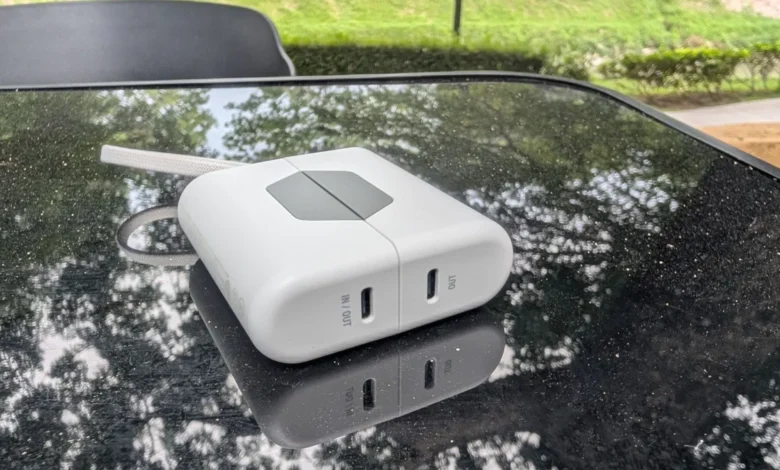
Priced at $79.95, the Nimble SharePower sits at a distinct premium within the 10,000mAh portable charger market, where standard multi-port alternatives frequently retail for half the cost. Available in four distinct colorways—black, pink, white, and blue—the device is remarkably compact when fully assembled in what Nimble designates as "Stack Mode." Measuring small enough to fit comfortably within the palm of the hand, the unit belies its dual-battery architecture through a sleek, minimalist exterior.
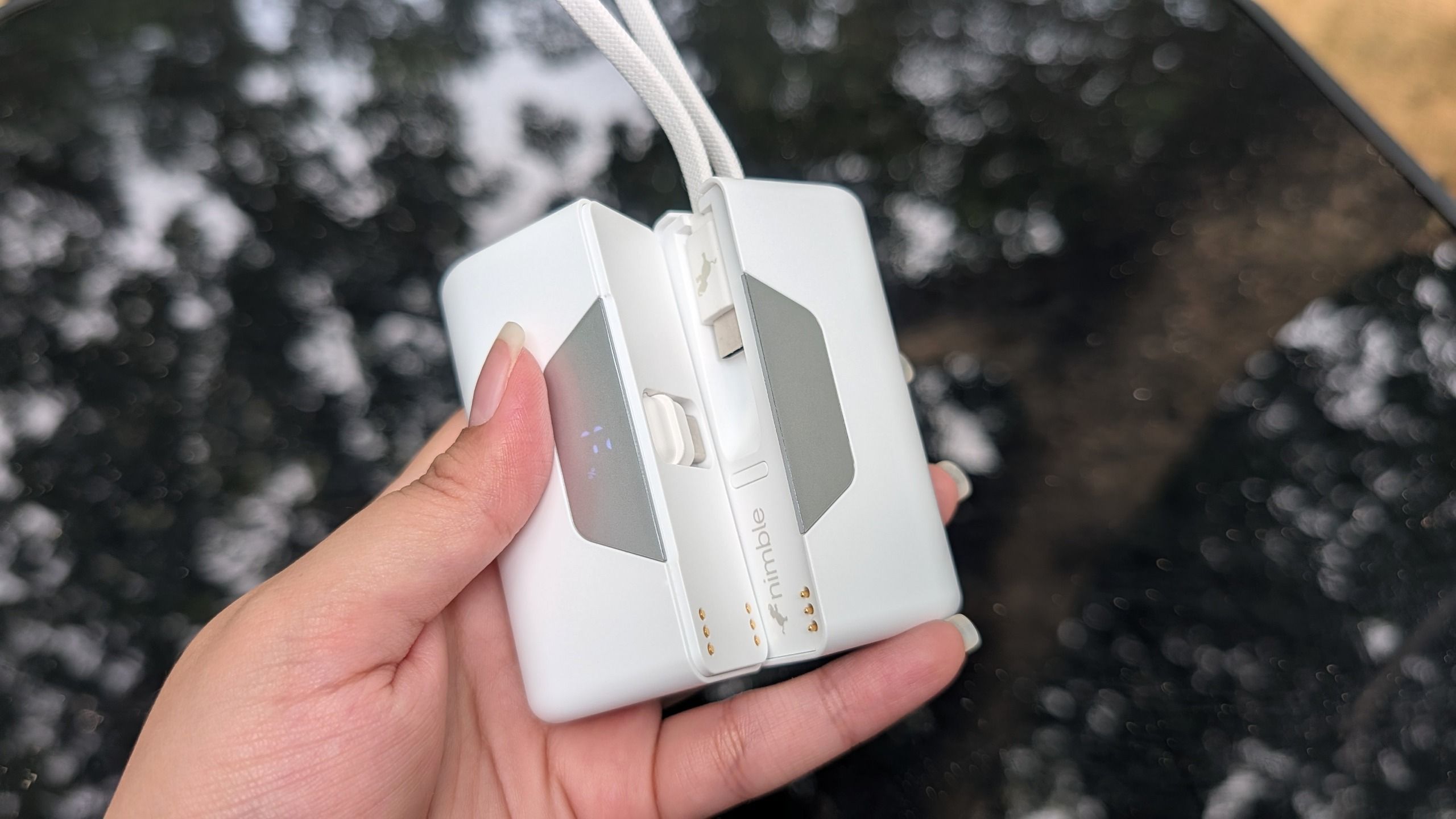
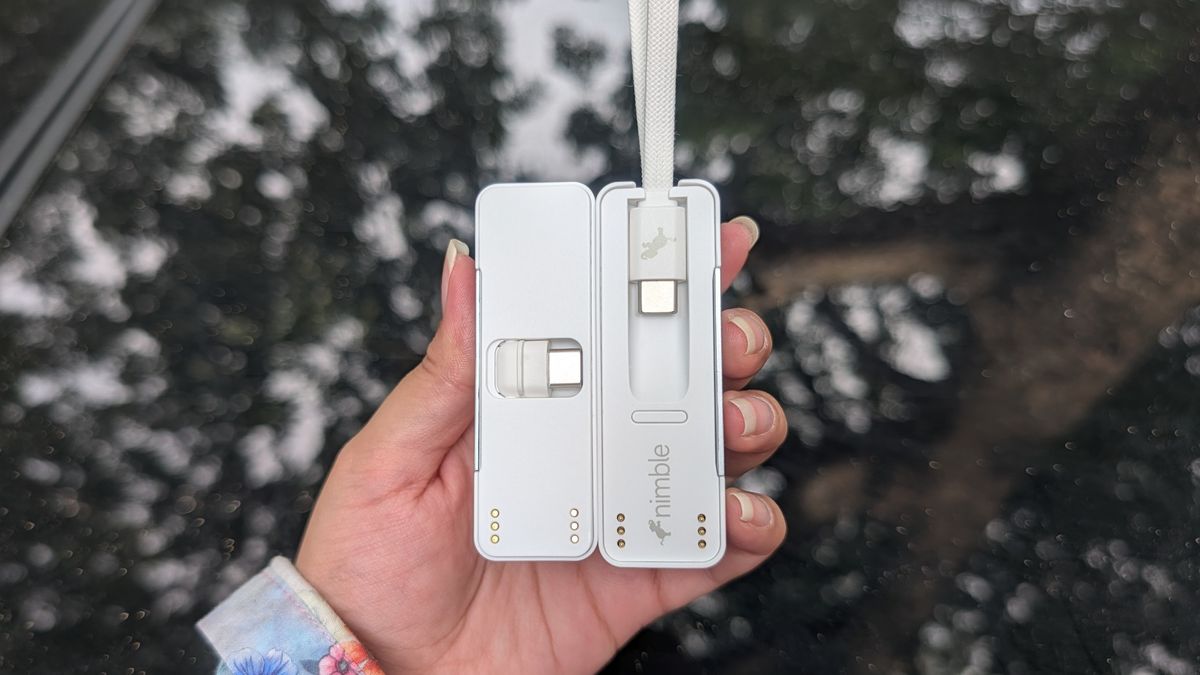
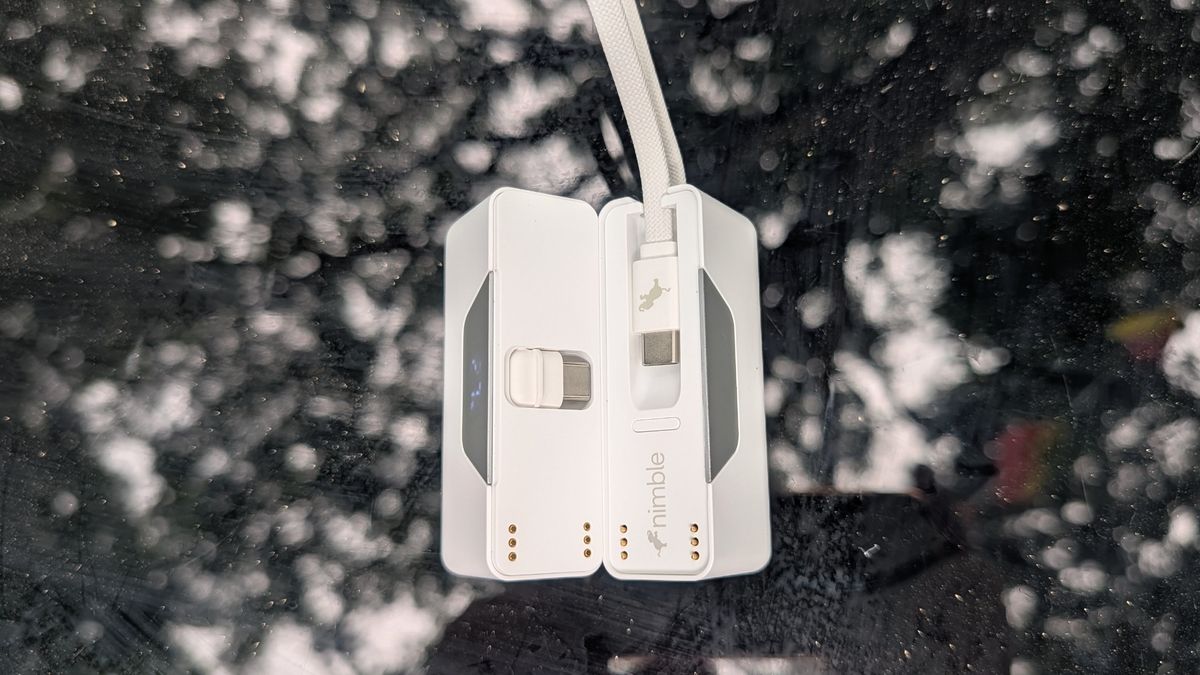
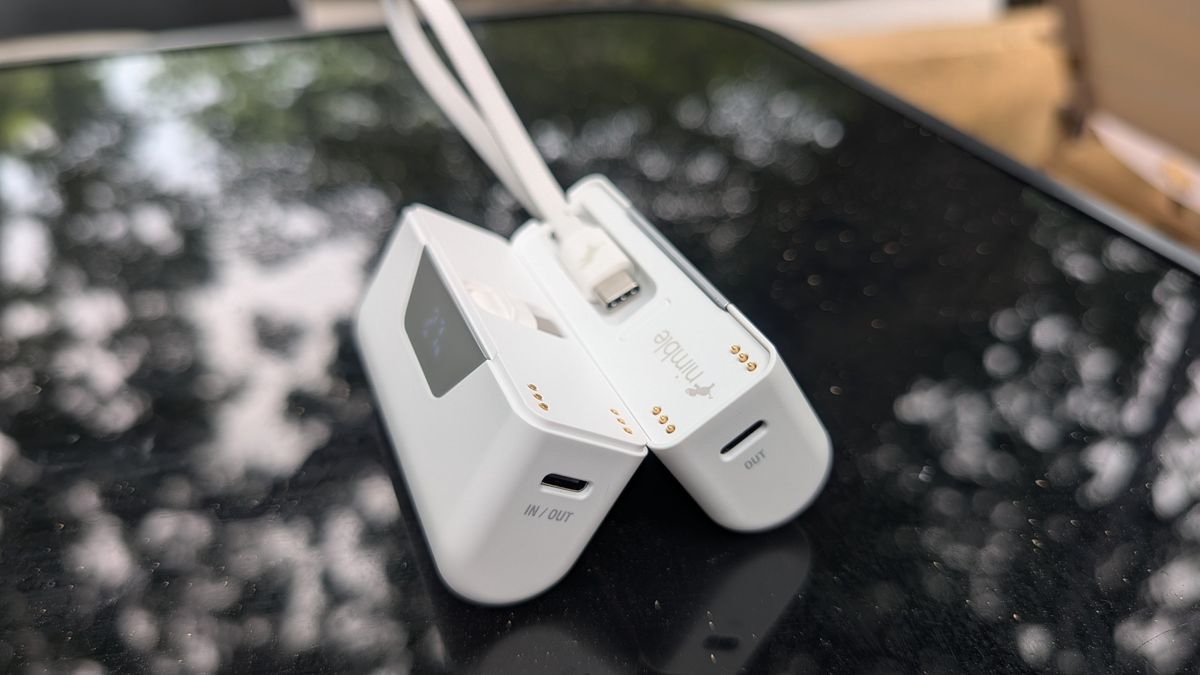
The core innovation of the SharePower lies in its magnetic retention system. Powerful internal rare-earth magnets hold the two discrete 5,000mAh halves securely together during transport and single-unit usage. When separated into "Share Mode," the unit divides into two independent, fully functional 5,000mAh portable chargers. Each half is thoughtfully equipped with its own integrated power delivery mechanism. One half features a built-in, folded USB-C connector hidden inside the casing, accompanied by a digital display screen that provides precise real-time battery percentage readouts. The opposing half incorporates a flexible USB-C cable tucked neatly along the chassis, functioning ingeniously as a carrying lanyard when the device is locked in its stacked configuration.
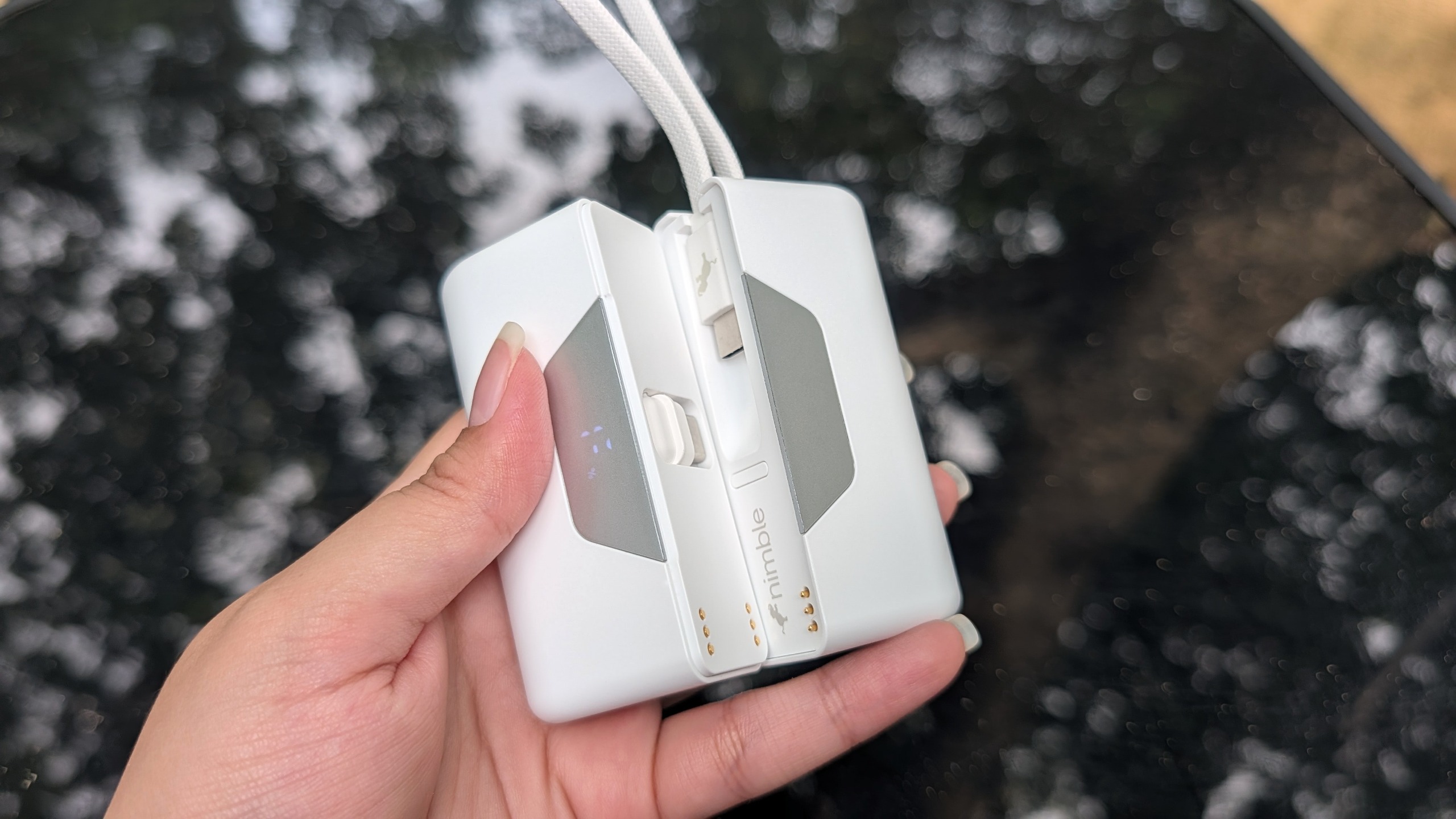
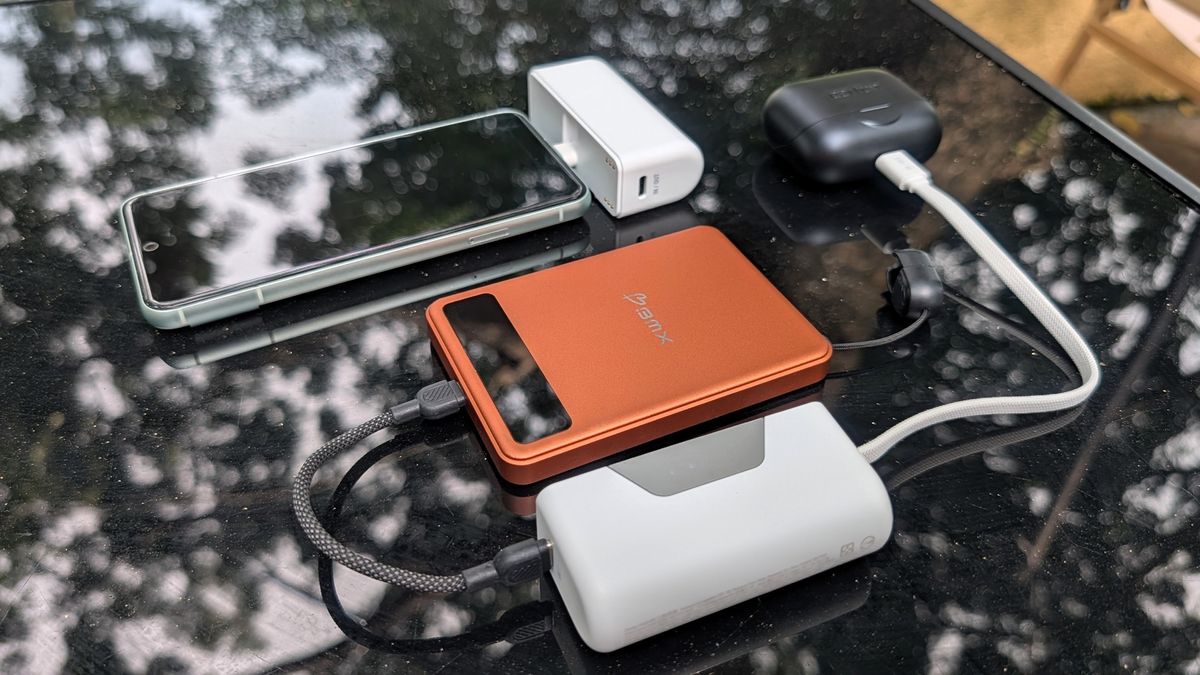
Furthermore, engineers did not sacrifice port versatility for the sake of the split mechanism. Each individual 5,000mAh half includes an additional auxiliary USB-C port. This architectural choice means that when the device is completely separated, users can theoretically connect up to four devices simultaneously across both halves—two via the integrated cables and two via the standalone ports. In terms of power output, the unified device supports a total of 35W Power Delivery (PD) wired charging, while each isolated half delivers up to 20W PD independently in Share Mode, ensuring that connected smartphones and accessories charge rapidly even when the battery pack is divided.
The Evolution of Portable Power: Background and Market Context
To fully appreciate the design philosophy behind the Nimble SharePower, it is necessary to examine the broader trajectory of the portable charger market over the past decade. The proliferation of high-capacity lithium-ion and lithium-polymer cells initially focused on raw capacity scaling, transitioning from modest 2,000mAh lipstick chargers to massive 20,000mAh and 30,000mAh bricks capable of charging laptops multiple times. As internal smartphone battery capacities plateaued around 4,000mAh to 5,000mAh, the 10,000mAh power bank emerged as the industry sweet spot—offering roughly one-and-a-half to two full smartphone charges while maintaining pocket-friendly dimensions.

Concurrently, manufacturers began experimenting with integrated cables to eliminate the friction of carrying loose wires. Brands like Anker, Belkin, and various direct-to-consumer tech startups introduced models featuring built-in Lightning, Micro-USB, and USB-C cords. However, none of these iterations solved the proximity problem inherent to group sharing. If two friends traveled together and only brought one power bank, they had to sit side-by-side on a train, stand shoulder-to-shoulder at an airport gate, or surrender one phone to the owner of the charger while it replenished its energy reserves.
Nimble, a brand recognized within the sustainability-focused tech accessory sector for utilizing recycled plastics and eco-conscious packaging, identified this behavioral friction point. By conceptualizing a modular battery architecture, the company addressed not just a technical requirement—power delivery—but a sociological one: the human desire for independence while utilizing shared resources.
Real-World Implications and Group Travel Scenarios
The practical applications of a modular, divisible power bank become immediately apparent during group excursions, family vacations, and multi-day music festivals. Consider a standard travel scenario: a group of friends is exploring a dense urban environment like Tokyo or Rome. Digital maps are draining phone batteries rapidly, and the group decides to split up momentarily—one person heads to hotel reception to check in while another visits a nearby café to secure a table, or members join separate lines at a museum.
With a traditional power bank, sharing power meant forfeiting mobility. One person had to remain stationary or hand their device over, introducing security risks and logistical bottlenecks. The Nimble SharePower effectively eliminates this restriction. By detaching one 5,000mAh half and handing it to a companion, both individuals retain complete physical independence. They can walk away, navigate separate transit routes, or handle distinct errands simultaneously without sacrificing access to their navigational tools, digital wallets, or communication channels.
This capability is particularly valuable for designated family "tech wranglers"—the individual on every group trip who inevitably packs all the cables, wall adapters, and battery banks because their traveling companions consistently forget their own gear. Instead of enduring the frustration of a shared brick being monopolized or finding oneself tethered to a forgetful family member for hours, the user can retain half of the total capacity for personal use while graciously loaning the detachable twin unit.
Financial Considerations and Market Analysis
At $79.95, the Nimble SharePower requires a deliberate financial investment. In the current consumer electronics landscape, a standard unbranded or budget-tier 10,000mAh power bank can often be acquired for $20 to $30, while premium offerings from established manufacturers generally hover around $40 to $50. Purchasing the SharePower means paying a significant markup for its unique mechanical engineering and dual-battery management systems.
Industry analysts note that premium pricing models for novel form factors often target early adopters, frequent travelers, and tech enthusiasts who prioritize convenience and innovative design over pure cost efficiency. While budget-conscious consumers may balk at the price-to-capacity ratio—paying nearly $80 for a total of 10,000mAh—the device’s utility proposition transcends raw metrics. It is less a standard battery pack and more a specialized tool designed to solve a very specific interpersonal friction point during travel.
Furthermore, the integration of dual independent charging circuits, magnetic locking mechanisms, built-in retractable cables, digital LED readouts, and independent power management chips for each half justifies the manufacturing complexity reflected in the retail price. Building two functioning, safe, and regulated power banks that snap together seamlessly into a unified housing requires rigorous engineering to prevent electrical faults and ensure thermal management standards are met.
Future Outlook and Industry Impact
As the consumer electronics market continues to mature, innovation increasingly relies on reimagining how traditional accessories interact with human behavior. The Nimble SharePower demonstrates that even heavily commoditized hardware categories like portable chargers still harbor room for creative disruption.
While it remains to be seen whether competitor brands will adopt modular, divisible battery architectures in future product lines, the positive reception of the SharePower among mobile tech reviewers suggests a clear market appetite for thoughtfully designed accessories that prioritize user mobility. For group travelers, festival-goers, and families seeking a foolproof way to manage collective device usage without sacrificing personal freedom, the Nimble SharePower offers a compelling, albeit premium, solution to an age-old logistical annoyance.