Maxon Empowers Cinema 4D with Native Support for Third-Party AI Chatbots Like ChatGPT and Claude via Model Context Protocol


The landscape of 3D modeling, animation, and digital content creation is undergoing a paradigm shift as software developers increasingly integrate artificial intelligence to streamline repetitive workflows and augment human creativity. Following Adobe’s deployment of its proprietary AI assistant within Photoshop earlier this year, Maxon has announced a major update for Cinema 4D that introduces native support for third-party AI chatbots, including Anthropic’s Claude, OpenAI’s ChatGPT, and various Codex-enabled assistants.
Rather than developing a closed, proprietary AI assistant ecosystem, Maxon has chosen to implement a built-in Model Context Protocol (MCP) server. This architectural decision enables digital artists, animators, and visual effects professionals to direct powerful external language models using natural language instructions directly within their localized Cinema 4D environments. Available starting today for users running Cinema 4D version 2026.4 or later on Windows and macOS, the new capability aims to eradicate the friction of procedural, iterative, and administrative tasks without ever forcing creators to abandon their native software interfaces.
Unlocking Procedural Automation Through Natural Language
For decades, digital content creation suites like Cinema 4D have offered immense power coupled with steep learning curves and heavy procedural overhead. Artists frequently spend hours managing tedious administrative tasks—such as organizing outliner hierarchies, naming assets, building data-driven material variations, setting up complex render passes, and configuring basic scene structures.
With the integration of the new MCP server, Cinema 4D bridges the gap between conversational AI and high-end 3D production. By connecting tools like ChatGPT or Claude to the software, artists can issue plain-text prompts to accomplish multi-step technical chores. Maxon has highlighted several key use cases where the integration shines, including:

- Scene Organization: Automatically structuring messy, imported CAD or DCC assets into clean, logical, and consistent outliner hierarchies.
- Variation Generation: Instantly creating diverse object configurations and material shaders based on external data sources, such as automated batch building from CSV data files.
- Pipeline Preparation: Setting up complex multipass render structures and automating render queue job deployments.
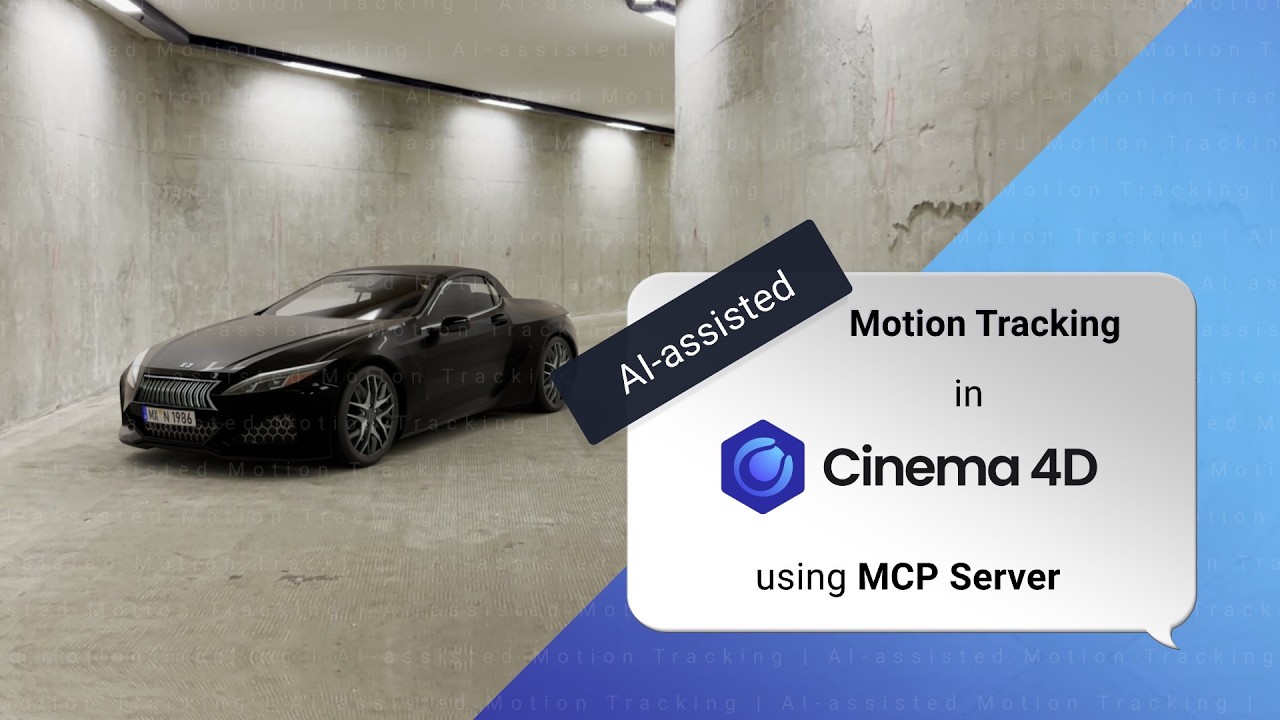
- Foundational 3D Tasks: Assisting with basic 3D camera tracking, automated UV mapping setup, foundational rigging, and procedural animation blocking.
The inclusion of these capabilities addresses a long-standing pain point in the VFX and design industries: the cognitive switch required to pivot between creative direction and technical execution. By delegating iterative housekeeping to large language models via natural language, technical directors and solo artists alike can maintain their creative momentum.
Chronology of Innovation: Maxon’s Strategic AI Evolution
Maxon’s approach to artificial intelligence has been methodical, prioritizing flexibility and integration over forced platform lock-in. The introduction of the MCP server builds upon a broader roadmap of AI implementation deployed by the company over the past twenty-four months.
Earlier in the development cycle, Maxon signaled its intent to embrace emerging technologies by partnering with hardware and software giants to bring cutting-edge solutions to its user base. A notable milestone occurred when the company announced the impending arrival of Cinema 4D on iPad, which integrated Tencent’s HY 3D AI engine to allow users to generate initial 3D models rapidly from scratch.
The launch of the Model Context Protocol server in Cinema 4D 2026.4 represents the next logical step in this evolution. Instead of relying solely on built-in generative engines that create flat assets, Maxon has chosen to give external AI models direct, secure access to the application’s underlying API. This ensures that the generated outcomes are not foreign, uneditable blobs of geometry, but rather native Cinema 4D scene data constructed using the software’s native parameters.
Furthermore, Maxon has confirmed that the ecosystem will continue to expand before the close of the calendar year, with a dedicated, feature-rich Cinema 4D iPad application slated for release in the coming months, further blurring the lines between desktop-class simulation power and mobile flexibility.
Security, Privacy, and Maintaining Creative Control
One of the most sensitive aspects of integrating artificial intelligence into professional creative pipelines is data security and control. Major design studios, visual effects houses, and enterprise organizations operate under strict confidentiality agreements, making cloud-reliant AI tools a potential liability if not managed correctly.
Maxon has structured its MCP implementation with robust safeguards designed to put the artist and studio firmly in the driver’s seat. Crucially, the MCP server is disabled by default, requiring users to explicitly and proactively opt-in to activate the functionality.
To prevent unauthorized access or accidental data leaks, the server is protected by a mandatory MCP adapter access token. Additionally, the software features granular permission controls: artists can dictate precisely which groups of Cinema 4D tools their chosen chatbot is permitted to interact with, minimizing the surface area for errors or unintended scene modifications.
Operational transparency is another cornerstone of Maxon’s security design. Because all actions are executed directly through Cinema 4D’s native API on the local machine rather than processed as an external black-box export, every single MCP-driven change is meticulously registered in the software’s standard undo history. If an AI assistant executes a command that yields an undesirable result, the user can simply step backward through the history tree just as they would with any manual edit. Additionally, all commands issued by the AI are permanently written to a localized audit log, giving technical directors and pipeline supervisors absolute visibility into the exact steps taken by the assistant.
Broader Industry Implications and Market Analysis
Maxon’s adoption of the Model Context Protocol reflects a wider maturation of AI integration within the professional software sector. While early waves of generative AI focused heavily on standalone text-to-image or text-to-3D generators that often produced unpredictable or low-resolution outputs, the current trend emphasizes workflow orchestration and software control.
By leveraging existing, highly capable models like Claude and ChatGPT rather than building an isolated proprietary LLM, Maxon bypasses the immense computational training costs while offering its users access to the cutting edge of natural language understanding. This model-agnostic approach allows artists to choose the assistant that best fits their personal workflow preferences or studio compliance mandates.
Industry analysts suggest that this type of utility-focused AI integration will become a baseline expectation for professional creative suites moving forward. As profit margins tighten and project turnaround times accelerate, tools that can effectively automate the tedious, non-creative administrative layers of 3D production—such as asset naming, scene cleanup, and batch rendering preparation—will deliver measurable productivity gains.
However, the success of such integrations will ultimately hinge on user trust. By prioritizing local execution, comprehensive audit logging, and granular permission controls, Maxon has established a blueprint for how heavy industrial software can embrace modern AI without compromising the security, precision, and artistic intent demanded by high-end professional pipelines.
For existing subscribers and professionals eager to test the capabilities of the new system, the MCP server requires no additional software installations and is fully integrated into the Cinema 4D 2026.4 update. Comprehensive documentation, video tutorials demonstrating motion tracking and data-driven scene variation automation, and technical setup guides are currently available via the official Maxon website.