Bridging the Accessibility Gap: How AudioEye Combines AI and Human Expertise to Make the Digital World Usable for Everyone

The landscape of the internet is undergoing a profound transformation, driven not only by rapid technological advancements but also by an increasingly urgent reckoning regarding digital inclusivity. For over a decade, AudioEye, a prominent digital accessibility platform, has positioned itself at the center of this movement. Trusted by more than 127,000 organizations globally, the company aims to resolve a fundamental imbalance in the modern digital ecosystem: while the web has become indispensable for daily life, commerce, and communication, it remains largely unusable for a significant portion of the global population.
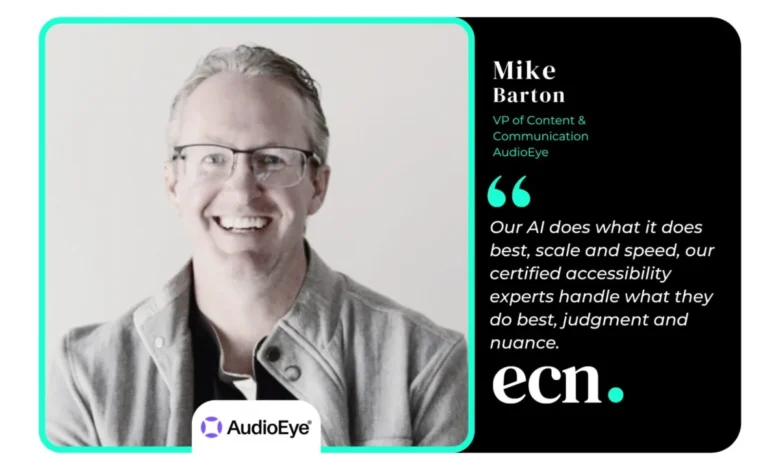
According to recent industry data, approximately 1.3 billion people worldwide live with some form of disability. For these individuals, standard websites and applications often present insurmountable barriers, ranging from missing alternative text on images to improperly structured headings that disorient screen readers. In an interview detailing the mission, evolution, and strategic outlook of AudioEye, Mike Barton, Vice President of Content Marketing and Communications, sheds light on how the company leverages a hybrid model of artificial intelligence and human expertise to tackle these pervasive challenges. As legal pressures intensify globally and the economic stakes reach historic proportions, the imperative for universal digital access has shifted from a peripheral concern to a core business priority.
The Evolution of Digital Accessibility: From Niche Compliance to Global Imperative
When AudioEye was founded nearly twenty years ago, digital accessibility was largely viewed by mainstream corporations as a niche administrative concern or an afterthought addressed only to satisfy minimum legal thresholds. During the early days of the commercial web, companies routinely treated accessibility as a static checkbox rather than an ongoing operational commitment.
However, the operating environment has changed dramatically over the last decade. Several converging forces have accelerated the urgency of the issue. First, legal actions under statutes such as the Americans with Disabilities Act (ADA) in the United States have surged, with digital accessibility lawsuits doubling over the past five years. Second, regulatory frameworks have expanded internationally. The implementation of landmark legislation like the European Accessibility Act (EAA) has established rigorous cross-border standards, compelling multinational corporations and local enterprises alike to ensure their digital properties are fully inclusive.
Concurrently, the rapid proliferation of artificial intelligence has reshaped both the architecture of modern websites and the methodologies users employ to navigate them. In response to these sweeping changes, AudioEye has continuously refined its technological infrastructure. The company has maintained a dual commitment: scaling detection and remediation through advanced automation while anchoring its quality assurance in the lived experiences and rigorous judgment of certified human accessibility experts.
Defining Digital Accessibility and the Modern Business Case
To understand the gravity of the current regulatory and economic landscape, one must first examine the core definition of digital accessibility. It encompasses the intentional design and engineering of websites, mobile applications, and digital documents so that individuals with disabilities can perceive, understand, navigate, and interact with them just as effectively as users without disabilities. This includes individuals with visual, auditory, physical, speech, cognitive, and neurological impairments who frequently rely on specialized assistive technologies, such as screen readers, voice recognition software, and keyboard-only navigation setups.
For contemporary enterprises, failing to prioritize accessibility carries severe multifaceted consequences encompassing legal liabilities, brand reputation damage, and missed revenue opportunities. Market research highlights that individuals with disabilities represent an estimated $18 trillion in global disposable spending power. Furthermore, consumer behavior studies indicate that approximately 70 to 83 percent of users with disabilities will immediately abandon a non-accessible website and direct their business toward competitors. Rather than returning later, these potential customers are permanently lost to companies that fail to optimize their user interfaces.
On the financial and legal fronts, the risks are equally stark. E-commerce platforms remain the primary targets of litigation, with approximately 78 percent of all digital accessibility lawsuits directed at online retailers. Other highly regulated and consumer-facing sectors, including healthcare, financial services, travel, and government entities, face heightened exposure to regulatory penalties and demand letters. Industry analysts note that organizations treating accessibility merely as a temporary fix or a superficial widget are increasingly vulnerable, whereas those integrating accessibility into their foundational growth strategies are outperforming peers.
The Hybrid Operational Model: Automation Meets Human Expertise
The technological core of AudioEye relies on a sophisticated hybrid architecture designed to address the sheer volume of modern web infrastructure while accounting for the nuanced, contextual demands of human interaction. Deploying the platform is streamlined for digital teams; a single line of JavaScript—implemented similarly to standard cookie banners or live chat widgets—integrates the solution across diverse content management systems, custom builds, and headless architectures.
Once deployed, AudioEye’s proprietary AI engine continuously scans rendered web pages against the internationally recognized Web Content Accessibility Guidelines (WCAG). Independent research conducted by Adience indicates that this automated scanning detects up to 2.5 times more accessibility issues than competing market solutions. Approximately half of these identified barriers are resolved automatically and in real time by the software.
However, AudioEye emphasizes that automation alone is insufficient for comprehensive compliance and usability. Complex accessibility barriers frequently reside in gray areas requiring deep contextual understanding—such as the intended function of a dynamic button, the semantic meaning of a complex data table, or the logical flow of a multi-step user checkout process. To bridge this gap, the platform incorporates manual audits conducted by certified accessibility specialists, many of whom live with disabilities. These experts identify vulnerabilities invisible to algorithms, develop custom code fixes, and deploy them directly through the platform without requiring internal engineering teams to merge extensive pull requests. Consequently, roughly 97 percent of all identified issues are resolved before placing a burden on corporate development staffs, with the remaining minor fraction addressed via detailed source-level feedback reports.
Navigating Legal Compliance and Risk Mitigation
Regulatory compliance remains a primary catalyst for corporate investment in digital accessibility. AudioEye’s methodology approaches compliance not as the endpoint of a periodic, one-time audit, but as the natural byproduct of continuous, integrated remediation. By combining broad automated detection with rigorous manual validation by certified auditors, the platform secures comprehensive coverage across WCAG A and AA success criteria, aligning digital properties with the ADA, the EAA, and emerging international mandates.
In instances where organizations receive legal claims or demand letters, AudioEye provides specialized support. The company’s legal support teams validate allegations, generate expert forensic reports, and collaborate directly with client legal counsel. Company executives highlight that AudioEye maintains a documented record of courtroom dismissals and offers structural legal protection guarantees designed to provide reliable indemnification compared to traditional automation-only widgets or traditional, labor-intensive consulting firms.
The Future of the Inclusive Web and AI Integration
Looking toward the horizon, industry leaders at AudioEye are monitoring two major macroeconomic and technological trends that will define the next decade of digital accessibility. The first trend is the globalization of regulation. With the European Accessibility Act fully in force and additional international jurisdictions drafting stringent digital rights laws, businesses can no longer rely on localized compliance strategies limited to domestic borders.
The second trend involves the dual-edged impact of artificial intelligence. While AI-driven automation allows platforms like AudioEye to scale detection and remediation faster than ever before, the broader proliferation of general-purpose AI coding tools risks generating an influx of inaccessible digital content at unprecedented speeds. Because these foundational models are frequently trained on historical codebases that lacked accessibility considerations, the risk of creating a more exclusionary internet is substantial.
Simultaneously, AI agents are increasingly acting as autonomous navigators on behalf of users, relying directly on website accessibility trees to parse information, compare products, and complete transactions. As AI transforms the fundamental nature of online discovery, digital accessibility and AI optimization are converging into a single discipline. Ensuring that the digital economy remains universally open, equitable, and navigable for all users remains the defining challenge and mission for the industry as it scales into the future.