Beyond Opening Files: Mastering Python Context Managers for Robust Software Engineering

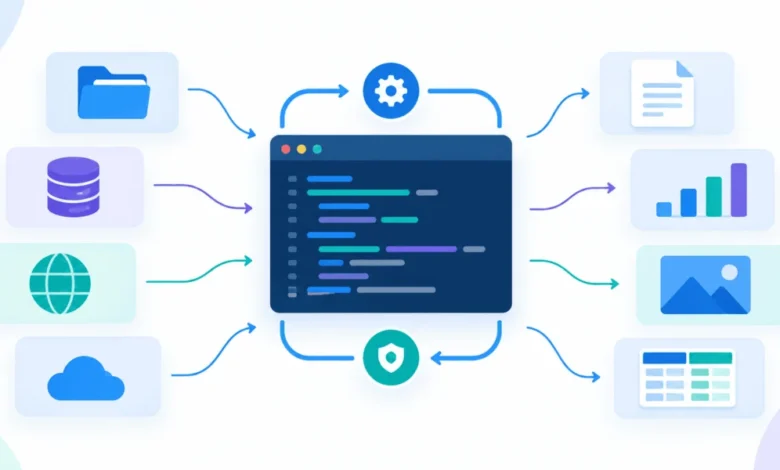
Python context managers are frequently introduced to novices as a convenient shorthand for file handling, typically through the ubiquitous with open(path) as f syntax. While this remains their most common application, it represents only a fraction of their architectural utility. In modern software engineering, particularly within high-stakes environments like machine learning pipelines and large-scale data processing, context managers serve as a critical pattern for resource lifecycle management. By encapsulating setup and teardown logic within a defined scope, developers can ensure that system states—ranging from memory allocations and environment variables to hardware lock acquisitions—are handled with absolute reliability, regardless of whether a code block executes successfully or terminates due to an unhandled exception.
The necessity for robust lifecycle management becomes apparent when examining the fragility of procedural scripts. In a standard evaluation script for a machine learning model, a developer might initialize a temporary scratch directory, modify global environment variables, suppress verbose logging output, and start a performance timer. If the execution proceeds linearly, these actions are reversed at the end of the script. However, if a malformed data record triggers a runtime exception halfway through the process, the cleanup code at the bottom of the file is bypassed. This failure mode results in “zombie” resources: orphaned 3 GB temporary directories, stale environment configurations that break subsequent processes, and suppressed loggers that mask critical errors for the next user.
The Architectural Logic of the With Statement
At its core, the Python with statement is a boundary-definition mechanism rather than a mere file-management tool. The Python data model defines a specific sequence for this operation: the interpreter evaluates the context expression to generate a manager, invokes its __enter__ method, binds the resulting object to an optional target variable, executes the enclosed block, and finally triggers __exit__.
The critical strength of this protocol lies in the __exit__ method’s guarantee of execution. This method is invoked during normal program flow, upon explicit return statements within the block, and—most importantly—during stack unwinding caused by exceptions. By centralizing cleanup logic within __exit__, developers move the responsibility of state restoration from the programmer’s manual maintenance to the language’s runtime guarantees.
A frequent pitfall for engineers involves the return value of __exit__. If the method returns a truthy value, it signals to the Python interpreter that an exception occurred within the block but has been “handled” and should be suppressed. Returning a falsy value, or allowing the method to finish without an explicit return, ensures that the exception propagates to the caller. For production-grade systems, the latter is almost always preferred, as silent exception suppression can lead to catastrophic failures in data pipelines where missing results go unnoticed.
Building Resilient Instrumentation with Custom Classes
When a context manager requires state that must persist or be inspected after the block finishes, implementing a custom class is the most effective approach. Consider the design of a performance timer. By bracketing a block of code with a class that records the system time via time.perf_counter upon entry and exit, the developer creates a reusable instrumentation tool that is immune to early exits.
In a production environment, this class can be enhanced to log the success or failure status of the block by analyzing the exc_type argument passed to __exit__. By doing so, the developer can generate metrics such as “feature_extraction: 12.418s (failed)” even when the process crashes. This level of granular visibility is invaluable for post-mortem debugging in distributed training jobs where identifying the specific stage of a pipeline that triggered a failure is otherwise a manual, time-consuming investigation.
Streamlining with @contextmanager
For simpler scenarios where the context manager does not need to store persistent state, the contextlib.contextmanager decorator provides a more ergonomic alternative to defining full classes. This approach utilizes a generator function to define the boundary. Code preceding the yield statement acts as the setup, while code following it (ideally placed within a finally block) serves as the teardown.
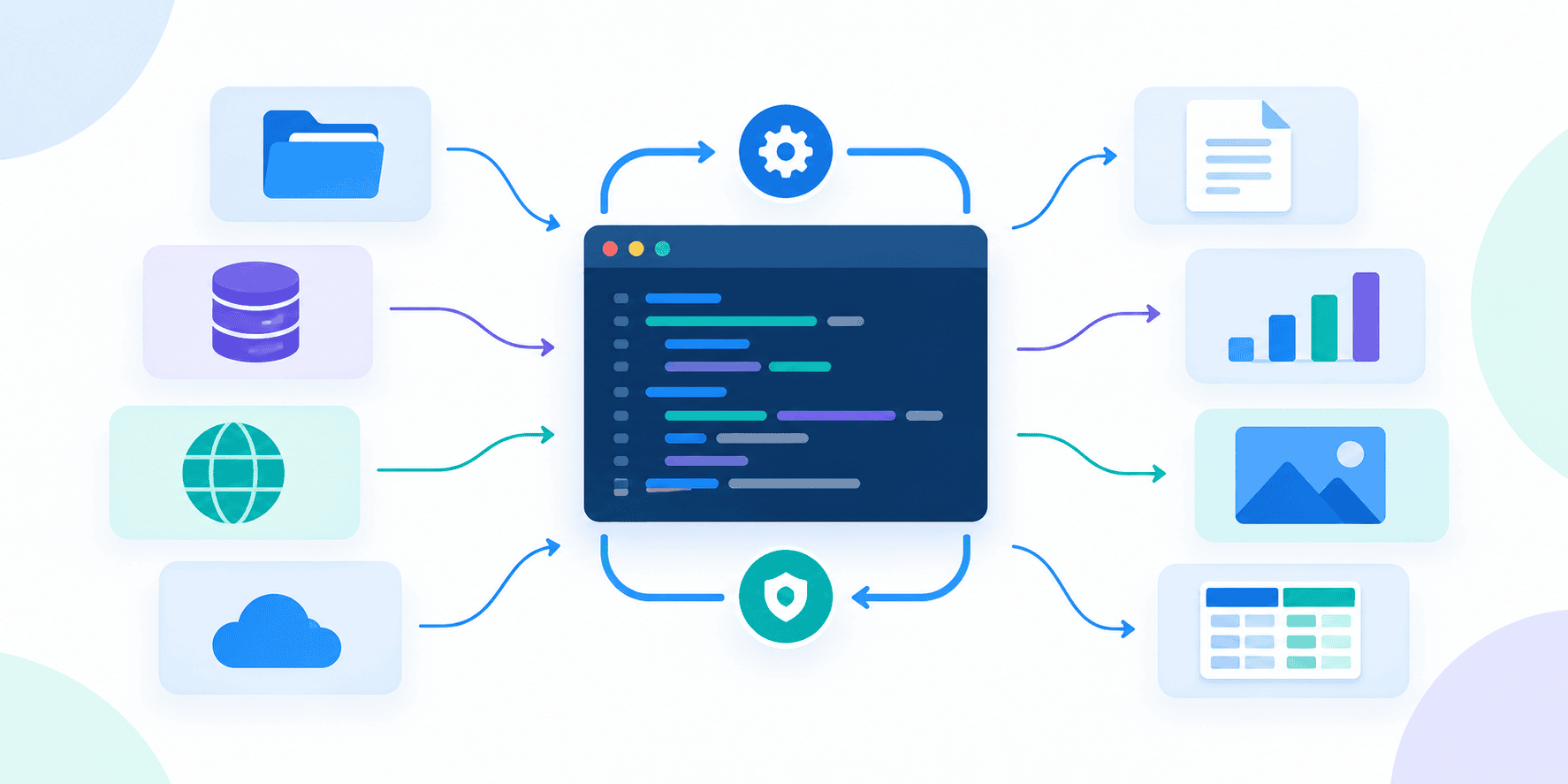
This pattern is highly effective for modifying global states such as logging levels or system configuration settings. By wrapping the adjustment in a finally block, the developer ensures that the previous state is restored even if the inner code raises an error. This prevents the “noisy logger” syndrome, where a temporary reduction in logging verbosity becomes permanent because an error interrupted the reset command. Furthermore, because @contextmanager utilizes ContextDecorator, these functions can also be used as decorators, allowing for clean, declarative code organization in modules with complex configuration requirements.
Managing Dynamic Resources with ExitStack
In scenarios involving dynamic resources—such as opening an arbitrary number of shards for a large-scale data merge—static nesting of with statements is impossible. Python’s contextlib.ExitStack is designed precisely for these runtime-defined resource sets. It acts as a registry for both context managers and arbitrary cleanup functions.
When a developer uses stack.enter_context() or stack.callback(), the ExitStack keeps track of the teardown requirements. When the stack’s scope ends, it executes the cleanup logic in the reverse order of registration. This is the programmatic equivalent of a nested with block, ensuring that if a process opens ten file handles and a network socket, they are closed in the exact sequence required to maintain data integrity and prevent resource leaks.
Addressing Global State and Reversibility
The use of unittest.mock.patch.dict represents a sophisticated way to manage temporary modifications to mappings, such as os.environ. While the name suggests a testing utility, its functionality is broadly applicable to any scenario requiring the temporary alteration of global configuration dictionaries.
When a context manager modifies os.environ, it effectively creates a temporary state for the current process. This is a powerful tool for injecting configuration overrides—such as setting a faster cache disk path or disabling parallel tokenization—without the risk of side effects leaking into other parts of the application. However, engineers must exercise caution: in multithreaded or asynchronous environments, global state changes remain visible to all threads simultaneously. In such cases, architectural patterns that pass state explicitly via function arguments are safer than relying on context-managed global overrides.
Strategic Implications for Engineering Teams
The adoption of robust context managers is not merely a stylistic choice; it is a defensive programming strategy. By moving from manual, procedural cleanup to a declarative lifecycle model, teams reduce the likelihood of “silent failures.” In the context of the machine learning lifecycle—from data ingestion and preprocessing to model training and evaluation—this visibility is essential.
A clear selection rule helps teams maintain consistency:
- Use Classes when the manager maintains state that must be queried after the block completes.
- Use @contextmanager for linear, single-purpose setup/teardown tasks.
- Use Standard Library Managers (like
tempfile.TemporaryDirectory) whenever possible to avoid reinventing established, battle-tested solutions. - Use ExitStack when the lifecycle complexity or quantity of resources is determined at runtime.
Ultimately, the goal of these patterns is to ensure that the error path is as well-behaved as the success path. As systems grow in complexity, the ability to guarantee that every resource is released, every timer is stopped, and every global variable is restored is what distinguishes fragile, high-maintenance scripts from resilient, production-ready software. When a system encounters a failure at two in the morning, the difference between a clean state and a corrupted one is often the difference between an automated recovery and a manual, high-pressure intervention.