The Evolution of "Gunna Writing Fire": How a 2019 Hip-Hop Visual Became a Cornerstone of Internet Culture

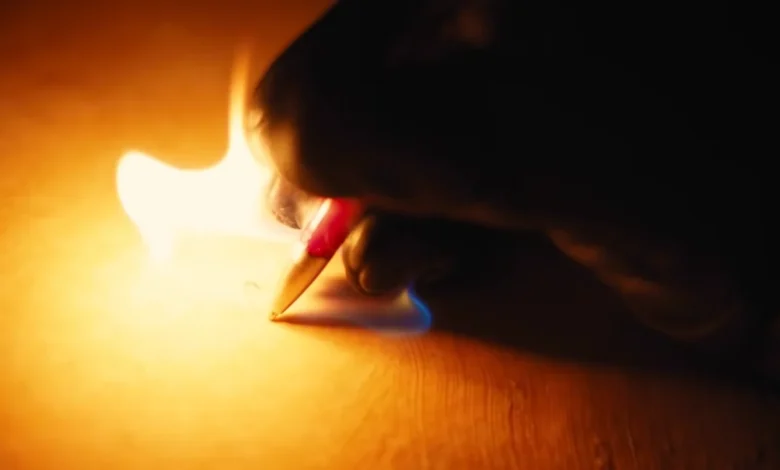
The internet meme ecosystem thrives on hyperbole, visual absurdity, and the rapid recycling of pop culture artifacts. Among the myriad templates that have emerged from the intersection of hip-hop music videos and digital shitposting, few have demonstrated the enduring versatility and cultural penetration of "Gunna Writing Fire." Originating from a surreal moment in a 2019 music video, this visual trope—featuring American rapper Gunna jotting down lyrics as literal flames erupt from beneath his pen, eventually consuming an entire suburban home—has evolved from a niche Twitter reaction into a dominant multi-platform meme format. Over the course of five years, the clip has transcended its origins in trap music promotion to become a universal shorthand for creative genius, unexpected academic triumph, and, most notably, the absurd self-referential humor of the "He Didn’t Say That" meme wave.
Main Facts and Origins in the Trap Music Scene
The genesis of the phenomenon dates back to November 1, 2019, when hip-hop heavyweights Young Thug, Gunna, and Travis Scott premiered the official music video for their collaborative single "Hot." Directed with the high-concept, cinematic flair characteristic of Young Thug’s visual projects, the video showcased various surreal vignettes, most notably featuring the artists performing inside and around a suburban residence.
Approximately midway through the video, a specific sequence captures rapper Gunna seated calmly at a table, meticulously writing on a piece of paper. As his pen moves across the page, spontaneous bursts of orange and yellow fire ignite directly beneath the ink, rapidly escalating into an inferno that overtakes the entire room and symbolizes the blistering intensity of the track. The single itself was a massive commercial success, surging on streaming platforms and ultimately driving the music video past the 183-million-view milestone on YouTube over the following three years.
However, the lifespan of the visual extended far beyond standard music industry metrics. Almost immediately after the premiere, digital culture commentators and meme creators on Twitter recognized the comedic and rhetorical potential of the scene. The visual served as a hyper-literalized metaphor for the idiom "writing fire"—implying that the content being produced by the writer is so exceptionally brilliant, powerful, or emotionally resonant that it literally generates heat and destruction.
Chronology and Early Social Media Spread
The chronological progression of the "Gunna Writing Fire" meme can be divided into distinct phases of adoption, dormancy, and explosive resurgence.
In the immediate aftermath of November 2019, the clip was primarily deployed within niche anime, gaming, and television fandom circles on Twitter. The earliest documented iteration appeared on November 3, 2019, when Twitter user @AyoDerik paired the GIF with a caption celebrating manga creator Hideaki Sorachi’s prolific output during specific story arcs of the series Gintama. This set a foundational template: the video clip would serve as the punchline or illustrative evidence for creators, authors, or students working at an impossibly high level of quality or intensity.

Throughout late 2019 and the entirety of 2020, the format maintained a steady, if understated, presence across microblogging platforms. Users adapted the visual to honor comic book artists, television showrunners, and students experiencing moments of supreme intellectual clarity. For instance, an April 2020 tweet by user @DatBoiReezy__ comparing My Hero Academia creator Kohei Horikoshi’s writing process to the fiery pen stroke garnered significant engagement within manga communities.
Despite this steady circulation, the meme experienced a brief contraction in visibility throughout 2021 as internet humor shifted toward other prevailing trends. Yet, the underlying structural appeal of the video—its seamless loopability and dramatic visual contrast—ensured it remained primed for a major revival.
The 2022 Resurgence: TikTok and the "He Didn’t Say That" Crossover
The definitive turning point for the meme occurred in the spring and summer of 2022, when the format broke out of its traditional Twitter confines and saturated mainstream algorithmic platforms such as TikTok, Instagram, and Reddit.
In April 2022, creators on TikTok began pairing the Gunna writing footage with a "Slowed + Reverb" remix of Playboi Carti’s track "Rockstar Made," elevating the dramatic tension of the scene and transforming it into a high-energy aesthetic format. These TikToks regularly pulled in millions of views, introducing the visual to a younger demographic of digital natives who may not have closely followed the original 2019 Young Thug release.
Simultaneously, the meme merged with another dominant internet subculture: the "He Didn’t Say That" (or "Movie Titles in Movie Lines") trend. Originating on imageboards and migrating to Reddit communities such as r/shitposting, r/whenthe, and r/ShitPostCrusaders, this subgenre relies on subverting dialogue expectations by having characters explicitly state the title of their respective media property in a forced, awkward manner.
When Reddit users paired the "Gunna Writing Fire" visual with captions suggesting that legendary screenwriters or game developers were concocting these absurdly literal lines, the format achieved peak virality. Examples included captions attributing lines like "And that was how he trained his dragon 2" or "yo mista bad… you can just call me breaking" to fictional scriptwriters. These posts regularly crossed the threshold of 10,000 to 25,000 upvotes, cementing the meme as a dominant fixture of mid-2022 internet humor.
Supporting Data and Quantitative Impact
An analysis of digital engagement metrics surrounding the meme highlights its widespread resonance. The foundational YouTube music video for "Hot" provided an immense baseline audience, funneling hundreds of millions of impressions toward the artists. On Reddit, individual iterations of the "Gunna Writing Fire" crossover memes consistently outperformed baseline content benchmarks within major meme subreddits, with multiple posts exceeding 15,000 upvotes within 48 hours of publication.

On TikTok, hashtags associated with the visual and its accompanying audio remixes accumulated aggregate view counts scaling well into the tens of millions. The cross-pollination between rap music media, anime fandoms, prestige television critique, and shitposting communities created a remarkably resilient distribution funnel that resisted standard meme fatigue.
Broader Cultural Implications and Media Analysis
The longevity of "Gunna Writing Fire" offers valuable insight into how modern digital culture consumes and repurposes commercial art. Historically, music videos functioned strictly as promotional vehicles designed to support a single’s chart performance before fading from active cultural memory. In the streaming era, however, discrete visual moments within these videos are frequently extracted, divorced from their original context, and converted into open-source digital vernacular.
Sociologically, the meme reflects a broader cultural appreciation for hyperbolic appreciation. By exaggerating the act of writing—transforming a mundane physical motion into a catastrophic, property-destroying event—users playfully elevate everyday acts of productivity, whether completing a difficult homework assignment or drafting a fictional story, to mythological status.
Furthermore, the integration of the meme into the "He Didn’t Say That" trend demonstrates the collaborative, remix-heavy nature of contemporary internet humor. Creators do not merely consume media; they actively deconstruct its narrative mechanics, rewriting the assumed processes behind beloved cultural works to evoke irony and shared amusement.
Conclusion and Future Outlook
As internet culture continues to accelerate at a dizzying pace, few memes manage to sustain relevance across multiple years and platform shifts. By bridging the gap between high-production trap music videos and absurdist digital irony, "Gunna Writing Fire" has secured its place in the modern digital lexicon. Whether deployed to celebrate genuine creative brilliance or to mock the very mechanics of storytelling itself, the image of a rapper’s pen igniting a blaze remains an enduring testament to the unpredictable ways popular culture captures the imagination of the global internet community.
Related posts: