Apple and Goldman Sachs Launch High-Yield Savings Account to Expand Fintech Ecosystem

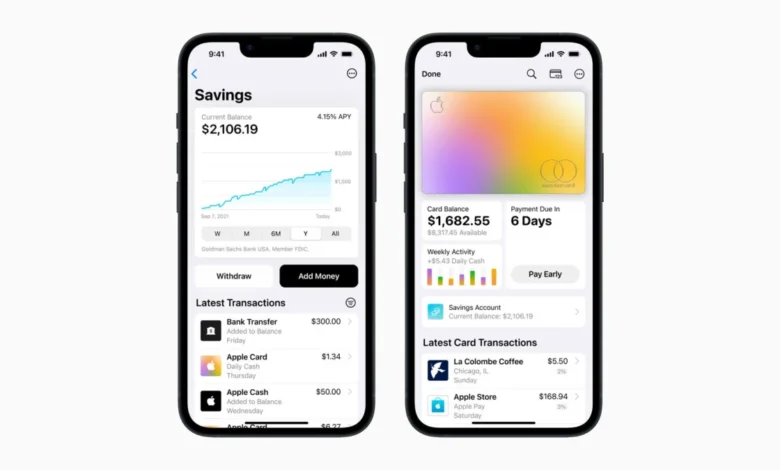
Apple has officially entered the competitive landscape of personal savings, launching a new high-yield savings account for Apple Card users in partnership with Goldman Sachs. The announcement, which took place on Monday, represents a strategic pivot for the technology giant as it continues to integrate financial services directly into the iOS ecosystem. By offering an annual percentage yield (APY) of 4.15%, Apple is positioning itself as a serious contender in the digital banking space, leveraging the convenience of the Apple Wallet app to capture a larger share of consumer liquid assets.
The Mechanics of the New Savings Account
The new savings feature is designed to be an extension of the existing Apple Card experience. Users can now automatically route their Daily Cash—the rewards earned from purchases made with an Apple Card—directly into the high-yield savings account. This automation simplifies the process of wealth accumulation for users who are already integrated into Apple’s credit ecosystem.
Beyond the automatic routing of rewards, the account allows users to deposit additional funds from external bank accounts. Apple has set a maximum deposit limit of $250,000, which aligns with the standard Federal Deposit Insurance Corporation (FDIC) coverage limit. This is a critical detail, as it provides institutional security for users concerned about the safety of their deposits, with the account being held through Goldman Sachs, the partner bank for the Apple Card.
Chronology of Apple’s Financial Services Expansion
Apple’s move into banking has been a gradual, calculated process rather than a sudden pivot. The company’s trajectory in the fintech sector can be tracked through a series of key milestones that demonstrate a clear strategy of vertical integration:
- 2014: Apple Pay is introduced, marking the company’s first significant entry into consumer finance by digitizing the wallet experience.
- 2019: Apple Card is launched in partnership with Goldman Sachs, bringing a branded credit card experience to the iPhone.
- 2022: Apple acquires UK-based fintech startup Credit Kudos, signaling an interest in proprietary credit-scoring technology.
- March 2023: Apple introduces "Apple Pay Later," a buy-now-pay-later (BNPL) service that allows users to split purchases into four payments over six weeks with zero interest, putting the company in direct competition with firms like Affirm and Klarna.
- April 2023: Apple launches the high-yield savings account, adding a deposit-taking component to its suite of financial tools.
This timeline reflects a transition from simple payment processing to a comprehensive financial platform that manages credit, debt, and now, savings.
Market Comparison and Competitive Context
The interest rate offered by Apple is notable, particularly when compared to traditional brick-and-mortar financial institutions. Many major national banks offer savings rates as low as 0.01% APY, often characterized as "standard" rates. In contrast, Apple’s 4.15% APY is designed to attract users who have historically been underserved by low-yield, high-fee traditional savings accounts.
However, from an analytical perspective, Apple’s offering exists within a broader landscape of high-yield digital banks. Competitors such as Marcus by Goldman Sachs, Ally Bank, and American Express offer varying rates that often fluctuate in response to Federal Reserve policy. While 4.15% is competitive, it is not the highest rate currently available on the market; some specialized online banks and credit unions frequently offer rates that exceed 4.5% or 5.0% depending on the prevailing economic climate and the central bank’s federal funds rate.
Apple’s advantage, however, is not necessarily the absolute highest yield, but the "frictionless" user experience. By housing the account within the Wallet app, Apple removes the need for users to log into separate banking portals or manage multiple external applications, effectively reducing the barrier to entry for personal finance management.
Official Statements and Strategic Intent
In an official statement regarding the launch, Jennifer Bailey, Apple’s vice president of Apple Pay and Apple Wallet, emphasized the company’s focus on the user experience. "Our goal is to build tools that help users lead healthier financial lives, and building Savings into Apple Card in Wallet enables them to spend, send, and save Daily Cash directly and seamlessly—all from one place," Bailey stated.
This framing suggests that Apple views its financial products as value-added services intended to increase the "stickiness" of the iPhone ecosystem. By making it easier for users to manage their money, Apple increases the likelihood that users will remain within the iOS ecosystem for their daily financial needs.
Goldman Sachs’ role in this partnership is equally significant. For the investment bank, the partnership provides a massive influx of retail deposits, which serves as a lower-cost funding source for their operations compared to wholesale market funding. This symbiotic relationship—where Apple provides the user interface and platform, and Goldman Sachs provides the banking infrastructure—is the bedrock of the Apple Card program.
Economic Implications and Risks
The integration of high-yield savings into the smartphone experience has several implications for the broader banking industry. First, it accelerates the trend of "de-banking," where consumers shift their primary financial activity away from traditional branch-based banks toward digital-first platforms. This shift poses a challenge for traditional banks, which must now contend with tech giants that possess superior data analytics and user interface design.
Second, the volatility of the APY is a factor that users must monitor. As noted in the company’s disclosures, the 4.15% rate is variable and subject to change at any time based on market conditions. This is standard practice in the industry, but for a consumer base that may be new to high-yield savings, it is an important distinction to understand.
Furthermore, the scale of this initiative is significant. With over a billion active iPhones worldwide, the potential for mass adoption of this savings feature is immense. Even a fraction of the Apple Card user base moving their savings into this account could result in billions of dollars in new deposits, potentially altering the competitive landscape for retail banking.
Regulatory and Privacy Considerations
As Apple expands its reach into the financial sector, it faces increasing scrutiny regarding data privacy and antitrust concerns. Financial regulators are closely watching how Apple handles the data generated by these transactions. While Apple maintains that it does not sell user transaction data to third parties for advertising purposes, the aggregation of financial data alongside lifestyle and health data on the iPhone creates a comprehensive profile that remains a subject of ongoing debate among privacy advocates and legislators.
Moreover, the "walled garden" approach—where financial services are tightly integrated into iOS—has drawn the attention of regulators in the European Union and the United States. Concerns regarding competition and the ability of third-party developers to access the NFC (Near Field Communication) hardware on the iPhone have led to various legal challenges. The success of the savings account initiative may depend on Apple’s ability to navigate these regulatory environments while continuing to offer a seamless experience.
Future Outlook
The launch of the high-yield savings account is a clear indication that Apple is not content with being a peripheral player in finance. The company is actively building a proprietary financial infrastructure that allows it to capture value at every stage of the consumer spending cycle.
Future developments may include the integration of more complex wealth management tools, such as automated investment accounts, retirement planning features, or even specialized insurance products. As the company continues to refine its "Wallet" app, it is moving closer to the vision of an "all-in-one" financial hub.
For the average consumer, the immediate impact is the opportunity to earn a competitive return on their cash with minimal effort. However, the long-term impact is a fundamental shift in how personal finance is conducted, moving away from the traditional bank branch and toward an integrated, digital-first model that is increasingly dominated by consumer technology companies. Whether this evolution will lead to greater financial health for the average user or simply further centralize financial control in the hands of Big Tech remains a subject for ongoing observation as the market matures.