Scientists Reveal The Hi Meme Takes Over Social Media As BBC Ginger Cat Thumbnail Goes Viral

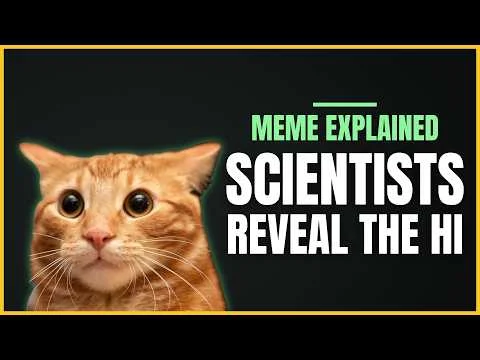
The internet culture landscape often gives rise to surreal and unexpected phenomena, but few have bridged the gap between mainstream science journalism and absurdist humor quite like the "Scientists Reveal the Hi" meme. Over the course of October 2026, social media feeds across Instagram, TikTok, and various image-board communities have been flooded with a peculiar image: a striking orange cat peering out from beneath a simulated BBC News breaking news banner. Superimposed across the graphic are the truncated, nonsensical words "scientists reveal the hi." What began as a simple visual glitch or deliberate misinterpretation has rapidly evolved into a widespread exploitable trend, capturing the imaginations of digital creators, meme historians, and casual internet users alike. While the text on the viral thumbnails is entirely fabricated, the origin of the imagery itself is grounded in genuine academic research, tracing back to a 2025 BBC News feature exploring the genetic mechanisms behind feline coat coloration.
Main Facts of the Viral Phenomenon
The core of the viral trend relies on an exploitable image format mimicking the distinct graphical user interface of BBC News broadcasts. The template typically features a high-definition photograph of a domestic ginger cat accompanied by a deceptively authoritative lower-third caption reading "scientists reveal the hi." The juxtaposition of serious journalistic formatting with an abruptly casual, unfinished greeting has struck a chord with internet audiences, leading to thousands of parody videos, recaptioned images, and derivative exploitables.
Despite the comedic nature of the memes, the underlying photograph is authentic. It originated from a BBC News digital article published in 2025, which investigated the specific genetic mutations responsible for the distinct orange, or ginger, pigmentation found in certain domestic cats. When digital creators isolated the thumbnail and altered the accompanying headline text, a new meme format was born. The trend quickly graduated from isolated image posts to short-form video content on TikTok and Reels, where users playfully mock the absurdity of modern scientific headlines by pretending that researchers have dedicated significant resources to discovering a simple feline greeting.
Chronology and Timeline of the Trend
The trajectory of the "Scientists Reveal the Hi" phenomenon offers a fascinating case study in how modern internet culture repurposes traditional media assets.
The timeline of the meme’s evolution spans from its journalistic roots to its current status as a viral sensation:
- Mid-2025: The British Broadcasting Corporation (BBC) publishes a science and nature feature detailing the genetic pathways that produce orange coats in domestic cats, accompanied by a professional studio photograph of a ginger feline.
- Early October 2026: Digital creators on TikTok and Instagram recognize the humorous potential of the thumbnail’s stark composition. The original headline is digitally replaced with the abrupt phrase "scientists reveal the hi," mimicking sensationalized science journalism tropes.
- Mid-October 2026: The image format transitions into an exploitable trend. Users begin generating variations featuring different animals, alternative corporate news banners, and increasingly ridiculous scientific breakthroughs.
- Late October 2026: The meme achieves widespread saturation across major social media platforms, documented by internet culture archives and tracking sites, accumulating thousands of views, shares, and derivative parodies.
Supporting Data and Digital Metrics
The virality of the "Scientists Reveal the Hi" format can be measured through its rapid dissemination across multiple algorithmic platforms. According to digital culture trackers, engagement metrics for the meme surged during the final weeks of October 2026. On Instagram and TikTok, hashtags associated with the trend, including variations of "scientists reveal the x" and traditional animal recaptions, accumulated millions of cumulative impressions.
Furthermore, archive repositories dedicated to documenting internet memes noted a sharp increase in search queries related to the BBC cat thumbnail. The content’s cross-platform appeal lies in its low barrier to entry; the template can be easily replicated using basic image-editing software or in-app text tools, allowing amateur creators to generate their own iterations within seconds. This participatory nature has sustained the trend’s momentum, preventing it from fading as quickly as more rigid, non-exploitable meme formats.
Industry and Institutional Context
The intersection of legitimate scientific reporting and internet meme culture is a well-documented phenomenon. Major broadcasting institutions like the BBC frequently find their archival imagery repurposed by online communities due to the high production value and instantly recognizable branding of their digital assets. In this instance, the formal aesthetic of BBC News served as an effective satirical canvas.
While representatives from major news organizations rarely comment directly on individual meme formats, media analysts note that such trends highlight the shifting relationship between traditional journalism and digital audiences. When complex scientific topics—such as feline genetics—are packaged for the digital consumer, they inadvertently provide fertile ground for internet subcultures to deconstruct, parody, and reconstruct information into forms of participatory digital art. The transformation of a serious inquiry into animal biology into a casual wave of "hi" greetings underscores the fluid nature of modern media consumption.
Broader Impact and Implications for Digital Culture
The "Scientists Reveal the Hi" trend reflects a broader cultural fatigue with sensationalized headlines and clickbait journalism. By reducing a complex scientific article to an incomplete, overly simplistic greeting, internet users playfully subvert the conventions of modern digital media. The meme serves as a form of meta-commentary on how news is consumed, shared, and often stripped of nuance in fast-paced social media feeds.
As this exploitable format continues to evolve, it demonstrates the enduring power of visual juxtaposition in meme creation. By pairing high-stakes journalistic aesthetics with utterly mundane or nonsensical subject matter, creators have established a reliable comedic formula. Whether the trend will pave the way for further parodies of academic and journalistic reporting remains to be seen, but the "scientists reveal the hi" cat has firmly secured its place in the timeline of 2026 internet history.