YouTube Q3 2026 Financials Show Ad Growth Moderation Amid Surging Subscriptions and Connected TV Dominance

YouTube experienced a noticeable moderation in its advertising revenue growth during the third quarter of 2026, even as its subscription tiers, connected TV footprint, and e-commerce integrations expanded significantly. According to parent company Alphabet’s official Q3 2026 financial report, YouTube generated $11.2 billion in advertising revenue for the period. While this figure underscores the platform’s enduring capacity to command multi-billion-dollar ad budgets, the year-over-year growth rate cooled to 9%, down from the 13% expansion recorded in the second quarter of 2026.
Despite the slight tapering in direct ad-take growth, YouTube’s financial ecosystem is proving increasingly resilient and diversified. The platform continues to drive substantial gains for Alphabet’s broader subscription initiatives, fueled by explosive adoption of YouTube Music and YouTube Premium. Industry analysts note that YouTube’s strategic pivot toward living room screens, robust creator monetization programs, and generative artificial intelligence tools are transforming the video giant from a simple ad-supported hosting site into a sprawling digital entertainment conglomerate.
Chronology of Growth: From 100 Million to 150 Million Subscribers
The trajectory of YouTube’s subscription services highlights a period of accelerated international consumer adoption over the past two and a half years. In early 2024, Alphabet proudly announced that YouTube Music and Premium had collectively crossed the monumental threshold of 100 million paying subscribers. By the close of the third quarter of 2026, that figure had surged by 50%, bringing the total subscriber base to an impressive 150 million users worldwide.
This rapid 50% expansion over a relatively short timeline has directly contributed to an 11% year-over-year increase in Google’s overall subscription, platform, and other revenues. During Alphabet’s Q2 earnings call in July 2026, executives pointed out that a primary catalyst for this momentum was an influx of Premium sign-ups originating from connected TV (CTV) viewers. As linear television continues to bleed audiences to digital streaming alternatives, households increasingly opt for ad-free YouTube experiences on their living room displays.
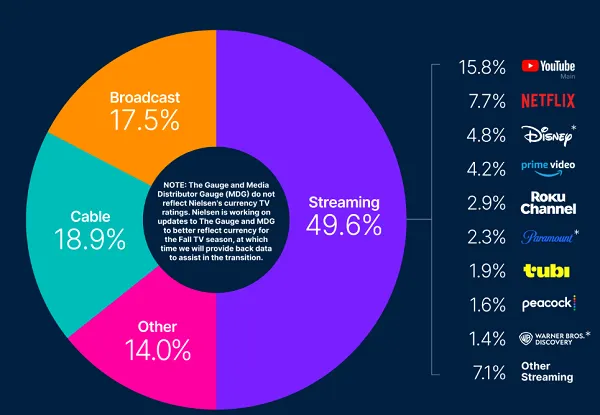
This trend was further validated by Nielsen’s closely watched "The Gauge" report published in August 2026, which cemented YouTube’s status as the top streaming platform in the United States. Capturing the lion’s share of American television viewing time, YouTube has successfully bridged the gap between web-native content and traditional living room entertainment.
The Living Room Revolution and Connected TV Monetization
During the accompanying Q3 2026 earnings call, Google Chief Business Officer Philipp Schindler emphasized that the "Living Room"—YouTube’s connected TV ecosystem—is no longer just a driver for direct user subscriptions. Instead, it has evolved into a powerhouse for commercial advertising. Schindler revealed that connected TV viewing now accounts for more than one-third of YouTube’s total advertising revenue.
This structural shift in viewing habits has profound implications for brand marketers. Advertisers who traditionally allocated their linear television budgets to legacy broadcast networks are aggressively reallocating capital to YouTube’s CTV inventory. This allows them to combine the broad visual impact of television advertising with the precise audience targeting capabilities of digital video.
Concurrently, Schindler highlighted continued strength in small and medium-sized business (SMB) adoption of Google’s Demand Gen products. These automated, multi-format advertising campaigns enable SMBs to seamlessly deploy creative assets across YouTube, YouTube Shorts, and Discover feeds, democratizing high-level digital marketing for smaller enterprises.
Expanding the Creator Economy and E-Commerce Integration

YouTube’s enduring dominance relies heavily on its vast creator ecosystem, which continues to scale alongside its financial metrics. Alphabet reported that more than 3 million creators are now officially enrolled in the YouTube Partner Program, representing a massive global workforce of independent digital media producers.
To enhance the monetization potential for these creators, YouTube has aggressively leaned into social commerce. More than 1.3 million channels are currently participating in the platform’s shopping program. This momentum reached a new milestone with the recent announcement of a strategic affiliate partnership with Amazon.
Under this new integration, U.S.-based creators can officially tag Amazon products directly within their long-form videos, Shorts, and livestreams. This partnership bridges the friction between content discovery and transactional retail, enabling creators to earn commissions on merchandise sales while offering viewers a frictionless path to purchase. Market researchers view this move as a direct challenge to competing social commerce initiatives on TikTok and Instagram, positioning YouTube as a premier destination for performance-driven retail marketing.
Artificial Intelligence Integration: Tools and User Reception
As digital content creation accelerates globally—with Schindler noting that more than 20 million videos are uploaded to the platform every single day—YouTube is deploying artificial intelligence to streamline production and optimize ad targeting.
Throughout 2026, YouTube has systematically rolled out generative AI capabilities within YouTube Studio, alongside conversational editing assistants designed specifically for Shorts and the standalone YouTube Create app. These tools build upon experimental features introduced earlier in the year, such as the AI-powered "reimagine" option launched in March, which allows viewers to generate alternative video variations based on existing creator clips, and the "Extend with AI" testing framework that enabled creators to auto-generate alternative video endings.
Data released by YouTube in late 2026 indicates that these technological interventions are striking a chord with content producers. According to a platform report published in mid-October 2026, 61% of individuals who uploaded videos to the app over the preceding 12 months expressed a strong interest in utilizing AI tools to seamlessly insert themselves into video content.
Implications and Industry Outlook
The financial disclosures from Alphabet’s Q3 2026 earnings report paint a picture of a mature platform navigating the natural laws of scale. While a moderation in advertising revenue growth from 13% to 9% indicates that hyper-growth in ad intake cannot continue indefinitely at linear rates, YouTube’s strategic diversification is more than compensating for the cooling period.
By successfully capturing the connected TV market, scaling its paid subscriber base to 150 million users, deepening its retail footprint via the Amazon affiliate partnership, and embedding generative AI into the creative workflow, YouTube has constructed a multi-layered revenue model.
Nevertheless, industry observers note that challenges remain. As generative video tools become ubiquitous, platforms will face the continuous challenge of moderating "AI slop"—low-quality, automated content designed solely to game recommendation algorithms. However, provided YouTube can maintain strict quality controls and preserve user trust, its aggressive integration of AI and commerce positions the platform to remain the undisputed heavyweight of the global digital video landscape for the foreseeable future.
Related posts: