AI Researchers Accuse CBS and Google of Overhyping Emergent Capabilities in High-Profile Broadcast

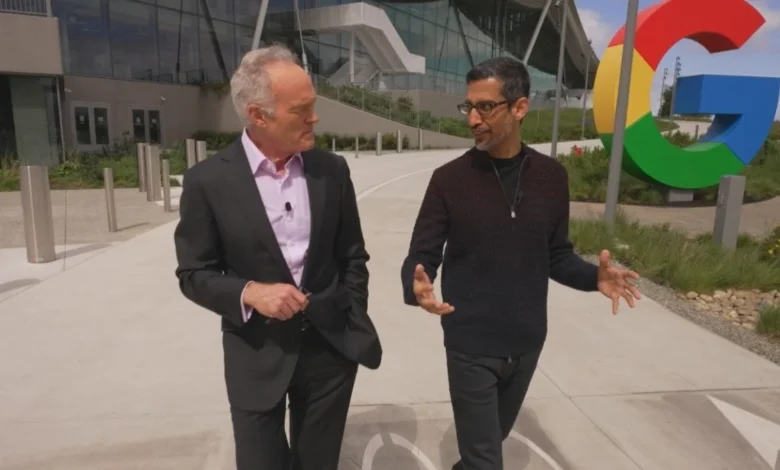
The recent segment on the CBS news program 60 Minutes featuring Google CEO Sundar Pichai has ignited a firestorm of criticism within the artificial intelligence research community. The broadcast, which aimed to demystify the rapid advancements in generative AI, instead found itself at the center of a debate regarding the accuracy of technical claims. At the heart of the controversy is the assertion that Google’s Large Language Model (LLM), PaLM, spontaneously learned to speak and translate the Bengali language without prior training. Prominent researchers and ethicists in the field have since characterized these claims as misleading, arguing that the narrative of "emergent properties" is being leveraged for public relations rather than scientific accuracy.
The 60 Minutes Narrative: A Claim of Spontaneity
During the Sunday broadcast, CBS correspondent Scott Pelley presented a segment on the mysterious nature of modern AI. Central to his argument was the concept of "emergent properties"—a term used to describe instances where AI models demonstrate capabilities for which they were not explicitly programmed. To illustrate this, the program featured a demonstration of Google’s PaLM (Pathways Language Model), the underlying architecture that powers the company’s chatbot, Bard.
In the segment, the AI was prompted in Bengali, a language spoken by millions across Bangladesh and India. The model responded correctly, leading the program to imply that the software had "adapted on its own" to a language it had never been taught. James Manyika, a Google vice president featured in the report, bolstered this narrative by suggesting that the model could now "translate all of Bengali," framing it as a breakthrough in the company’s quest to support thousands of languages.
Technical Reality Versus PR Narrative
The academic community reacted swiftly to the broadcast, pointing to documented evidence that contradicts the "spontaneous learning" narrative. Margaret Mitchell, a renowned AI ethicist at Hugging Face and a former co-leader of Google’s Ethical AI team, was among the first to highlight a critical oversight in the CBS reporting.
According to the original research paper detailing the development of PaLM, the model was indeed trained on a dataset that included Bengali. Specifically, the paper notes that Bengali text comprised approximately 0.026% of the model’s massive training corpus. Mitchell argued that because the model had been exposed to the language during its training phase, its ability to respond to Bengali prompts is a standard function of LLM architecture—not a supernatural emergence of new skills.
"By prompting a model trained on Bengali with Bengali, it will quite easily slide into what it knows of Bengali," Mitchell explained on social media. "This is how prompting works." She emphasized that the scientific community views the suggestion that an AI can "speak" a language it has never seen as a physical impossibility given current machine learning paradigms.
Chronology of Claims and Disclosures
The discourse surrounding PaLM’s capabilities has a history that predates the 60 Minutes report. To understand the friction between Google’s public messaging and the reality of the technology, one must look at the timeline of its public introduction:
- May 2022: Google unveils PaLM at its I/O developer conference. CEO Sundar Pichai highlights the model’s multilingual capabilities, noting that it could perform tasks in Bengali despite not being explicitly trained for translation.
- April 2023: The 60 Minutes interview airs, re-amplifying the narrative of "emergent properties" and spontaneous language mastery.
- Post-Broadcast: Independent researchers, including Mitchell and University of Washington professor Emily M. Bender, issue public rebuttals, providing evidence from the original 2022 research paper to debunk the claim that the model was "never trained" on Bengali.
The discrepancy lies in the definition of "training." Google argues that while the model ingested raw Bengali text for sentence completion, it was not "taught" to translate or engage in question-and-answer formats. Therefore, the company contends that the application of these skills to new tasks is the "emergent" aspect. Critics, however, argue that this is a semantic sleight of hand.
The Definition of "Emergent Properties"
The term "emergent properties" has become a buzzword in the AI industry, often used to describe behaviors that appear only when a model reaches a certain scale. While the phenomenon is a subject of genuine academic inquiry, critics like Emily M. Bender suggest that the term is increasingly being used as a rhetorical shield to mask the underlying mechanisms of LLMs.
Bender, who has long warned against the anthropomorphization of AI, described the claims made on 60 Minutes as "unscoped and unsubstantiated." She particularly took issue with the claim that the AI could "translate all of Bengali," noting that such a statement is scientifically meaningless without clear benchmarks or testing criteria.
"The term ’emergent properties’ seems to be the respectable way of saying AGI," Bender noted, referring to Artificial General Intelligence—a hypothetical state where a machine possesses the ability to understand or learn any intellectual task that a human can. By attributing "magic" to the models, she argues, companies like Google can inflate expectations and value while obscuring the data-driven reality of their products.
Official Response and Corporate Stance
In response to inquiries regarding the discrepancy, a Google spokesperson, Jason Post, clarified the company’s position. The statement emphasized that Google never claimed the model had zero exposure to the Bengali language. Instead, the company maintained that the distinction lies in the lack of supervised fine-tuning for specific tasks like translation.
"While the PaLM model was trained on basic sentence completion in a wide variety of languages, it was not trained to know how to translate between languages, answer questions in Q&A format, or translate information across languages while answering questions," the statement read. "It learned these emergent capabilities on its own, and that is an impressive achievement."
This response highlights a fundamental tension in the current AI landscape: the divide between how engineers define a system’s capabilities and how those capabilities are marketed to the public. To an engineer, a model that learns a task from raw data is a feat of architecture; to the general public, a model that "learns on its own" sounds like the development of sentient or near-sentient intelligence.
Broader Implications for AI Literacy
The controversy serves as a case study in the challenges of communicating complex technical concepts to a mass audience. As AI tools like ChatGPT, Bard, and others become integrated into daily life, the pressure on tech companies to demonstrate "breakthroughs" increases. This pressure can lead to marketing narratives that simplify, and occasionally distort, the underlying science.
The implications of this trend are significant:
- Public Trust: When the public is told that AI possesses "mysterious" and "magical" capabilities, it creates a false sense of what the technology is capable of. This can lead to over-reliance on systems that are fundamentally prone to error, bias, and "hallucinations."
- Regulatory Challenges: Legislators attempting to regulate AI often rely on public perceptions and industry descriptions. If the industry frames AI as an uncontrollable "black box," it complicates efforts to establish transparency and accountability requirements.
- Scientific Integrity: The use of buzzwords like "emergent" to describe basic statistical learning processes risks diluting the rigor of AI research. As Mitchell noted, maintaining a belief in the "magic" of AI serves corporate PR goals but ultimately functions as a form of disinformation.
Conclusion
The incident involving 60 Minutes and Google underscores the growing rift between the rapid, often hype-driven deployment of AI and the cautious, evidence-based approach preferred by the research community. While the technical achievements of models like PaLM are undoubtedly significant, experts argue that the path forward must be paved with transparency rather than the amplification of "black box" mysteries. As the industry continues to evolve, the demand for clear, accurate, and sober communication regarding the capabilities and limitations of artificial intelligence will only intensify. For now, the debate serves as a necessary reminder that in the world of machine learning, there is a substantial difference between a model that is effectively programmed and one that is truly intelligent.