November 2026 Palm Beach County Learjet Crash: A Comprehensive Overview of the Tragedy and Its Digital Aftermath

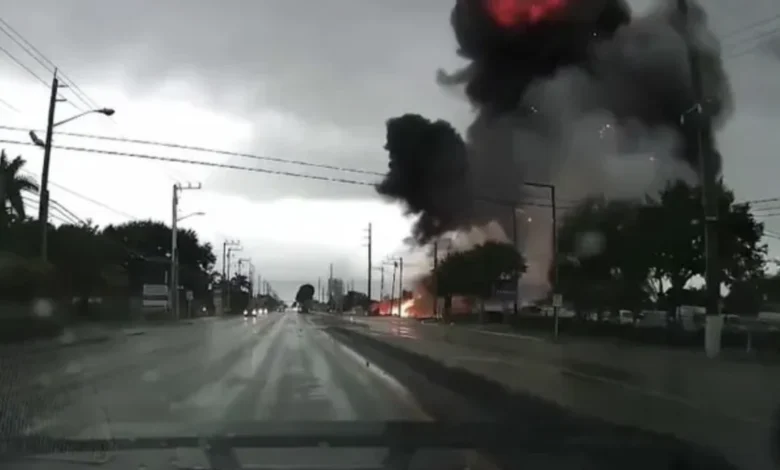
The November 2026 Palm Beach County Learjet Crash refers to the devastating aviation disaster that occurred on November 1, 2026, when a private Bombardier Learjet 60 business jet plummeted into a residential neighborhood in Palm Beach County, Florida. The catastrophic accident resulted in the deaths of all nine individuals on board the aircraft. Beyond the immediate tragedy on the ground and in the air, the incident rapidly transformed into a global digital phenomenon, generating tens of millions of views, real-time analyses, and widespread public discourse across social media platforms including X, TikTok, and YouTube. Driven by dramatic dashcam footage, frantic air traffic control audio recordings, and the tragic loss of young aviation professionals, the event stands as one of the most thoroughly documented and digitally scrutinized private aviation accidents of the decade.
Flight Profile and Chronology of the Disaster
The sequence of events began on the morning of November 1, 2026, when a mid-size Bombardier Learjet 60—manufactured in 2004 and registered to a Delaware-registered limited liability company—departed from Austin-Bergstrom International Airport in Texas. The flight plan indicated a routine executive transit route heading southeast toward the Bahamas.
At approximately 12:50 p.m. Eastern Time, while cruising at an altitude of approximately 35,000 feet over Florida airspace, the flight crew contacted air traffic control to report encountering severe environmental challenges. According to preliminary data and transcripts reported by major news networks, the pilots noted moderate turbulence, active icing conditions, and heavy precipitation. A crew member radioed air traffic control to state they were "managing the ice" before requesting clearance to climb to a higher altitude to escape the adverse weather patterns.
Shortly after this communication, the aircraft experienced an extraordinary and catastrophic loss of control. Flight tracking data and radar returns indicated that the Learjet entered an unprecedented, rapid, and uncontrolled descent. In the span of roughly one minute, the business jet plummeted approximately 27,000 feet, recording terrifying descent rates estimated between 10,000 and upwards of 20,000 to 30,000 feet per minute.
Audio recordings from air traffic control subsequently captured the harrowing final moments of the flight. The recordings feature multiple urgent "Mayday" distress calls from the cockpit. A female crew member can be heard warning that the aircraft was severely overspeeding and descending uncontrollably toward the terrain, explicitly broadcasting, "We are going to crash into the ground," immediately before a final scream cut off transmission.
Impact and Ground Zero
At approximately 12:51 p.m. ET, the out-of-control Bombardier Learjet impacted a residential area near Military Trail, positioned between Cresthaven Boulevard and 10th Avenue North in Palm Beach County. The crash site is situated near the densely populated communities of Greenacres and Cresthaven, roughly seven miles southwest of downtown West Palm Beach.
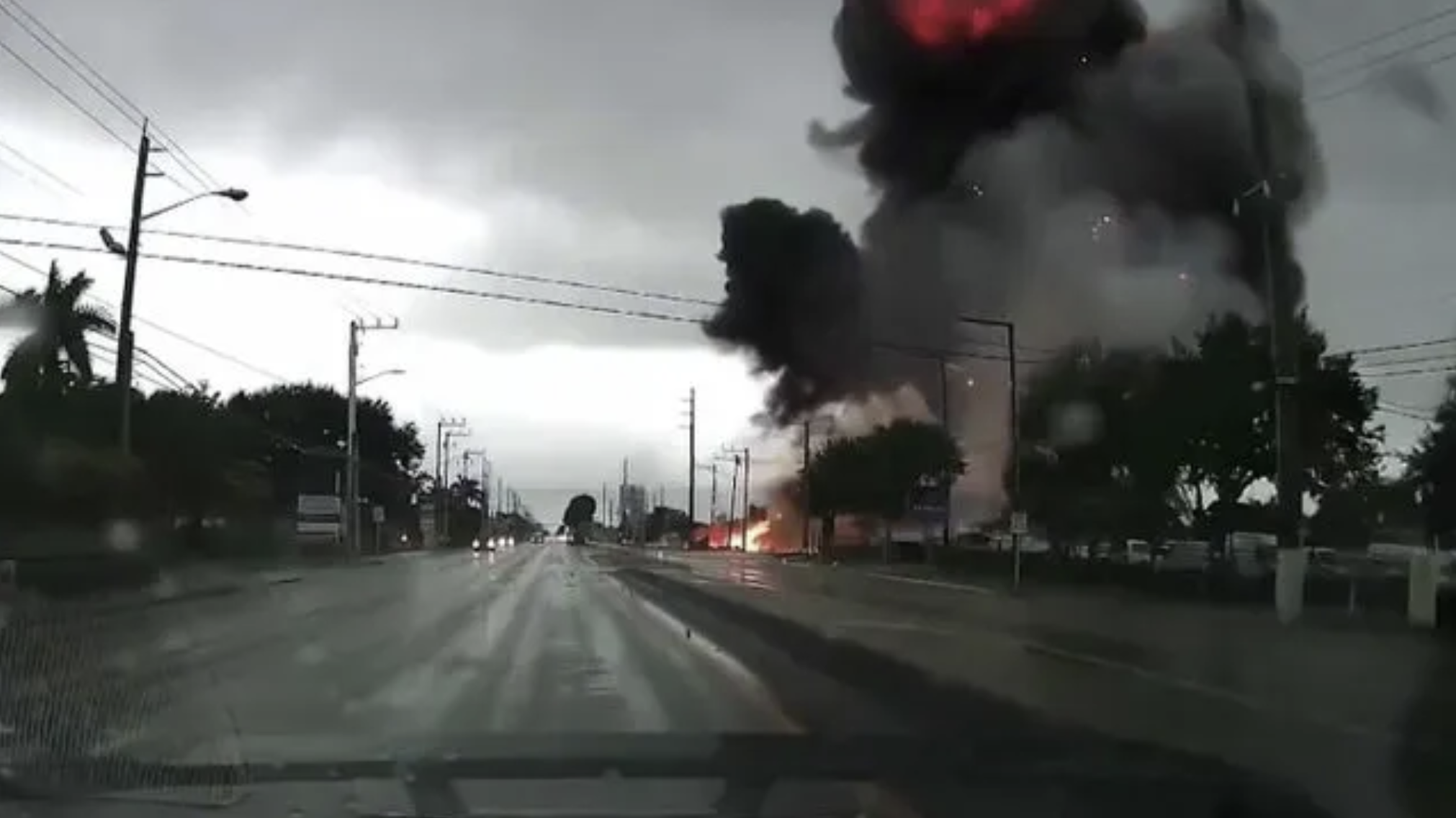
The high-velocity impact created a massive crater, severed local power lines, and completely destroyed residential structures within a mobile home park and adjacent roadway. Miraculously, despite the high-density nature of the impact zone, no ground fatalities were officially reported, though property damage was extensive. Initial harrowing dashcam footage shared by witnesses showed that a civilian vehicle had been attempting to pull out of the park mere feet from the impact zone; the occupants of the car managed to escape direct physical harm, further adding to the surreal nature of the catastrophe. All nine occupants on board the Learjet, however, perished instantly upon impact.
Victim Identification and Human Toll
In the immediate aftermath of the crash, local authorities, emergency responders, and federal investigators descended upon the scene to secure the perimeter and initiate search-and-recovery operations. By November 2, 2026, media outlets and investigative bodies began releasing the identities of the deceased.
Among the victims was 20-year-old co-pilot Nathalia Gadelha. The revelation of her age and background deeply resonated with the public. Gadelha had earned her private pilot’s license at the remarkably young age of 17, frequently expressing her lifelong passion and dedication to aviation across personal platforms. The official confirmation of her untimely death triggered widespread mourning, particularly on platforms like TikTok, where commemorative videos generated millions of views and widespread emotional tributes from the global aviation community. The identities of the remaining eight passengers and crew members were gradually released pending family notifications and official coroner reports.
Viral Spread and Social Media Amplification
The Palm Beach County plane crash achieved unprecedented digital visibility largely due to the widespread distribution of raw, real-time footage captured by civilian dashcams and security cameras in the area.
Within hours of the crash on November 1, 2026, prominent accounts on X (formerly Twitter), such as @FearedBuck, shared sweeping video footage of the aircraft’s final plunge and the resulting destruction. The post accumulated over 11.2 million views and tens of thousands of likes within a single day, serving as the primary nexus for public shock and commentary. Other high-profile accounts, including @bigbusiness and @bagtaIk, quote-posted the footage, drawing millions of additional impressions by highlighting the sheer velocity of the descent and the narrow escapes of nearby motorists.
Concurrently, educational and analytical creators on YouTube and TikTok rushed to dissect the technical aspects of the tragedy. Aviation documentary channels, such as @HeadingUnknownDocs, published comprehensive breakdowns analyzing the mechanics of high-altitude icing, aircraft overspeeding, and rapid depressurization or control surface failure. These explanatory videos amassed hundreds of thousands of views within hours, reflecting a public appetite for technical understanding in the wake of disaster.
Misinformation and Conspiracy Theories
As is common with high-profile tragedies captured on low-quality or distant video, the Palm Beach County crash quickly became fertile ground for unverified rumors and conspiracy theories. Videos circulated on TikTok claiming that unusual objects were visible in the sky prior to impact, while other speculative posts questioned the apparent disintegration of the aircraft fuselage upon high-speed impact.
Digital watchdogs and independent fact-checkers quickly pushed back against the wave of misinformation. Creators such as TikTok user @junkmotherjess posted viral analytical breakdowns explaining that a lightweight aircraft descending vertically at extreme terminal velocity behaves aerodynamically similar to a projectile, and that the pulverization of the airframe was a natural consequence of the kinetic energy released during a high-speed structural impact rather than a deliberate cover-up or extraneous intervention. Federal agencies, including the Federal Aviation Administration (FAA) and the National Transportation Safety Board (NTSB), reiterated that formal investigations take time and urged the public to rely on verified technical findings rather than online speculation.
Official Investigations and Broader Implications
In the days following the disaster, representatives from the National Transportation Safety Board (NTSB) and the Federal Aviation Administration (FAA) established a formal on-site command center to recover the aircraft’s flight data recorder (FDR) and cockpit voice recorder (CVR)—commonly known as the black boxes.
The preliminary investigative focus centered heavily on the crew’s earlier reports of severe in-flight icing, extreme precipitation, and subsequent loss of aircraft control at high altitude. Aviation safety experts noted that environmental icing can severely degrade the aerodynamic profile of mid-size business jets like the Learjet 60, occasionally leading to sudden pitch anomalies or autopilot disengagement if not meticulously managed.
The tragedy has reignited broader industry conversations regarding private aviation safety protocols, the psychological and operational challenges of managing severe weather phenomena at cruising altitudes, and the rigorous training requirements for flight crews operating complex regional jets. Furthermore, the incident highlighted the growing intersection between modern aviation accidents and real-time digital documentation, illustrating how instantaneous social media sharing shapes public perception, amplifies grief, and accelerates the demand for immediate transparency long before official government investigations can be concluded.