Navigating TikTok’s AI Disclosure Mandate: A Comprehensive Guide for Brands and Content Creators


TikTok has officially labeled more than one billion videos as artificial intelligence-generated, underscoring both the explosive adoption of synthetic media and the platform’s aggressive enforcement of its transparency protocols. As algorithms become increasingly sophisticated at synthesizing hyper-realistic human features, environments, and audio tracks, social media governance has shifted from a reactive stance to an absolute requirement. For digital marketers, corporate communications teams, and individual creators alike, understanding TikTok’s AI policy is no longer optional; it is a critical safeguard against restricted visibility, content removal, and brand reputation crises.
The evolution of generative artificial intelligence has fundamentally transformed the digital content landscape. What began as rudimentary text generators and pixelated image models has rapidly matured into a suite of powerful tools capable of producing high-definition video, deepfake vocal cloning, and complex synthetic scenes that are virtually indistinguishable from reality. Recognizing the potential for widespread misinformation, consumer deception, and platform manipulation, major technology companies have introduced strict labeling mandates. TikTok, boasting a user base numbering in the billions, has taken a leading role in this regulatory wave, implementing a multi-layered compliance framework designed to maintain platform integrity while accommodating the creative possibilities of modern technology.
Understanding TikTok’s AI Disclosure Policy and Regulatory Framework

At the core of TikTok’s Community Guidelines under the Integrity and Authenticity policy lies a simple premise: artificial intelligence is welcome on the platform, provided its application is transparent. The policy specifically targets content where AI is utilized to create or significantly alter realistic-looking people, environments, or events. If a piece of synthetic media possesses the fidelity to pass as genuine footage, it crosses the threshold requiring mandatory disclosure.
The platform categorizes compliance into distinct operational areas, separating organic publishing from paid advertisements. When a user or brand successfully applies an AI label, a designated tag appears directly beneath the video caption, explicitly informing viewers that the creator has labeled the media as AI-generated. Failure to apply this tag voluntarily when required can trigger automated detection systems, leading to severe penalties ranging from content suppression to outright account restrictions.
However, the policy draws clear boundaries regarding what constitutes a significant modification. Everyday digital adjustments—such as basic color correction, cropping, standard framing, or cosmetic filters that apply virtual makeup—are exempt from disclosure requirements. Similarly, generic text-to-speech voiceovers and AI-assisted copywriting or scriptwriting do not trigger the mandate. Conversely, voice cloning that mimics a specific individual, digital face-swapping, and the generation of synthetic human avatars require immediate identification. Furthermore, TikTok maintains a zero-tolerance policy for specific categories of AI content, banning material that seriously misleads the public regarding critical civic issues or inflicts targeted harm on real individuals, regardless of whether a label is attached.
The Three-Tiered Labeling Architecture: Creator Toggles, Auto-Labels, and Ad Disclosures

To enforce compliance efficiently, TikTok employs a sophisticated three-tiered system comprising creator toggles, automated platform detection, and specialized advertising disclaimers.
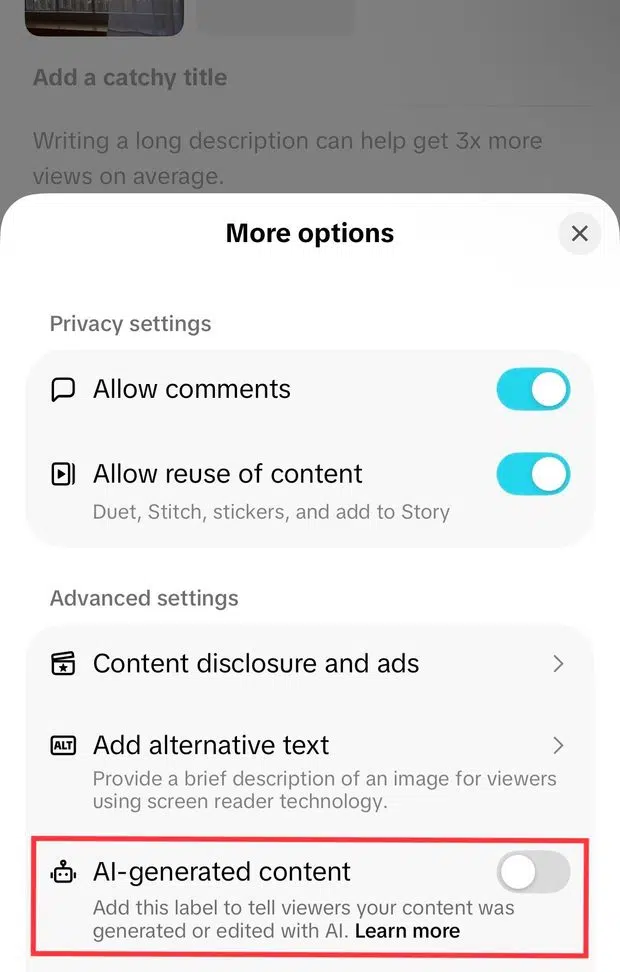
The first tier, the Creator Toggle, is designed for organic publishing. Creators manually activate an AI-generated content setting within the publishing interface before making a post live. This puts the initial responsibility of transparency directly onto the publisher.
The second tier involves Auto-Labels. TikTok utilizes advanced machine learning infrastructure to detect synthetic media independently. This automated system identifies content produced using TikTok’s native AI creative tools, as well as external files that embed Content Credentials—standardized metadata detailing a file’s provenance and creation history. If the platform’s algorithms determine that an unlabeled video contains significant AI-generated elements, the system automatically applies the disclosure tag. Notably, once TikTok’s automated systems apply a label, it cannot be removed by the creator.
The third tier governs paid advertising through TikTok Ads Manager. Advertisers must explicitly apply an AI disclosure during the campaign setup phase if their promotional materials feature realistic artificial elements. This requirement extends to Spark Ads, which amplify organic content; in these instances, the underlying organic post must already comply with all relevant disclosure standards before it can be boosted. Furthermore, advertisers must exercise caution when duplicating campaigns, as the ad disclosure toggle frequently resets to default settings, requiring manual verification during every iteration.

Strategic Implications and Risk Management for Modern Enterprises
For corporate entities and major brands, adherence to TikTok’s AI governance is directly tied to enterprise risk management. The integration of synthetic media into marketing pipelines introduces significant vulnerabilities that, if mismanaged, can precipitate severe public relations crises.
First and foremost is the preservation of consumer trust. Modern audiences are increasingly skeptical of digital imagery, particularly in commercial contexts. When a brand utilizes generative AI to depict realistic customer experiences, product demonstrations, or testimonials without clear labeling, consumers frequently perceive the omission as an intentional deception. Industry analysts note that as synthetic content achieves near-flawless realism, transparent disclosure acts as a necessary bridge, offering audiences the contextual clarity required to maintain brand loyalty. Discovering unacknowledged synthetic media through an aggrieved comment section rather than proactive disclosure can permanently damage a brand’s reputation.
Secondly, non-compliance carries immediate logistical consequences. Unlabeled AI content risks algorithmic suppression or removal, abruptly halting marketing campaigns and squandering allocated media budgets. In the advertising sector, unverified AI submissions face immediate rejection during the review stage, preventing promotional materials from ever reaching their intended demographic.

Thirdly, influencer marketing partnerships introduce variable compliance risks. While a corporation may maintain stringent internal guidelines regarding artificial intelligence, third-party creators frequently utilize diverse methodologies. Without clear contractual expectations, an influencer may publish an unvetted, AI-enhanced sponsored post bearing a corporate partner’s name. Establishing explicit protocols within creator briefs is essential to ensure that sponsored collaborations remain transparent and fully compliant with both platform rules and regulatory standards such as the Federal Trade Commission’s endorsement guides.
Step-by-Step Implementation of Enterprise AI Workflows
Mitigating the risks associated with synthetic media requires organizations to transition from ad-hoc compliance to formalized, institutional workflows. Forward-thinking marketing departments are embedding disclosure checks directly into their standard operational procedures across four distinct phases.
The first phase involves rigorous multi-platform auditing. Because social media platforms maintain divergent standards regarding artificial intelligence—what is mandated on TikTok may not be enforced identically on competing networks—multichannel distribution strategies require meticulous oversight. High-profile missteps by global corporations, such as inconsistent labeling across different video platforms for identical creative campaigns, demonstrate that modern audiences closely monitor corporate transparency. Establishing a unified baseline of disclosure across all channels protects against public scrutiny.

The second phase focuses on contractual governance. Brands must codify their AI expectations within creator briefs and legal agreements long before production commences. These documents must explicitly define permissible AI applications, mandatory approval milestones, and specific disclosure obligations, while reinforcing adherence to broader sponsorship guidelines.
The third phase addresses internal content handoffs. Because creative assets frequently pass through multiple departments—moving from generative designers and video editors to copywriters and social media managers—the original production methods can easily become obscured. Implementing a standardized tagging protocol during internal handoffs ensures that the scheduling team remains fully informed of any synthetic elements embedded within a file.
The final phase integrates compliance checks into existing approval workflows. Rather than treating AI disclosure as an afterthought, organizations are utilizing dedicated social media management infrastructure to route content through mandatory review gates. Platforms equipped with custom approval workflows, such as Hootsuite’s Perch, allow teams to assign specific reviewers to confirm disclosure compliance before any material is scheduled or published. This ensures that every piece of content undergoes rigorous verification, transforming compliance from a compliance burden into a seamless operational routine.
Leveraging Advanced Tools for Social Governance and Sentiment Analysis
To maintain absolute compliance and brand safety across expansive digital operations, enterprises increasingly rely on integrated social OS platforms. Managing multi-account governance and real-time audience reception requires specialized technological intervention.
Within the Hootsuite ecosystem, specific tools address distinct operational challenges associated with AI governance. Perch facilitates the construction of custom approval workflows, allowing compliance officers and legal teams to embed mandatory AI disclosure checks directly into the content calendar. This guarantees that no post is published without verified labeling.
Concurrently, governance layers such as Vigil manage publishing permissions and administrative controls across corporate accounts. By restricting access to publishing credentials, organizations ensure that only authorized personnel and verified AI integrations possess the authority to push content live, preventing unauthorized or non-compliant uploads.
Finally, proactive social listening platforms like Lumen provide vital intelligence regarding audience sentiment. Even when a brand strictly adheres to disclosure guidelines, public reception to synthetic campaigns can fluctuate. Lumen tracks brand mentions, public commentary, and emotional sentiment across tens of millions of sources and dozens of platforms. This capability allows communications teams to monitor the immediate reception of AI-driven marketing initiatives, identify emerging reputational risks, and execute strategic adjustments before public discourse hardens into a crisis.

As the regulatory landscape surrounding artificial intelligence continues to mature, transparency will remain the definitive benchmark for digital credibility. By embracing comprehensive internal controls, rigorous approval workflows, and proactive audience monitoring, brands can successfully harness the creative potential of generative AI while safeguarding their reputation in an increasingly skeptical digital ecosystem.