The Rise of the Bicep Heart Trend: How a Fitness-Meets-Romance Flex Took Over TikTok and Instagram

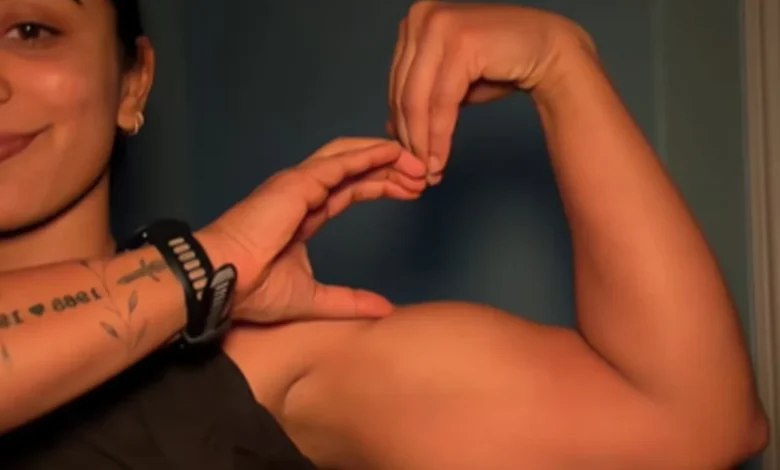
The digital landscape of late 2026 has witnessed the rapid ascent of a novel social media phenomenon known as the Bicep Heart Trend, seamlessly blending elements of physical fitness culture with the universally recognized aesthetics of the "thirst trap." Emerging in late October 2026, this viral sensation has quickly saturated major short-form video platforms including TikTok and Instagram Reels, capturing the attention of millions of users worldwide. Characterized by a specific combination of muscular flexion and hand positioning to create the silhouette of a heart, the trend represents the latest iteration of participatory internet culture, highlighting how creative physical challenges can rapidly mobilize online communities across demographics.
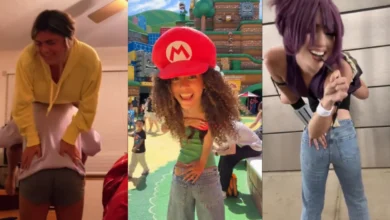
To understand the mechanics of the Bicep Heart Trend, one must examine the specific choreography required by participants. The trend begins with an individual flexing their bicep directly in front of the camera, highlighting muscular definition and fitness dedication. The participant then extends their fingers downward toward their forearm. To complete the geometric illusion, the individual uses their opposite hand, shaped into a distinct "C" configuration, and places it squarely into the gap created between the flexed arm’s fingertips and the forearm. When executed correctly, the negative space forms a clear heart shape, merging the traditional bravado of a fitness flex with a gesture of romantic or playful affection.
The origin of this viral movement can be traced directly to October 31, 2026. On this date, TikTok creator @kavithageorge published a short video accompanied by the inquisitive caption, "Have you ever heard of a bicep heart?" In the clip, the creator demonstrates the maneuver, executing the complex positioning of the arm and hand to form the heart shape. The visual juxtaposition of a serious physical flex instantly softening into a symbol of affection struck a chord with viewers. The video experienced exponential growth, accumulating an astounding 5.3 million views within its first week online. This initial momentum laid the groundwork for a broader cultural wave, transforming a localized creative idea into a widespread internet challenge.
Following its Halloween debut, the trend transitioned from an isolated viral video into a cross-platform movement during the first week of November 2026. Creators across TikTok, Instagram Reels, and Facebook began experimenting with their own interpretations, variations, and comedic takes on the physical challenge. The rapid dissemination of the trend across multiple platforms underscored the interconnected nature of modern social media ecosystems, where viral content frequently jumps boundaries to reach entirely new audiences.
The chronology of the trend’s spread illustrates its swift and aggressive adoption by prominent creators and everyday users alike. On November 1, 2026, TikTok user @chrisphamne uploaded his own iteration of the Bicep Heart Trend. His video resonated deeply with the platform’s algorithm and user base, pulling in over 8.2 million views in a mere five days. This rapid accumulation of engagement signaled to the wider creator community that the trend possessed high replay value and broad aesthetic appeal, encouraging further participation from fitness enthusiasts and lifestyle influencers alike.
As the movement gained traction, users began to incorporate collaborative elements. On November 3, 2026, Instagram user baldbangbaddie posted a video featuring both herself and her boyfriend executing the trend together. This collaborative spin on the challenge garnered over 40,000 likes within three days, demonstrating that the trend could easily be adapted for couples and social viewing. By shifting from a solo display of strength and creativity to a shared activity, the trend expanded its emotional resonance and visual variety.
Recognizing the technical difficulty some users experienced while trying to position their hands and arms correctly, educational content quickly emerged to support the trend’s growth. On November 4, 2026, high-profile TikTok creator @brookemonk_ published a tutorial video breaking down the precise mechanics of how to perform the bicep heart. The instructional content proved immensely popular, driving significant engagement as users sought to master the geometry of the pose. The tutorial amassed over 8.3 million views in just two days, cementing the trend as a mainstream participatory challenge rather than an exclusive feat for seasoned fitness creators.
The trend also inspired comedic and satirical adaptations, a hallmark of enduring internet phenomena. On November 5, 2026, Instagram user jennifer_jinn posted a video of herself visibly crying, paired with a tongue-in-cheek caption pleading for viewers to send her bicep hearts to cheer her up. The humorous contrast between emotional distress and the absurdly specific physical requirement of the trend resonated with audiences, collecting over 314,000 likes in a single day. This variation demonstrated the flexibility of the meme, allowing users to inject humor, irony, and narrative context into their posts.
While the Bicep Heart Trend may appear at first glance to be a superficial piece of digital entertainment, sociologists and digital media analysts note that such trends fulfill important psychological and social functions within modern virtual communities. By combining physical fitness—a category heavily associated with self-improvement, discipline, and body positivity—with a symbol of love and connection, creators tap into established frameworks of positive reinforcement. Fitness-oriented content consistently performs well on platforms like TikTok and Instagram, but the addition of the heart gesture softens the intimidating nature of traditional "thirst traps," making the content more approachable, playful, and shareable.
Furthermore, the rapid rise of the trend underscores the increasing sophistication of short-form video algorithms in promoting interactive challenges. Platforms are structurally designed to reward content that inspires replication and duets. When a creator posts a physical challenge like the Bicep Heart Trend, they are not merely broadcasting a finished product; they are issuing an invitation to their audience to participate, test their own physical coordination, and contribute their unique voice to an ongoing digital conversation.
The broader implications of the Bicep Heart Trend reflect the ongoing evolution of internet culture toward micro-trends that combine physical dexterity with aesthetic appeal. As users continue to innovate and find new ways to adapt the core concept—ranging from solo fitness showcases to couple collaborations and satirical commentary—the trend serves as a case study in how simple visual ideas can achieve global reach within a matter of days. Whether the trend will maintain its momentum or eventually give way to the next wave of short-form video challenges remains to be seen, but its rapid ascent in late 2026 firmly secures its place in the timeline of modern social media milestones.