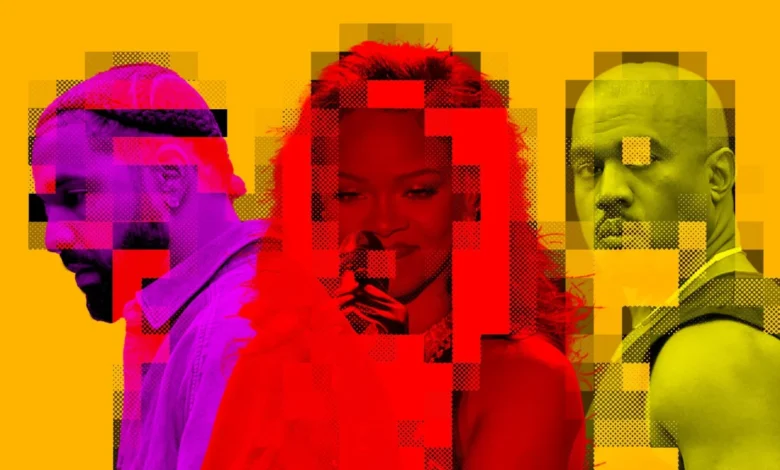
The digital landscape of music is undergoing a seismic shift, propelled by the rapid advancement of generative artificial intelligence (AI). What once seemed like science fiction is now a tangible reality, with AI tools capable of replicating the voices of popular artists with uncanny accuracy. This burgeoning technology is blurring the lines between authentic creations and sophisticated imitations, sparking a complex debate about creativity, copyright, and the future of the music industry. From viral social media tracks to mainstream artist reactions, the implications are far-reaching and the legal ramifications are only beginning to be understood.
The AI Voice Revolution Hits the Airwaves
In recent months, platforms like YouTube, Instagram, and TikTok have become fertile ground for AI-generated music. These tracks often feature the distinct vocal stylings of established artists, leading to a growing difficulty for listeners to discern the authenticity of the performances. This phenomenon gained significant public attention in February when DJ David Guetta shared a concert clip on his social media showcasing a song he created using AI-generated vocals of Eminem. The use of Eminem’s voice was reportedly without the rapper’s permission, highlighting an immediate ethical and legal quandary.
This trend is not isolated. The French hip-hop duo AllttA released a track titled "Savages," which prominently features AI-generated vocals of Jay-Z. New Yorker writer Kyle Chayka noted that Jay-Z’s "familiar voice adds something ineffably compelling to the track," underscoring the powerful allure of these AI imitations. More recently, a collaboration titled "Heart on My Sleeve," attributed to AI-generated versions of Drake and The Weeknd, went viral across social media. The sophistication of this track led some to speculate it was a calculated marketing ploy by an emerging startup, demonstrating the potential for AI music to be leveraged for commercial purposes.
The proliferation of these AI-generated tracks continues unabated, with many being faux cover songs produced by relatively unknown creators. This surge in artificial artistry has not been met with universal acclaim. Last week, Drake himself took to Instagram to express his frustration with an AI-generated rendition of him rapping Ice Spice’s hit song "Munch (Feelin’ U)," labeling it "the final straw." While global pop superstar Rihanna has yet to publicly comment on the numerous AI-generated versions of her performing songs by artists like Beyoncé, Katy Perry, and Maroon 5, her silence amidst such widespread imitation is notable.
Industry Giants Respond to the AI Challenge
The music industry, a sector historically protective of its intellectual property and artist rights, is beginning to grapple with this disruptive technology. Universal Music Group (UMG), a powerhouse that represents a vast roster of artists including Drake and Rihanna, has reportedly engaged with major music streaming services such as Spotify and Apple Music. The objective of these discussions is to collaborate on strategies to curb the unauthorized scraping of content, a fundamental process that fuels the development of music generative AI tools.
This proactive stance by UMG may well be a response to the increasingly concerned assessments from financial analysts. An influential analyst for BNP Paribas Exane recently characterized AI-generated music as a "new disruptive threat" to the established industry model. The inherent complexities of this technology raise a multitude of legal questions that currently lack definitive answers, creating an environment of uncertainty for both creators and rights holders.
The Creator Economy and AI Tools
Despite the industry’s apprehension, a segment of fans appears to be embracing the ambiguity and creative possibilities offered by AI music. One such creator, who goes by the online moniker YeezyBeaver and is a 22-year-old from Oklahoma, has garnered significant attention for his YouTube channel. The channel features a wide array of songs performed by an AI-generated Kanye West, with his rendition of Plain White T’s "Hey There Delilah" proving to be particularly popular and surprisingly engaging. YeezyBeaver, who requested that his real name not be published, explained that his foray into AI music creation began after discovering a post on a Kanye West fan server that provided access to a rapper’s voice model and instructions for integrating it into generative AI tools.
YeezyBeaver, like many other emerging AI music creators, utilizes a tool known as So-Vits-SVC. This software has achieved such widespread popularity that it boasts its own hashtag on TikTok, accumulating over 2 million views. His initial experiments involved overlaying Kanye West’s voice onto Drake’s track "Jungle," an endeavor that achieved moderate viral success on TikTok. "I just started looking for other artists, songs that I think Kanye would sound good on," YeezyBeaver stated. "And then that’s pretty much how we got to here."
Another individual, operating under the pseudonym pieawsome, is an American college student who, like YeezyBeaver, prefers to remain anonymous. Pieawsome is also actively experimenting with Kanye West’s voice. He is an active member of the internet’s "Kanye unreleased community," a group dedicated to the unfinished works of the artist. "I realized we had enough Kanye material where we could probably make an AI model out of it to finish some of the songs," pieawsome shared. By meticulously isolating acapella sections from available but unreleased Kanye West audio, he fed this data into So-Vits-SVC. After a few days of training, the resulting AI model produced impressive output. He then disseminated his Kanye voice model on Discord, where it quickly gained traction. "People started working with it, and [the music produced] got passed around a bunch of people," pieawsome recounted. The impact of this community effort was evident when Travis Scott himself liked an Instagram post featuring a track where Kanye West’s AI-generated voice covered Ice Spice’s "Munch," a testament to the growing influence and reach of these fan-driven AI music projects.
The Visual Dimension: AI-Generated Music Videos
The creative application of AI in music extends beyond audio to encompass visual elements as well. Jered Chavez, a 19-year-old student at the University of South Florida, produced an AI-generated music video that has garnered significant attention on Instagram. The video features an imaginative scenario where Drake, Kanye West, and Kendrick Lamar perform "Fukashigi no Karte," the closing theme song from the popular anime series Rascal Does Not Dream of Bunny Girl Senpai. Chavez described his motivation as a desire to present a "cool concept." He added, "I’m clearly not the first one to start it, but what makes my page stand out is I try to put a little twist on it and add a comedy aspect."
Chavez’s comedic approach also serves as a strategic measure to mitigate potential risks associated with creating such content. "With this area of AI, there’s a lot of controversy and ethical concerns," Chavez acknowledged. "Obviously, people that make this music and use this AI are taking someone’s likeness and, most of the time without permission, creating something that’s essentially putting words in people’s mouths."
This concern is particularly amplified when considering the use of generative AI to replicate the voices of deceased artists. "They’re not around to give their approval, and we don’t truly know what they would want," Chavez pointed out. This ethical dilemma does not appear to deter all creators; for instance, BohemianRhapsod.ai offers users the ability to orchestrate a choir of 16 AI-generated Freddie Mercury voices performing one of Queen’s most iconic hits, demonstrating a different approach to the use of AI for artistic tribute.
Navigating the Legal and Ethical Minefield
While a general consensus is emerging that generative AI presents significant challenges, the precise legal standing of hobbyist creators remains ambiguous. Pieawsome likens his AI music production to video game modding or fanfiction writing, stating, "It’s our version of that. That may be a good thing. It may be a bad thing. I don’t know. But it’s kind of an inevitable thing that was going to happen."
However, a contrasting perspective comes from Jonathan Bailey, former chief technology officer of Soundwide, a music technology company. Bailey posits, "I think you can make a persuasive argument that using AI to reanimate Jay-Z’s voice to have him rap or sing something he never created is kind of a form of identity theft."
The legal landscape surrounding AI-generated music is so nascent that even seasoned legal professionals are hesitant to offer definitive opinions. Donald Passman, a prominent lawyer representing major artists like Adele and Taylor Swift, declined to comment on the use of AI to imitate artists for this story, stating his reluctance to offer any statements that might conflict with future legal positions. "It’s way too new," Passman remarked about the technology.
Copyright Takedowns and the Future of AI Music
Some music labels appear to be taking a decisive stance. Reports from Discord servers dedicated to AI music indicate that numerous YouTube channels featuring AI-generated music have been subjected to copyright takedown notices. "I guess that’s one way of tackling it," Chavez commented. "But honestly, now this technology is out there, I don’t think people are ever going to stop using it."
Chavez believes that the ultimate responsibility lies with the creators themselves. "The responsibility lies in the judgment of the people that are making [AI-generated music]," he asserted. "I try to use my best judgment. This is kind of new territory for everyone."
The implications of this technological advancement extend beyond mere imitation. The ability to generate music in the style of any artist, past or present, raises profound questions about the definition of artistic originality, the value of human creativity, and the economic models that have sustained the music industry for decades. As AI continues to evolve, the industry faces the daunting task of establishing clear ethical guidelines and legal frameworks to navigate this uncharted territory, ensuring that innovation does not come at the expense of artists’ rights and the integrity of creative expression. The ongoing dialogue between artists, record labels, tech developers, and legal experts will be crucial in shaping the future of music in the age of artificial intelligence.