Breaking Down Global Silos: The Launch of the UN System Data Commons and the Future of AI-Driven International Research


For decades, international organizations, researchers, and policymakers combating the world’s most pressing systemic crises faced a frustrating paradox: while the United Nations system routinely compiled some of the highest-integrity, most meticulously verified statistical data on earth, that information was locked behind bureaucratic walls. Critical data points tracking public health, educational attainment, environmental degradation, and the eradication of extreme poverty were scattered across a vast archipelago of independent UN agencies. Each organization maintained its own internal storage taxonomy, preferred formats, and geographic boundaries.
Consequently, connecting the dots between a rise in childhood malnutrition in a specific region and local economic indicators often demanded months of painstaking manual labor. Data analysts spent the majority of their valuable hours formatting and reconciling conflicting spreadsheets rather than generating actionable insights or developing evidence-based interventions.
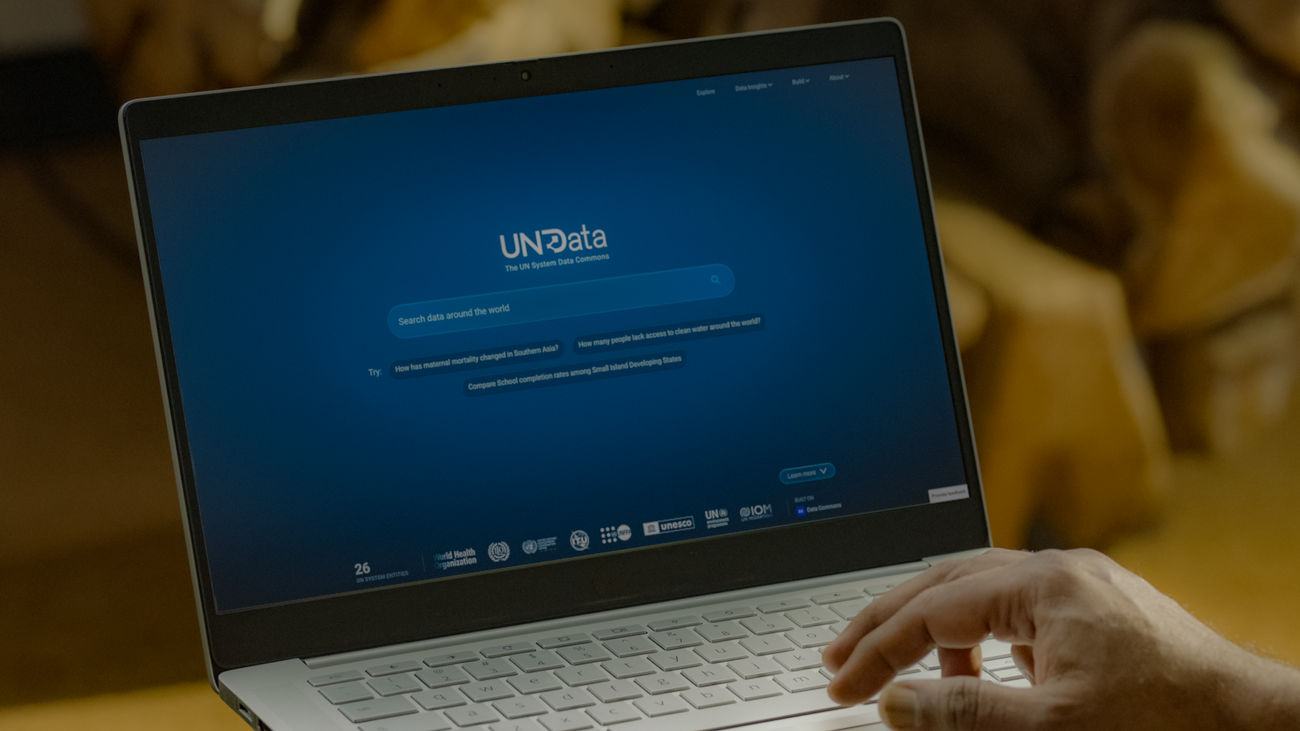
To fundamentally dismantle these historic silos and accelerate global problem-solving, the United Nations system has officially launched the UN System Data Commons. Built upon Google’s open-source Data Commons infrastructure—and made possible through critical philanthropic support from Google.org to the UN Foundation—this transformative platform unites decentralized global statistics into a single, highly searchable, AI-ready knowledge graph. Accessible publicly at data.un.org, the platform seeks to streamline how researchers, journalists, policymakers, and international leaders interact with vital global statistics.
The Architecture of Interconnected Global Knowledge
At its technological core, the UN System Data Commons functions by establishing a unified language for disparate datasets. Global challenges do not exist in isolation; public health crises frequently intersect with economic downturns, educational disruptions, and climate-related displacement. However, analyzing these overlapping vectors has historically required navigating multiple distinct databases, each operating under entirely separate administrative frameworks.
The new platform resolves this structural friction by automatically harmonizing metrics, timelines, and geographic boundaries into an interconnected digital environment. Instead of forcing human analysts to spend weeks standardizing disparate database schemas, the platform aligns them natively. This structural shift allows researchers to redirect their intellectual capital toward uncovering profound macroeconomic trends, evaluating policy efficacy, and designing targeted, evidence-based solutions.
Furthermore, the integration of cutting-edge artificial intelligence democratizes access to these traditionally elite datasets. Rather than requiring advanced statistical programming skills or specialized database querying languages, the UN System Data Commons incorporates natural-language search capabilities. Users ranging from non-profit program managers in the developing world to international policy analysts and investigative journalists can type intuitive questions in plain, everyday language. The system instantly processes the request, retrieves the verified data, and generates dynamic, interactive visualizations.
Agentic Research Assistants and the Model Context Protocol
The launch represents a monumental leap forward in how researchers interact with institutional data by introducing AI-driven agentic research assistants directly into the workflow. Built on open standards such as the Model Context Protocol (MCP), the platform renders global datasets fully AI-ready. This technological breakthrough empowers autonomous AI agents to fetch authoritative figures directly from the UN System Data Commons without human intervention, cross-reference datasets across entirely separate thematic domains, and package the findings into comprehensive formats.
Within seconds, an AI agent can synthesize complex queries into ready-to-use charts, graphs, infographics, or even complete, structured drafts of research reports. While this automation drastically reduces the time required to compile foundational research, project leadership emphasizes that rigorous human oversight remains vital. Even when operating on strictly grounded, verified statistical facts, analysts are strongly encouraged to review underlying source citations before publishing or utilizing critical figures in major policy decisions.
Despite the profound capabilities of these new digital tools, absolute data integrity remains the non-negotiable cornerstone of the initiative. Every dataset hosted within the UN System Data Commons undergoes rigorous validation by official UN statisticians and specialized technical experts. This stringent verification process ensures that every response generated by the platform remains firmly anchored in official, trusted facts, safeguarding institutional credibility against the hallucinations or inaccuracies that occasionally plague generic consumer artificial intelligence tools.
A Chronology of Collaboration and Digital Transformation
The genesis of the UN System Data Commons spans several years of strategic alignment between global technology leaders and international multilateral institutions. The initiative addresses longstanding criticisms regarding the accessibility of UN data, which have been raised repeatedly by member states, academic institutions, and civil society organizations since the early adoption of the Sustainable Development Goals (SDGs).
- 2018–2020: Independent evaluations of international development data highlight severe fragmentation across specialized UN agencies, noting that fragmented data architecture significantly impedes real-time tracking of global targets.
- 2021–2022: Initial exploratory partnerships begin between technology developers and philanthropic foundations to adapt Google’s open-source Data Commons framework for public-sector use, proving that massive, disparate datasets could be unified into a single knowledge graph.
- 2023: Google.org announces substantial philanthropic backing directed through the UN Foundation, providing the financial and engineering foundation necessary to scale the infrastructure specifically for the United Nations ecosystem.
- 2024–2025: Beta testing, architectural integration of natural-language processing capabilities, and rigorous internal validation protocols are established in collaboration with statisticians across multiple UN entities.
- October 2026: The official public launch of the UN System Data Commons at data.un.org, introducing natural-language querying, interactive exploration areas, and advanced Model Context Protocol (MCP) integrations for AI agents.
Broader Implications for Global Policy and Sustainable Development
The deployment of the UN System Data Commons arrives at a critical juncture for the international community. With the timeline for achieving the United Nations Sustainable Development Goals drawing closer, global leaders face unprecedented pressure to accelerate progress on poverty reduction, global health security, gender equality, and climate action. In an era marked by rapid, complex crises—ranging from sudden economic shocks to large-scale humanitarian emergencies—the speed at which decision-makers can access, analyze, and act upon reliable data can mean the difference between effective intervention and institutional failure.
By lowering the technical barriers to complex data analysis, the platform empowers smaller organizations, regional think tanks, and local researchers who previously lacked the specialized resources required to process massive, fragmented international databases. A public health official in a developing nation can now query multi-agency datasets as seamlessly as a well-funded research institute in a global financial capital. This democratization of information fosters a more inclusive, transparent global research community.
Roadmap for Expansion and Future Outlook
The current release represents only the preliminary phase of a much broader, long-term digital transformation strategy for the international body. Over the coming year, the UN system plans to aggressively expand the platform’s repository by systematically onboarding datasets from an even wider array of specialized UN entities, programs, and funds.
The explicit strategic objective for the initiative is to successfully integrate approximately 80 percent of all UN system statistical datasets into the unified knowledge graph by the year 2027. As these additional data streams—spanning specialized sectors such as labor statistics, maritime trade, environmental protection, and refugee demographics—are absorbed into the platform, its utility as an all-encompassing global research engine will compound exponentially.
For researchers, policymakers, journalists, and global citizens eager to engage with the world’s most comprehensive repository of international statistics, the platform is now live and fully operational at data.un.org, offering a new frontier in the collective effort to measure, understand, and ultimately improve the human condition.