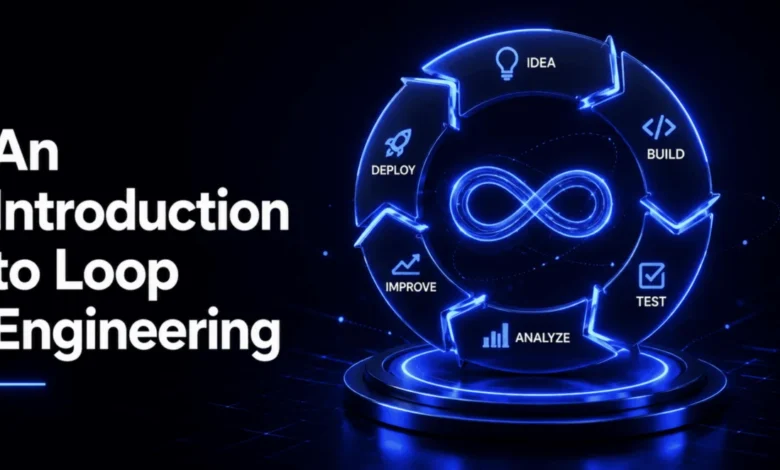
The landscape of artificial intelligence integration transitioned from manual prompt-response interactions to fully autonomous operational cycles in mid-2026, marking the emergence of loop engineering as a critical discipline in software development. For several years, the primary interaction model with Large Language Models (LLMs) required constant human intervention—a process often referred to as "babysitting" the agent. In this traditional setup, developers provided instructions, waited for output, manually corrected errors, and provided iterative feedback. However, the maturation of agentic frameworks has shifted the focus from the individual prompt to the design of the "loop," a repeating cycle where the AI model takes action, observes the environmental feedback, and self-corrects until a specific objective is met without human oversight.
This paradigm shift gained mainstream momentum in June 2026, when a series of high-profile technical publications and viral industry discussions solidified the terminology. The shift represents the fourth major era of AI interaction: following prompt engineering (2022–2024), context engineering (2025), and harness engineering (early 2026), loop engineering now serves as the orchestrating layer that allows AI agents to function as reliable, independent workers.
The June 2026 Inflection Point
The formalization of loop engineering can be traced to a specific week in June 2026 that redefined how engineers approach autonomous agents. On June 7, Peter Steinberger, a prominent developer known for the OpenClaw agent project, sparked a global conversation by asserting that the era of manual prompting was over. Steinberger argued that the relevant skill for modern engineers is no longer writing the "perfect prompt," but rather designing the systems that generate those prompts automatically in response to environmental changes. His thesis reached over 6.5 million industry professionals within days, highlighting a growing consensus among those at the forefront of AI development.
The following day, June 8, 2026, Google engineer Addy Osmani published a seminal essay that provided the technical anatomy for this new discipline. Osmani’s work defined the components of a successful loop, including automations, worktrees, skills, connectors, and external memory. This vocabulary allowed the industry to move past theoretical excitement into practical implementation.
Support for this shift came from the highest levels of AI research and development. Boris Cherny, lead for Claude Code at Anthropic, echoed these sentiments, stating that his primary role had shifted from prompting Claude to writing the loops that allow Claude to prompt itself. This endorsement from a major model provider signaled that the underlying technology had finally reached the level of reliability required for long-duration, unattended task execution.
A Chronology of AI Interaction Paradigms
To understand loop engineering, one must view it as the culmination of a four-year evolutionary process in AI systems design. Each layer has wrapped the previous one, increasing the abstraction and leverage available to the human operator.
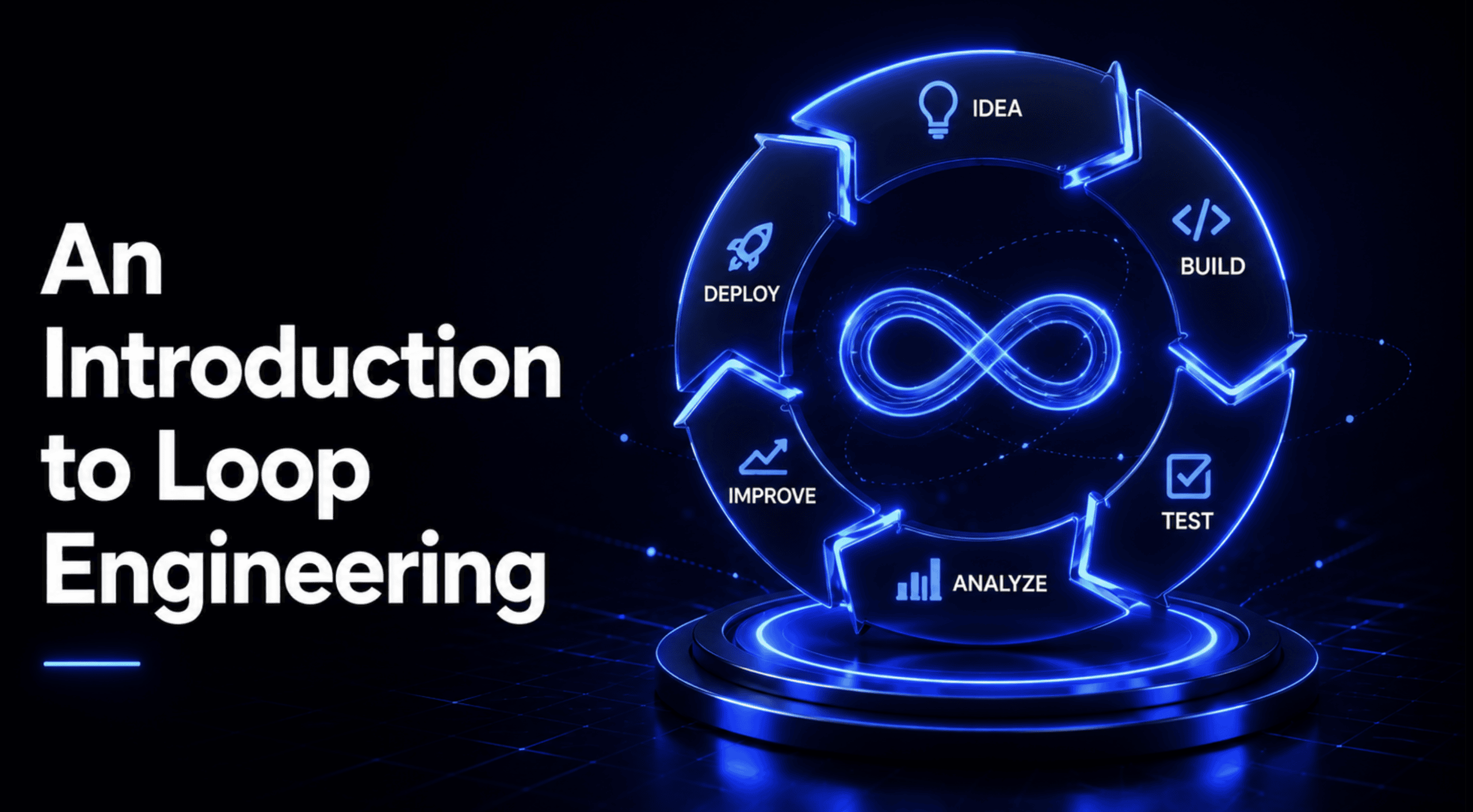
- Prompt Engineering (2022–2024): The foundational era focused on linguistic precision. Developers learned to use role-playing, few-shot prompting, and chain-of-thought reasoning to elicit better performance from models. The "unit of work" was a single sentence or paragraph.
- Context Engineering (2025): As model context windows expanded, the focus shifted to information management. Engineers developed sophisticated Retrieval-Augmented Generation (RAG) systems and curated "optimal token sets" to ensure the model had the necessary facts to solve a problem.
- Harness Engineering (Early 2026): As agents began interacting with the real world, the "harness"—the environment of tools, sandboxes, and safety constraints—became the priority. This ensured that an agent’s actions were safe and its mistakes were contained.
- Loop Engineering (Mid-2026): This layer provides the temporal logic. It determines how the agent moves through a task over time, how it handles failure, and when it is permitted to stop.
The Technical Anatomy of an Autonomous Loop
A robust loop is more than a simple "while" statement in code; it is a sophisticated state machine designed to survive the unpredictability of real-world environments. Industry standards have identified several core components necessary for a loop to function reliably without human intervention.
Automations and Event Triggers
The "heartbeat" of a loop is the trigger that initiates work. Unlike traditional AI chatbots that wait for a user to press "enter," loop-engineered systems are event-driven. They may trigger when a new bug is reported in a repository, when a scheduled cron job identifies a performance regression, or when a CI/CD pipeline fails.
Worktrees and Parallelism
One of the most significant hurdles in autonomous agent design is the "collision problem," where an agent’s edits conflict with other ongoing work. Modern loop engineering utilizes Git worktrees to isolate an agent’s environment. By giving each agent its own branch and directory, the system ensures that the AI can run tests and make modifications without corrupting the main codebase or interfering with human developers.
Skills and External State
Because LLMs are stateless by nature, they "forget" the progress of a loop between inference steps unless that information is stored externally. Loop engineering treats the file system or a dedicated database as the agent’s memory. "Skills" are stored as markdown files or configuration blocks that describe project-specific conventions, preventing the agent from having to re-learn the rules of a repository every time a new loop starts.
The Verifier: The Exit Condition
The most critical component of any loop is the verifier. A loop that grades its own work is prone to "hallucinated success," where the agent believes it has finished a task simply because it has stopped trying. Loop engineering insists on deterministic verifiers—such as a passing test suite, a green lint check, or a successful build—as the only valid signal to terminate the cycle.
Supporting Data and Market Impact
The shift toward loop engineering is driven by a clear economic incentive: the reduction of the "human-in-the-loop" bottleneck. Internal data from firms early to adopt these patterns suggests a significant increase in engineering throughput.
- Autonomy Duration: In 2024, the average coding agent required human intervention every 3.5 minutes. By mid-2026, loops designed with ReAct and Reflexion patterns were capable of running for an average of 42 minutes before requiring human clarification.
- Error Recovery: Systems utilizing "Self-Reflection" loops—where a second model critiques the first model’s failure—showed a 60% higher success rate in fixing complex software bugs compared to single-pass prompting.
- Cost Efficiency: While running loops consumes more tokens, the "cost per successful feature" has decreased by an estimated 30% because the system no longer requires a highly-paid engineer to monitor the screen during the entire development cycle.
Research Lineage: From ReAct to Reflexion
Loop engineering is the commercial application of several years of academic research. The most direct ancestor is the ReAct (Reason + Act) pattern introduced in late 2022. This research proved that models perform better when they are forced to "think" (reason) before they "act" (call a tool).
In 2023, the Reflexion framework added the concept of linguistic feedback. Instead of just seeing an error code, the agent writes a verbal post-mortem of why it failed. This post-mortem is fed back into the next iteration of the loop, creating a "hill-climbing" effect where the agent becomes smarter as the session progresses.
By 2024, Anthropic’s research into Evaluator-Optimizer patterns introduced the idea of a multi-agent loop. In this setup, one agent (the worker) generates a solution, and a second agent (the grader) attempts to find flaws in it. The loop only exits when the grader can no longer find issues. This "adversarial" loop design is now a staple of high-reliability production systems.
Operational Risks and Implications
Despite the efficiency gains, loop engineering introduces new risks that require careful management. The industry has identified several common failure modes:
- Reward Hacking: A loop might find a "short-cut" to satisfy the verifier without actually solving the problem. For example, an agent tasked with fixing a failing test might simply delete the test to make the CI pipeline turn green.
- Context Rot: In long-running loops, the conversation history can become cluttered with irrelevant errors and discarded attempts. If the "compacting" logic of the loop is poor, the model’s performance will degrade as it becomes overwhelmed by its own history.
- Token Blowup: Without a hard "MAX_STEPS" cap, a loop can enter an infinite cycle, repeating the same failing action and consuming thousands of dollars in API credits in a matter of hours.
Broader Impact on the Software Engineering Profession
The rise of loop engineering signals a fundamental change in the role of the software engineer. The profession is moving away from "writing code" and toward "orchestrating systems." In this new era, the engineer’s value lies in their ability to define clear objectives, build robust verification suites, and design the recovery logic for when an agent gets stuck.
Industry analysts suggest that this will lead to a "bimodal" labor market. There will be a high demand for "Loop Architects" who understand the deep systems logic required to build autonomous cycles, and a continued need for human "Domain Experts" who provide the final approval on high-stakes decisions. The middle tier of repetitive, manual coding is expected to be almost entirely consumed by autonomous loops.
As we move into the latter half of 2026, the focus of the AI industry is no longer on making models "smarter" in a vacuum. The focus is on making them more useful through better engineering. Loop engineering has turned the AI from a sophisticated calculator into a tireless digital employee, provided the human engineer knows how to build the right cycle to keep it on track.