AI Researchers Accuse CBS and Google of Overhyping Emergent Properties in Recent 60 Minutes Segment

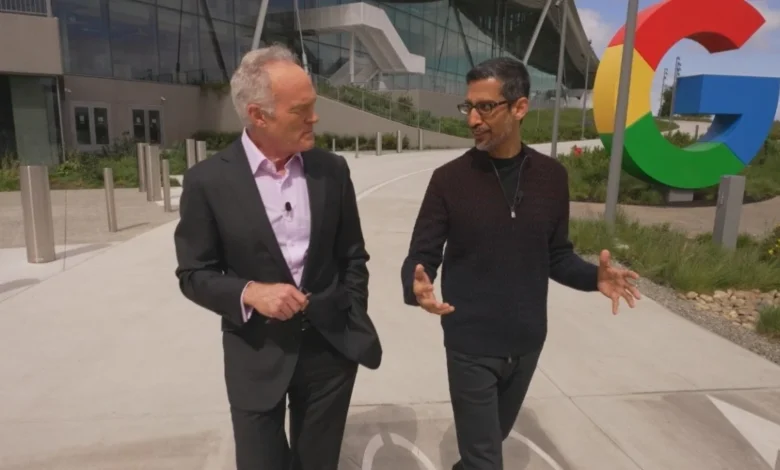
The intersection of artificial intelligence, corporate public relations, and mainstream media has become a flashpoint for controversy following a high-profile segment on CBS’s 60 Minutes. The broadcast, which featured Google CEO Sundar Pichai and other senior executives, aimed to demystify the rapid advancement of large language models (LLMs). However, the segment has ignited a firestorm within the academic and research community, with experts accusing both the network and the tech giant of misrepresenting how these models function by labeling their capabilities as "mysterious" or "emergent."
At the heart of the dispute is the segment’s portrayal of PaLM—the foundational technology powering Google’s Bard chatbot—as an entity that spontaneously acquired the ability to speak and translate Bengali without explicit training. Critics, including former Google ethics researchers, argue that this narrative relies on a misunderstanding of how neural networks process data, suggesting that the broadcast prioritized sensationalism over technical accuracy.
A Chronology of the Controversy
The narrative arc of the 60 Minutes segment centered on the concept of "emergent properties," a term frequently used by AI researchers to describe capabilities that appear in large models which were not explicitly programmed into them. During the interview, correspondent Scott Pelley presented a demonstration of Google’s AI responding to queries in Bengali. Pelley stated, “We discovered that with very few amounts of prompting in Bengali, it can now translate all of Bengali.”
However, this narrative contradicts established technical documentation. The chronology of the model’s development reveals a different reality:
- April 2022: Google officially unveiled PaLM (Pathways Language Model). In the accompanying research paper, Google’s own scientists acknowledged that the model was trained on a massive corpus of text, which included a small percentage of Bengali data—specifically 0.026% of the total training set.
- May 2022: During Google’s I/O developer conference, CEO Sundar Pichai showcased the model’s ability to handle Bengali. Even then, the framing focused on the "impressive" nature of the model’s cross-lingual synthesis, though the existence of the training data was documented in the public research paper.
- April 2023: The 60 Minutes broadcast aired, renewing the claim that the model learned a language it had "never seen before."
- Post-Broadcast: Within hours of the airing, AI ethics experts and independent researchers took to social media to correct the record, pointing to the original 2022 documentation to debunk the "spontaneous learning" narrative.
The Technical Debate: Emergence vs. Statistical Probability
The core of the disagreement lies in the definition of "learning." From a machine learning perspective, LLMs are statistical engines trained to predict the next token in a sequence based on vast amounts of input data.
Margaret Mitchell, a prominent AI researcher and former co-lead of Google’s Ethical AI team, was among the first to challenge the segment’s assertions. Mitchell emphasized that if a model has been exposed to even a fraction of a language in its training data, it is not "learning" the language from scratch when prompted; it is simply accessing the statistical patterns it already internalized during the training phase.
"By prompting a model trained on Bengali with Bengali, it will quite easily slide into what it knows of Bengali: This is how prompting works," Mitchell noted. The academic consensus, represented by voices like University of Washington professor Emily M. Bender, is that describing this process as "mysterious" or "magic" obfuscates the mechanical reality of the software. Bender argued that the term "emergent properties" is increasingly being used as a rhetorical proxy for "Artificial General Intelligence" (AGI)—a hypothetical, sentient-like intelligence—without providing the empirical evidence to support such a claim.
Corporate Strategy and Public Perception
The tension between the PR-driven narrative of tech companies and the cautious scrutiny of the research community is not new. Google, currently locked in an intense "AI arms race" with OpenAI and Microsoft, is under significant pressure to demonstrate that its technology is not only functional but groundbreaking.
When asked to comment on the backlash, a Google spokesperson, Jason Post, clarified that the company never denied that the model was trained on Bengali data. Instead, he drew a distinction between being trained on a language and being trained on specific tasks like translation or Q&A. "While the PaLM model was trained on basic sentence completion in a wide variety of languages… it was not trained to know how to translate between languages, answer questions in Q&A format, or translate information across languages while answering questions," Post stated.
This nuance, however, was largely absent from the televised segment. For many observers, the disconnect between Google’s internal technical understanding and its external marketing represents a deliberate strategy to build public mystique. By framing the AI as a "black box" that even its creators do not fully understand, companies may be inadvertently—or intentionally—creating a sense of inevitable progress that discourages regulatory oversight.
Broader Implications for AI Literacy
The incident highlights a growing gap in AI literacy between the public and the scientific community. When major networks like CBS present complex software behaviors as "mysterious," it complicates the public’s ability to understand the risks and limitations of the technology.
- Accountability and Misinformation: Critics argue that when media outlets fail to verify technical claims, they effectively become conduits for corporate disinformation. This makes it difficult for policymakers to distinguish between legitimate technological breakthroughs and clever, yet predictable, statistical output.
- The "Black Box" Narrative: The concept of the "black box" is a double-edged sword. While it is true that neural networks are notoriously difficult to interpret in terms of their internal decision-making processes, labeling them as "magical" or "emergent" shifts the conversation away from the very real, tangible issues of bias, data privacy, and labor ethics that are embedded in the training sets themselves.
- The Erosion of Academic Trust: The dismissal of peer-reviewed documentation in favor of simplified marketing narratives creates a friction between industry researchers and academic institutions. If the scientific record—the very papers published by Google—is ignored by the company’s own leadership in favor of a more marketable story, it undermines the integrity of the entire field.
Analytical Outlook: The Path Forward
The 60 Minutes controversy serves as a microcosm of the current state of the artificial intelligence industry. As companies compete for market dominance, the line between product demonstration and scientific discovery continues to blur.
Moving forward, independent verification remains the most critical tool for maintaining public trust. The incident has prompted a broader call for "AI literacy" in journalism, urging reporters to look beyond press releases and conduct deeper investigations into the provenance of training data.
Ultimately, the ability of a machine to translate a language it has been trained on is an engineering feat of immense scale and complexity, but it is not a supernatural event. By stripping away the performative mystery, researchers are attempting to bring the focus back to the fundamental questions: How is this data collected? Who is being represented in the model? And what are the actual boundaries of the software’s capability?
As AI continues to be integrated into the infrastructure of modern life, the demand for transparency will only grow. The backlash against the recent CBS segment suggests that the research community is no longer content to remain on the sidelines while their work is simplified for public consumption. Whether this will lead to a more restrained communication strategy from Silicon Valley remains to be seen, but the era of unquestioned, "magical" AI narratives appears to be coming to a decisive end.