Samsung’s Experimental Galaxy Z TriFold Sells Out, Successor Rumors Surface with Focus on Revolutionary Hinge Design.

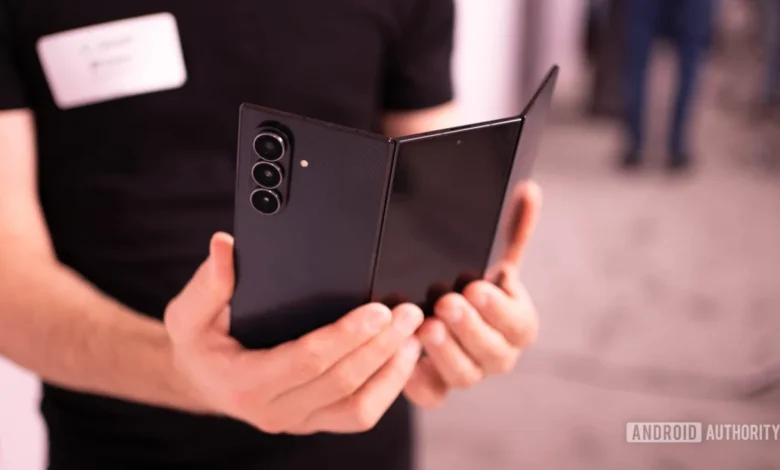
The Samsung Galaxy Z TriFold, an ambitious and notably expensive foldable device that carved out a niche as a limited-run product, officially sold out on April 17, 2026. Following a "last-call" sale earlier in the month, Samsung’s official product landing page for the device now confirms its complete unavailability, directing prospective buyers instead to the Galaxy Z Fold 7 or the Galaxy S26 Ultra. This discontinuation marks the end of a brief but captivating chapter for the 10-inch inner screen foldable, yet it simultaneously ignites speculation regarding a potential successor, the Galaxy Z TriFold 2, reportedly in development with a significant focus on a redesigned hinge mechanism aimed at achieving a thinner and lighter form factor.
The Genesis of a Vision: Samsung’s Foldable Ambitions at CES 2026
The initial unveiling of the Galaxy Z TriFold at CES 2026, the world’s premier consumer electronics show held annually in Las Vegas, signaled Samsung’s unwavering commitment to pushing the boundaries of mobile technology. As a pioneer in the foldable smartphone market, Samsung had already established a strong foothold with its Galaxy Z Fold and Z Flip series. However, the TriFold represented a leap into an even more experimental multi-fold form factor, aiming to blur the lines between smartphones, tablets, and even compact laptops. CES, known for being a launchpad for groundbreaking innovations, provided the ideal stage for such a concept device. Industry analysts at the time lauded Samsung’s audacity, recognizing the TriFold as a statement piece demonstrating the company’s long-term vision for display technology and device convergence.
The device’s defining characteristic was its dual-hinge design, allowing the expansive 10-inch inner display to fold into a more compact, albeit still substantial, form. This large screen real estate was a direct response to consumer and professional demands for enhanced multitasking capabilities and immersive media consumption on a portable device. Samsung’s strategic objective appeared to be exploring the upper echelons of the foldable market, catering to early adopters and power users willing to invest in cutting-edge technology. Despite the initial buzz, there were inherent challenges, notably the device’s substantial price point and its physical dimensions, which positioned it as a premium, niche offering rather than a mainstream contender.
A Brief but Impactful Chronicle: From Concept to Limited Availability
The journey of the Galaxy Z TriFold from a CES showstopper to a sold-out, limited-run product unfolded rapidly. Following its debut in January 2026, the device garnered significant media attention, showcasing Samsung’s engineering prowess. However, from early indications, it became clear that the TriFold was not destined for mass production. Sources close to the company hinted at its experimental nature, suggesting a production run limited by manufacturing complexities, high component costs, and a strategy to gauge market appetite for such an advanced form factor.
The decision to transition the TriFold into a "limited-run product" was publicly announced several months after its initial launch, confirming its status as a collector’s item for tech enthusiasts. This approach allowed Samsung to collect real-world user data and feedback on a revolutionary design without committing to the immense logistical and financial overhead of a full-scale global launch. The "last-call" sale earlier in April served as the final opportunity for consumers to acquire the device, culminating in its official sell-out on April 17, 2026. This chronological progression underscores Samsung’s iterative development process in the foldable segment, where bold experiments often inform future mainstream products. The TriFold, despite its short commercial lifespan, provided invaluable insights into user interaction with multi-fold screens and the practical challenges of integrating advanced hinge mechanisms.
The Perennial Pursuit of Portability: Hinge Innovation as the Key
One of the most significant takeaways from the Galaxy Z TriFold’s existence, and a central theme in the rumors surrounding its successor, revolves around the critical role of hinge technology in foldable design. The original TriFold, with its dual-hinge architecture and a large 10-inch primary display, was inherently a bulky device. It measured a considerable 12.9mm thick when folded and tipped the scales at a hefty 309 grams. This stood in stark contrast to Samsung’s more mainstream foldable, the Galaxy Z Fold 7, which had already achieved impressive feats in miniaturization, measuring 8.9mm thick when folded and weighing a mere 215 grams.
This substantial difference highlights the engineering hurdles associated with multi-fold designs. Each additional fold necessitates more complex hinge mechanisms, increased structural integrity, and often, compromises in overall device thickness and weight. For "TriFold" devices to transcend their niche status and appeal to a broader consumer base, significant advancements in hinge technology are paramount. The rumor, originating from reputable leaker Lanzuk (yeux1122), explicitly states that the goal for the Galaxy Z TriFold 2 is to be "thinner and lighter," directly addressing the primary physical constraint of its predecessor. This ambition points towards an "entirely new hinge solution" that could potentially employ innovative materials, more compact designs, or even novel folding geometries to reduce the device’s footprint without compromising durability or functionality.
The Evolving Landscape of the Foldable Market and Samsung’s Strategy
The context of the Galaxy Z TriFold’s development and rumored successor is deeply rooted in the rapidly evolving foldable smartphone market. Since the introduction of the first commercial foldable phones, the segment has witnessed consistent growth, albeit from a relatively small base. Market projections for 2026 and beyond indicate a continued upward trajectory, with analysts forecasting double-digit percentage growth year-on-year. This expansion is driven by ongoing technological refinements, decreasing production costs, and increasing consumer awareness and acceptance of the form factor.
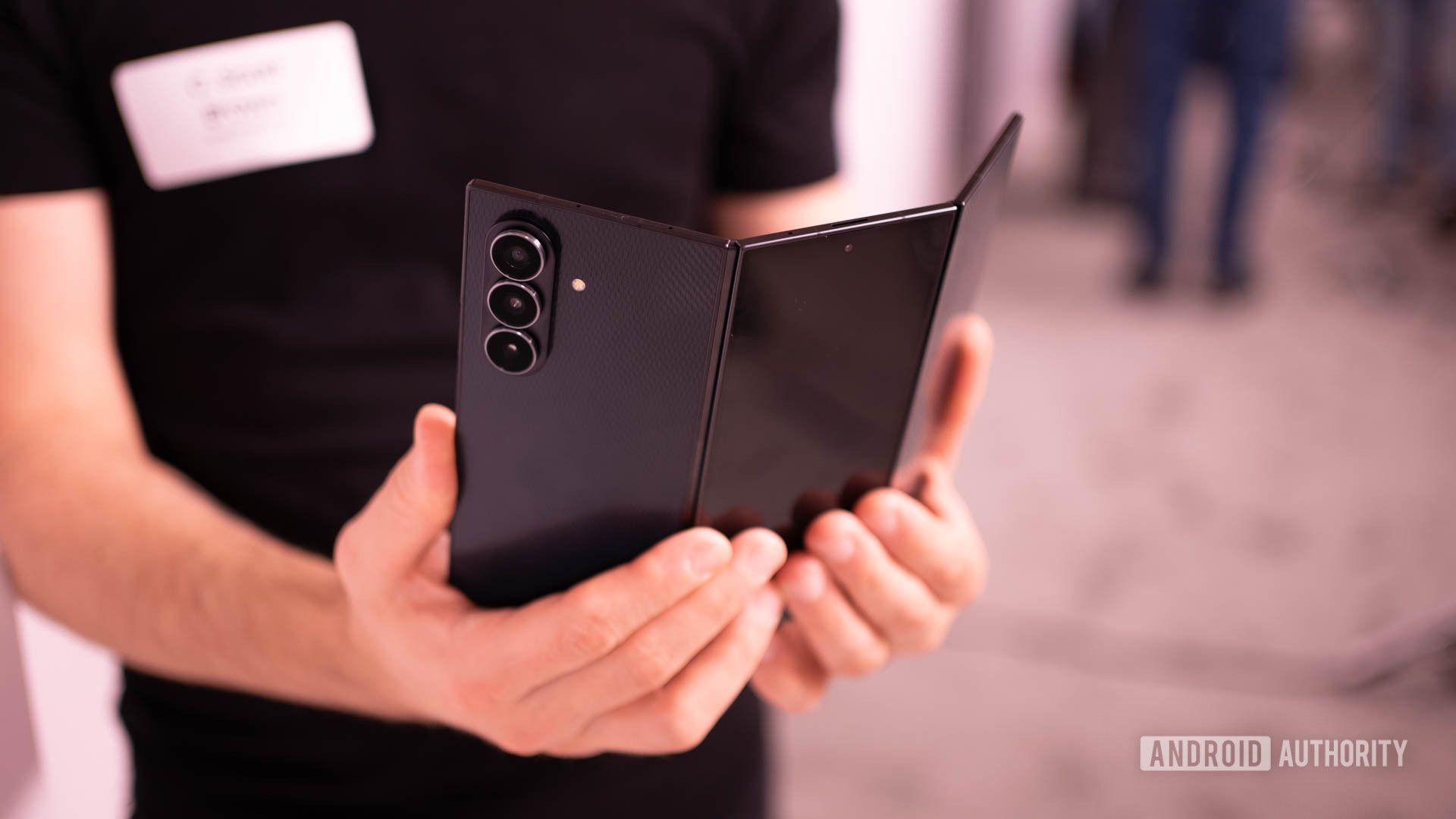
Samsung has consistently maintained its leadership position in this nascent market, largely due to its early entry, continuous innovation, and robust supply chain for foldable displays. However, competition is intensifying, with major players like Huawei, Xiaomi, Google, and OnePlus introducing their own foldable offerings. This competitive pressure encourages companies like Samsung to constantly innovate, not just in iterative improvements but also in exploring entirely new form factors, as seen with the TriFold. The strategy appears twofold: solidify dominance in existing foldable categories (Fold and Flip) while simultaneously experimenting with more radical designs to capture future market segments. The TriFold represents this exploratory arm, pushing the boundaries of what a portable device can be. The success, or even the lessons learned, from such experimental products directly influence the development of future, more mainstream devices.
Galaxy Z TriFold 2: Rumors, Technical Adjustments, and Market Implications
The emergence of rumors surrounding a Galaxy Z TriFold 2, particularly from a reliable source like Lanzuk (yeux1122), injects renewed excitement into the multi-fold segment. The core of the leak centers on a "redesigned hinge" and the explicit aim for a "thinner and lighter" device. This suggests that Samsung is not abandoning the multi-fold concept but rather refining it based on the valuable feedback and technical insights gained from the first iteration. A truly "entirely new hinge solution" could involve advancements such as a more compact "waterdrop" hinge variant adapted for dual folds, new hinge materials that offer greater strength-to-weight ratios, or even a re-evaluation of the folding axis to optimize overall thickness.
Crucially, the rumor also hints that "slightly improved hinge with some technical adjustments" could be applied to regular Galaxy Z Fold models. This is a significant implication, suggesting that the R&D invested in the TriFold 2’s advanced hinge might trickle down to make future Galaxy Z Fold or Galaxy Z Flip models even thinner and lighter than their predecessors, even without a complete overhaul. This iterative approach is characteristic of Samsung, where innovations developed for flagship or experimental devices often find their way into the broader product portfolio, benefiting a wider range of consumers.
For consumers, a thinner and lighter Galaxy Z TriFold 2 would address one of the primary deterrents of the original model. Improved portability could unlock new use cases, making the device more practical for daily commuting, travel, and extended professional use. Such a device could genuinely challenge the need for separate tablets for many users, offering a truly converged experience. However, challenges remain, including maintaining durability with a more complex and thinner design, optimizing software for the unique multi-fold screen configurations, and managing production costs to make the device more accessible, even if still premium.
Strategic Implications for Samsung’s Ecosystem
The pursuit of a second-generation TriFold carries profound strategic implications for Samsung. Firstly, it reaffirms Samsung’s commitment to innovation and its leadership position in the foldable market. By continuously pushing boundaries, even with experimental devices, Samsung differentiates itself from competitors and reinforces its brand image as a pioneer. Secondly, the TriFold series acts as a crucial testbed for advanced display and hinge technologies. The lessons learned from the design, manufacturing, and user experience of these complex devices directly inform the development of future generations of more mainstream foldables. This iterative cycle of innovation ensures that Samsung stays ahead of the curve.
Furthermore, a successful Galaxy Z TriFold 2 could solidify Samsung’s vision for device convergence. A truly portable, multi-fold device that seamlessly transitions between smartphone, tablet, and mini-laptop modes could create an entirely new category, further expanding Samsung’s ecosystem and potentially attracting users who prioritize ultimate versatility. The careful management of "limited-run" products also allows Samsung to manage risk effectively. It can explore radical designs, gauge consumer interest, and refine manufacturing processes without the pressure of mass market expectations, making these devices invaluable assets in their long-term R&D strategy.
The Consumer Outlook and the Future of Multi-Fold Devices
From a consumer perspective, the prospect of a thinner and lighter Galaxy Z TriFold 2 is compelling. The original TriFold, despite its bulk and high price, generated considerable "buzz," indicating a genuine appetite for larger, more versatile portable screens. If Samsung can address the physical limitations while maintaining or enhancing the 10-inch display experience, the TriFold 2 could be a game-changer for specific user groups, such as professionals requiring extensive screen real estate on the go, or multimedia enthusiasts seeking an immersive viewing experience.
The long-term vision for multi-fold devices like the TriFold points towards a future where device categories are less rigid. Imagine a single device that fits comfortably in a pocket but unfolds into a productivity powerhouse, capable of running multiple applications simultaneously on a large, vibrant display. The challenges of cost and durability will undoubtedly persist, and the market for such ultra-premium devices will likely remain niche for some time. However, the continuous refinement of hinge technology, display materials, and software optimization, driven by devices like the rumored Galaxy Z TriFold 2, will pave the way for a future where such advanced form factors become more commonplace and accessible.
In conclusion, the sell-out of the limited-run Galaxy Z TriFold marks the end of its commercial journey but not the end of Samsung’s multi-fold ambitions. The swift emergence of rumors about a Galaxy Z TriFold 2, with a specific focus on an "entirely new hinge solution" to achieve a thinner and lighter design, underscores Samsung’s unwavering commitment to innovation in the foldable space. This ongoing exploration, despite its inherent challenges and premium costs, is crucial for shaping the future of mobile technology, pushing the boundaries of what consumers can expect from their devices, and ultimately driving the evolution towards more versatile and integrated digital experiences.