Samsung Galaxy Z TriFold, a Visionary Triple-Foldable, Officially Sells Out and Concludes Its Brief Market Journey

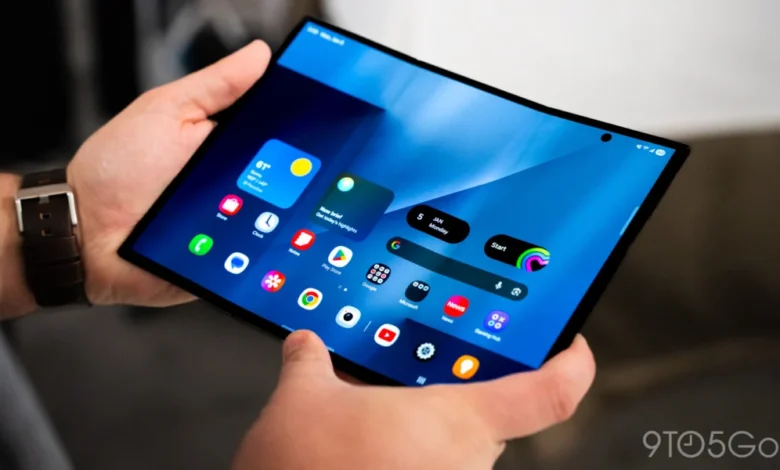
The limited-run Samsung Galaxy Z TriFold, a device that captured significant attention with its innovative triple-folding design, has now been officially declared "completely sold out" by Samsung, both through its online channels and in physical stores. This announcement marks the definitive end of availability for a smartphone that promised to push the boundaries of foldable technology but ultimately saw a remarkably short tenure on the market. Its brief existence, spanning mere months from its launch, has become a notable chapter in the rapidly evolving narrative of foldable smartphones, raising questions about market readiness for advanced form factors and the strategic decisions of industry leaders.
The Genesis of a Glimpse into the Future: The Galaxy Z TriFold’s Launch
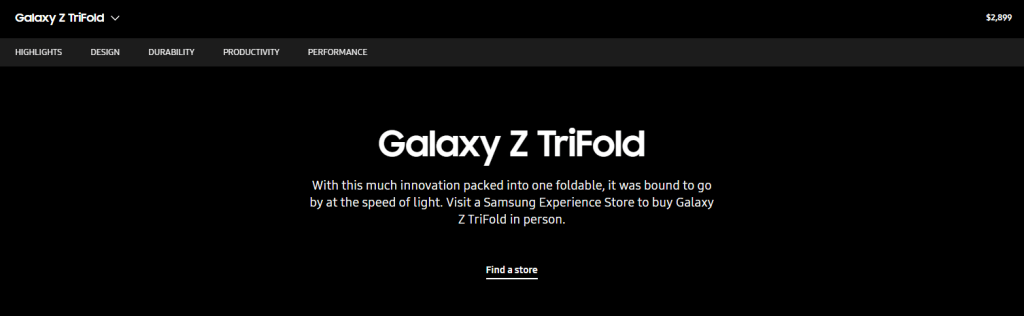
The Samsung Galaxy Z TriFold made its highly anticipated debut just a few months prior to its discontinuation, arriving in the U.S. market at a premium price point of $2,899, with availability commencing on January 30. This device was not merely another iteration in Samsung’s successful foldable lineup, which includes the established Z Fold and Z Flip series. Instead, it represented a bold leap, introducing the company’s first three-pane foldable design. The TriFold distinguished itself with two distinct hinges, allowing the device to unfurl into an expansive 10-inch inner display. This grand canvas was notably larger and wider than almost any other foldable screen available at the time, offering an unprecedented amount of screen real estate in a form factor that could still be compacted for portability.

Upon its unveiling, the Galaxy Z TriFold garnered considerable excitement from tech enthusiasts, industry analysts, and early adopters alike. Its innovative design was seen as a testament to Samsung’s continued leadership in display technology and its willingness to experiment with cutting-edge form factors. The promise of a tablet-sized screen that could fold down to a more pocketable (albeit still substantial) device ignited discussions about the future of mobile computing and productivity on the go. Early hands-on impressions highlighted the engineering marvel behind its dual-hinge mechanism and the immersive experience offered by its expansive display, particularly for multitasking, media consumption, and creative applications. Features like Samsung DeX, which transforms the phone into a desktop-like experience when connected to an external monitor, were heavily advertised, leveraging the TriFold’s unique screen real estate to enhance its productivity credentials.
An Abrupt Halt: The Discontinuation Timeline Unfolds
The enthusiasm surrounding the TriFold’s launch, however, proved to be short-lived. Barely two months after its initial availability, reports began to surface in mid-March indicating that Samsung was reportedly ending sales of the Galaxy Z TriFold. This news sent ripples through the tech community, as such an abrupt withdrawal for a flagship, innovative device was highly unusual. On March 17, Samsung officially confirmed the discontinuation of the Galaxy Z TriFold, a move that puzzled many, especially given the device’s experimental nature and its positioning as a technological showcase.
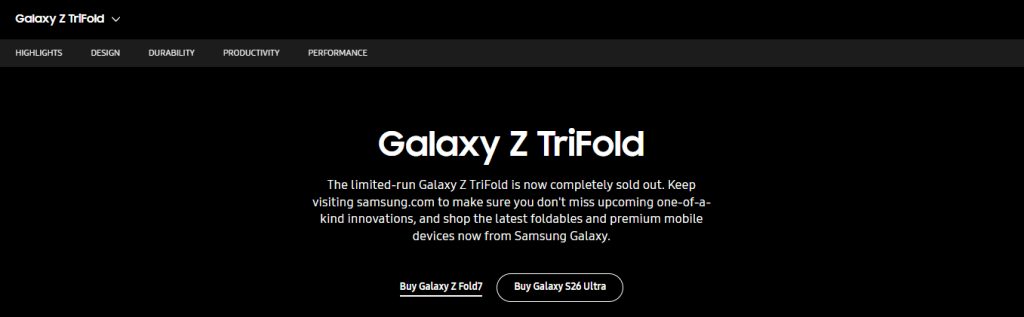
Following the official discontinuation, the device’s availability became sporadic. Samsung managed one final restock in the U.S. on April 10, providing a last opportunity for eager consumers to acquire the unique device. This final batch was quickly depleted, leading to the latest update on Samsung’s official website. As of April 17, the product listing for the TriFold on Samsung.com explicitly states, "The limited-run Galaxy Z TriFold is now completely sold out." This message further solidifies the device’s fate, closing the chapter on its retail journey.
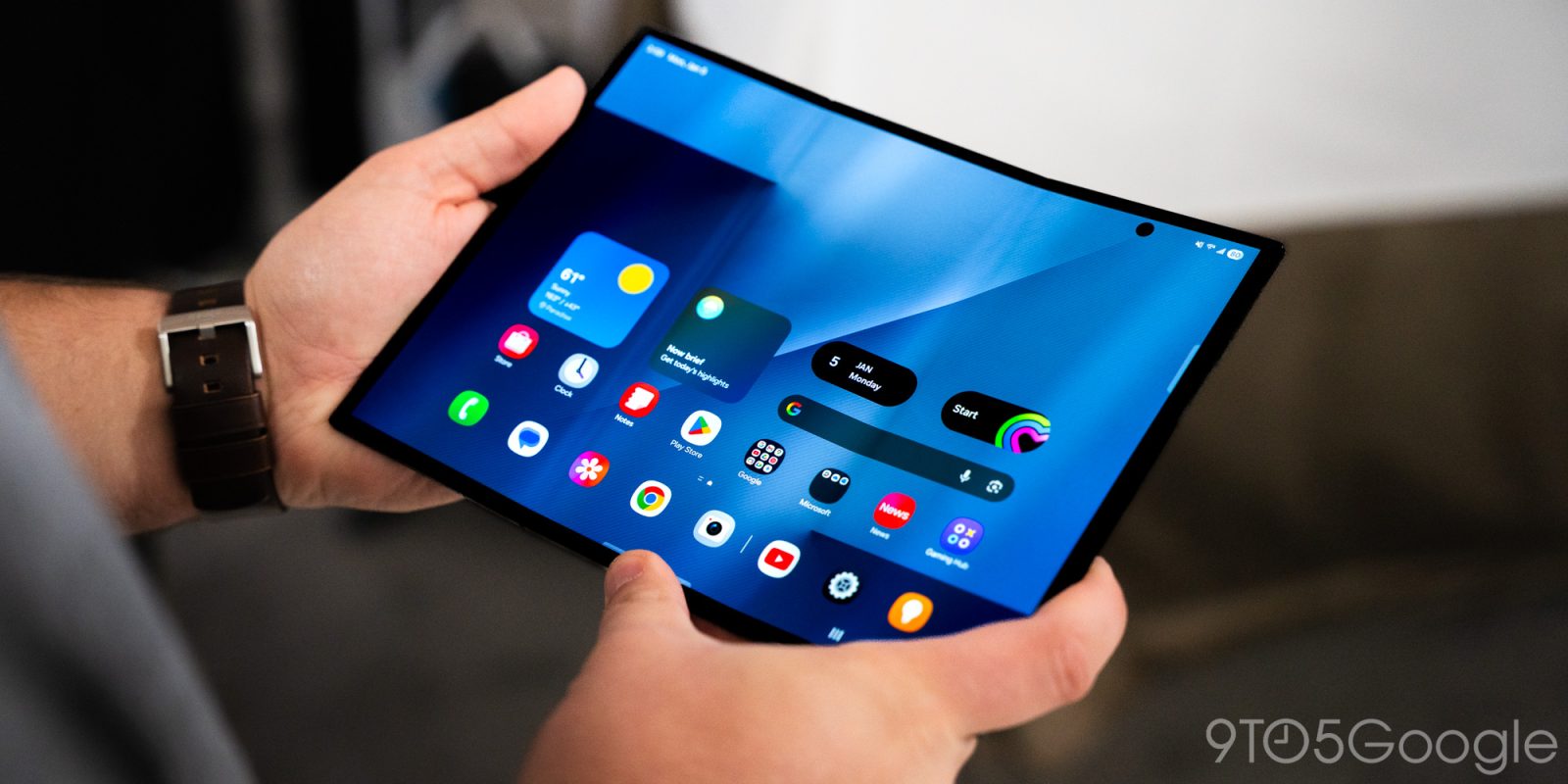
Prior to this final announcement, the messaging on Samsung’s website had subtly evolved. Initially, the TriFold was presented simply as a new, premium foldable. After the discontinuation reports, Samsung began referring to it as a "limited-run" product, a designation that was not present at launch. This retroactive branding suggests that the device may have been conceived, at least in part, as an experimental product with a predefined, smaller production quota, rather than a mass-market offering intended for long-term sales. As recently as April 15, the website directed interested customers to check Samsung Experience stores for stock, implying that some units might still be available through brick-and-mortar channels. However, the latest update removes this suggestion, unequivocally confirming a complete sell-out across all sales points.
Official Stance and Market Interpretation
Samsung’s official communication regarding the TriFold’s status, now prominently displayed on its product page, reads: "The limited-run Galaxy Z TriFold is now completely sold out. Keep visiting samsung.com to make sure you don’t miss upcoming one-of-a-kind innovations, and shop the latest foldables and premium mobile devices now from Samsung Galaxy." This statement, while confirming the end of the TriFold’s availability, notably avoids explicit mention of its discontinuation in the traditional sense. Instead, it frames the product as a "limited-run" item that has simply fulfilled its course.
This framing allows Samsung to manage the narrative surrounding the device’s short lifespan. By calling it "limited-run," the company can imply that its brief availability was part of the original strategy, rather than a reaction to unforeseen challenges or market performance. This interpretation is supported by industry analysts who suggest that launching such a technically complex and potentially expensive-to-produce device in limited quantities serves several strategic purposes. It allows a company to:
- Gauge Market Interest: Test consumer appetite for radical new form factors without committing to massive production scales.
- Collect Real-World Data: Gather crucial feedback on durability, user experience, and software optimization for multi-fold devices.
- Showcase Innovation: Maintain a perception of technological leadership and innovation ahead of competitors.
- Manage Supply Chain Risk: Mitigate financial risk associated with mass-producing an unproven technology.
The official page, despite the "sold out" notice, continues to highlight the TriFold’s pioneering attributes, emphasizing how it "pushes the limits of foldable technology for an experience unlike any other." This continued emphasis on its innovative features, even after its commercial availability has ceased, reinforces the idea that the TriFold served as a technological demonstrator and a platform for future research and development, rather than a conventional product failure.
The Broader Context: A Dynamic Foldable Market
The Galaxy Z TriFold’s brief journey unfolds against the backdrop of a highly dynamic and increasingly competitive foldable smartphone market. Samsung has been a pioneer and dominant force in this segment since the introduction of its first Galaxy Fold in 2019. Over the years, the company has refined its Fold and Flip series, making them more durable, affordable, and accessible, thereby driving significant growth in the premium smartphone category.
However, the landscape has diversified significantly. Competitors, particularly from China such as Huawei, Xiaomi, Oppo, and Honor, have introduced their own compelling foldable devices, often pushing boundaries in terms of hinge design, display crease reduction, and slimness. More recently, Google entered the fray with its Pixel Fold, and Apple is widely rumored to be exploring its own foldable device, intensifying the race for innovation and market share.
Within this environment, multi-fold designs like the TriFold represent the next frontier. While two-panel foldables (like the Z Fold) offer a tablet-like experience, triple-fold devices promise even larger displays, potentially blurring the lines between smartphones, tablets, and even compact laptops. The engineering challenges, however, are immense. Adding a second hinge increases complexity, weight, thickness, and potential points of failure. The software required to seamlessly manage transitions across three display segments is also significantly more intricate. These factors contribute to higher production costs and potentially impact durability and user experience.
Technical Hurdles and Market Viability
The development of the Galaxy Z TriFold undoubtedly involved overcoming significant technical hurdles. A triple-fold design necessitates:
- Advanced Hinge Mechanisms: Two independent, robust, and thin hinges that allow for precise folding and unfolding without compromising the integrity of the display or the device’s overall form factor.
- Durable Flexible Displays: A single, large flexible OLED panel capable of enduring multiple folds and unfolds across two distinct crease lines, maintaining image quality and touch responsiveness.
- Weight and Thickness Management: Integrating additional hinges and display area while keeping the device within acceptable limits for portability and ergonomic use.
- Battery Life: Powering a larger, more complex display and additional mechanical components without sacrificing all-day battery performance.
- Software Optimization: Developing an operating system and user interface that can intelligently adapt to various folded and unfolded states, ensuring a seamless and intuitive experience across all configurations.
The premium price tag of $2,899 for the TriFold reflected these inherent complexities and the cutting-edge technology it housed. While niche products at this price point can find an audience among enthusiasts and professionals seeking the absolute latest, the rapid discontinuation suggests that perhaps the balance of innovation, cost, and immediate market demand did not align with Samsung’s long-term product strategy or perhaps the production process proved more challenging than anticipated for scaled output. It’s plausible that the "limited-run" was not just a market test, but also a production test, where the manufacturing yield or cost efficiency for a triple-fold device was not yet ready for broader commercialization.

Analyst Perspectives and Strategic Implications
Market analysts have offered various interpretations of the TriFold’s brief market presence. Many view it as a strategic "exploratory" device, a high-profile experiment designed to gather invaluable insights into the feasibility and consumer appeal of multi-fold form factors. "Samsung remains at the forefront of foldable innovation, and the TriFold was a clear demonstration of their engineering prowess," stated tech industry analyst, Dr. Evelyn Reed. "Its ‘limited-run’ designation, while perhaps an after-the-fact rebranding, makes sense for such an ambitious device. It allowed them to test the waters, understand user interaction with a much larger foldable screen, and identify manufacturing challenges without committing to a full-scale, long-term production cycle."
Others suggest that the rapid discontinuation might also point to an internal strategic pivot. With the core Z Fold and Z Flip lines continuing to evolve and face increasing competition, Samsung might be reallocating resources to refine its more commercially successful form factors or to focus on other emerging technologies like rollable displays. The mention of directing customers to the Galaxy Z Fold 7 (a hypothetical future device based on the article’s timeline) or Galaxy S26 Ultra (a conventional flagship) underscores Samsung’s emphasis on its established, high-volume premium offerings.
The TriFold’s journey also highlights the fine line between innovation and market readiness. While groundbreaking technology often captures headlines, its successful integration into a consumer product requires a delicate balance of functionality, durability, cost, and user demand. For a device like the TriFold, it’s possible that while technologically impressive, it may have been slightly ahead of its time for mass adoption, or the cost-to-benefit ratio for consumers was not compelling enough beyond a small segment of early adopters.

Looking Ahead: The Future of Multi-Fold and Beyond
Despite the Galaxy Z TriFold’s short retail life, its impact on Samsung’s future product development and the broader foldable market is likely to be significant. The company is reportedly already "working on a sequel" to the TriFold, potentially exploring a "slideable phone for 2027." This suggests that the lessons learned from the TriFold’s development and market trial are being actively incorporated into future designs. The concept of a slideable phone, where the screen expands by sliding out from the main body, represents another avenue for achieving larger display areas without the complexities of multiple folds.
The pursuit of increasingly expansive and versatile mobile displays remains a key driver of innovation in the smartphone industry. Whether through triple-folds, rollables, or slideables, manufacturers are continuously seeking ways to offer users more screen real estate for productivity and entertainment, while maintaining a degree of portability. The Galaxy Z TriFold, in its brief but memorable existence, served as an important stepping stone in this ongoing quest.
Its ultimate legacy will likely be as a pioneering concept device that dared to push the boundaries of what a smartphone could be. While it may not have achieved commercial longevity, its contribution to the understanding of advanced foldable technologies and consumer preferences for such form factors is undeniable. As Samsung continues to lead the foldable revolution, the spirit of innovation embodied by the Galaxy Z TriFold will undoubtedly inform the design and development of the "one-of-a-kind innovations" the company promises for the future. For now, the window to own this futuristic foldable has definitively closed, leaving behind a testament to bold engineering and a hint of what might yet come.