Apple Vision Pro Might Have Made Dollar600 Million In One Weekend Top Analyst Says Pre Orders Could Have Topped 180000 Units
Apple Vision Pro Pre-Orders Hint at Staggering Weekend Sales: Analyst Projects Up to $600 Million Revenue and 180,000 Units
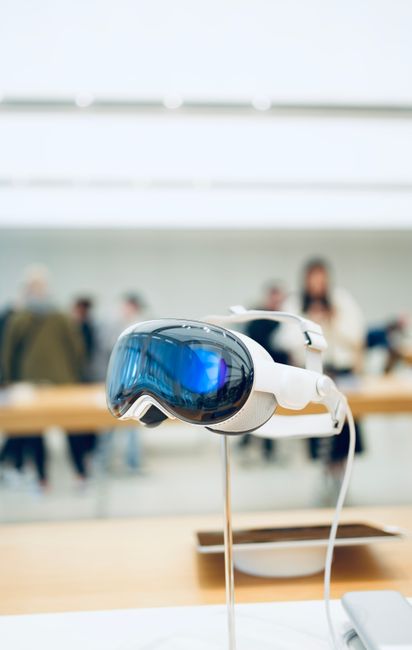
Early indications from industry analysts suggest an astronomical launch for Apple’s Vision Pro spatial computing headset, with pre-orders potentially reaching 180,000 units over its initial weekend of availability, translating to an estimated revenue of up to $600 million. This projection, if accurate, would signal a monumental entry into the mixed-reality market and solidify Apple’s capacity to disrupt yet another technology frontier. The device, priced at a premium $3,499, places it firmly in the high-end consumer electronics category, making these reported pre-order figures particularly noteworthy and indicative of strong consumer demand, even at such a significant price point. The limited initial rollout, with availability concentrated in the United States, further amplifies the impact of these early sales numbers, suggesting a concentrated wave of early adopters eager to experience Apple’s vision for the future of computing.
The sheer volume of pre-orders, estimated by some analysts to be between 160,000 and 180,000 units, is a testament to the meticulously crafted anticipation surrounding the Vision Pro. Apple’s strategic pre-announcement campaigns, coupled with a history of successful product launches that have defied conventional market wisdom, have undoubtedly fueled this initial surge. The company’s ability to generate immense interest and a sense of necessity around its new products is a recurring theme, and the Vision Pro appears to be no exception. The analyst reports, often derived from supply chain observations, manufacturing run rates, and pre-order tracking services that gauge online interest, paint a picture of a product that has captured the imagination of a significant segment of the tech-savvy and affluent consumer base. This early success is crucial for establishing a foothold in a nascent market and building developer momentum, as a strong initial user base incentivizes third-party software and content creation.
Delving deeper into the financial implications, the projected $600 million revenue generated from these pre-orders underscores the significant financial commitment from early adopters. With a base price of $3,499, even at the lower end of the estimated unit sales (160,000 units), the revenue would approach $560 million. Reaching the upper echelon of 180,000 units pushes the total revenue closer to the $630 million mark, with the $600 million figure representing a compelling midpoint. This revenue projection is not just about unit sales; it also implicitly accounts for potential early accessory purchases or higher-tier configurations, although the base model’s price is the primary driver. The profitability of these units, considering the complex engineering and advanced componentry within the Vision Pro, will be a key focus for investors and analysts as the company navigates the production and sales cycle. The premium pricing strategy, a hallmark of Apple’s approach, allows for higher margins, which are essential for recouping substantial research and development investments.
The success of the Vision Pro pre-orders is intrinsically linked to Apple’s established ecosystem and brand loyalty. Consumers are accustomed to investing in Apple products, trusting the company’s design philosophy, user experience, and integration with existing devices and services like iCloud, Apple Music, and the App Store. For the Vision Pro, this ecosystem play is amplified by the promise of spatial computing, an entirely new paradigm for interaction and content consumption. Early adopters are not just buying a headset; they are buying into a vision of the future, a commitment to being at the forefront of technological innovation. The allure of experiencing this next chapter of computing, coupled with the desire to own a piece of cutting-edge technology, has evidently outweighed the significant financial barrier for a substantial number of consumers. The "Apple tax," a term often used to describe the premium consumers are willing to pay for Apple products, appears to be alive and well with the Vision Pro.
Furthermore, the strategic timing of the Vision Pro’s pre-order launch, following a period of intense media attention and developer engagement, has created a perfect storm for initial demand. Apple has been meticulously cultivating interest, showcasing its capabilities at events and providing developers with early access to SDKs and tools. This proactive approach ensures that a critical mass of compelling applications and experiences will be available at launch, mitigating the common pitfall of a new hardware platform lacking sufficient software to justify its existence. The potential for gaming, productivity, entertainment, and even professional applications within the Vision Pro’s spatial environment is a powerful draw for early adopters looking for transformative use cases. The analyst projections are therefore not just based on brand hype, but on a tangible anticipation of a rich and functional ecosystem.
The implications of these robust pre-order numbers extend beyond immediate financial gains. A strong initial sales performance for the Vision Pro will be a significant signal to developers, encouraging them to invest more resources into creating applications and content tailored for the platform. This, in turn, will fuel further consumer adoption and create a virtuous cycle of growth. For competitors in the mixed-reality space, such as Meta with its Quest line, these figures represent a formidable challenge and a clear indication of the market’s potential when catalyzed by a major player like Apple. The Vision Pro’s entry sets a new benchmark for performance, design, and user experience, potentially forcing rivals to accelerate their own development and innovation cycles. The high price point might initially limit broad market penetration, but it establishes a premium segment that can pave the way for more accessible iterations in the future.
The analyst community’s consensus on the Vision Pro’s strong pre-order performance is a critical factor in shaping market sentiment and investor confidence. These projections, while preliminary, are based on sophisticated analysis of various data points, including manufacturing capacity, supply chain chatter, and the observable online buzz. The ability of Apple to consistently meet or exceed these high expectations is a testament to its operational excellence and its deep understanding of consumer behavior. The Vision Pro is not just another gadget; it is a statement of intent, a declaration of Apple’s ambitions in a new computing frontier. If these pre-order figures hold true, the Vision Pro will have not only made a significant financial splash in its opening weekend but will have also firmly established its position as a pivotal product in the evolution of personal technology. The ongoing narrative of Apple’s ability to define and dominate new technology categories appears poised for its latest chapter with the Vision Pro.