Ibm Watsonx Code Assistant
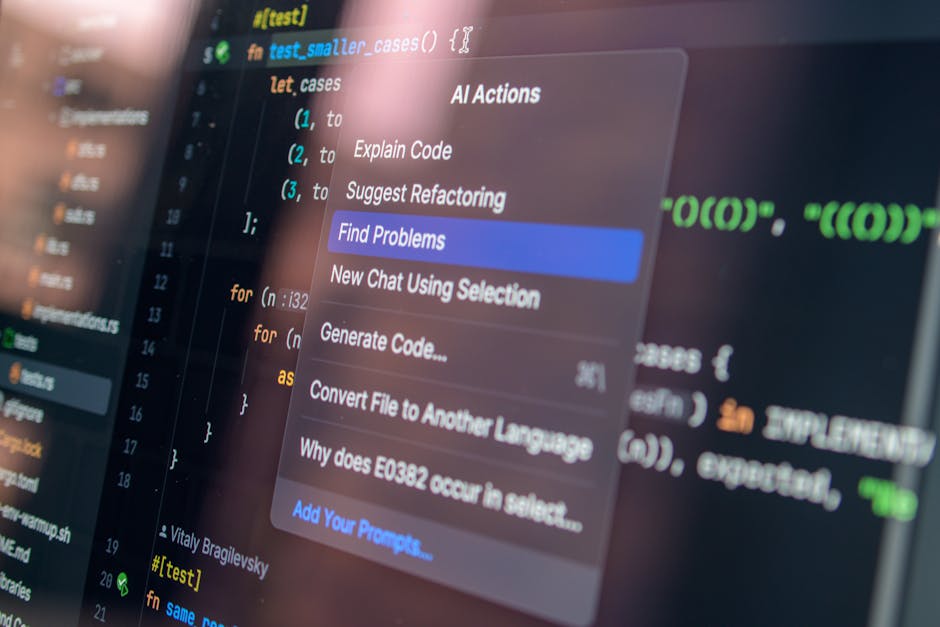
IBM watsonx Code Assistant: Revolutionizing Software Development with Generative AI
IBM watsonx Code Assistant represents a pivotal advancement in the field of software development, leveraging the power of generative artificial intelligence (AI) to augment and accelerate the entire application lifecycle. This sophisticated suite of tools is designed to empower developers, streamline complex coding tasks, and foster innovation by providing intelligent assistance throughout the coding process. At its core, watsonx Code Assistant integrates advanced AI models, specifically tuned for code, to understand, generate, and refactor programming logic across a multitude of languages and platforms. Its primary objective is to democratize access to sophisticated coding capabilities, enabling both experienced and novice developers to achieve higher levels of productivity and code quality. The platform addresses a growing demand for efficient development practices in an era characterized by rapid technological change and an increasing need for robust, scalable, and secure applications.
The foundational technology behind IBM watsonx Code Assistant is built upon IBM’s extensive research and development in AI and large language models (LLMs). These models are trained on massive datasets of high-quality code, encompassing diverse programming languages, libraries, and frameworks. This extensive training allows watsonx Code Assistant to grasp the nuances of syntax, semantics, and common programming patterns. The AI is not merely a code generator; it’s a contextual understanding engine. It can analyze existing codebases, identify potential issues, suggest optimizations, and even translate code between different languages. This analytical capability extends to understanding the intent behind a developer’s request, whether it’s to write a new function, debug an existing one, or even refactor a legacy system for modernization. The ongoing evolution of these LLMs ensures that watsonx Code Assistant remains at the forefront of AI-driven coding assistance, continuously improving its accuracy, relevance, and comprehensiveness.
One of the key benefits of IBM watsonx Code Assistant is its ability to significantly enhance developer productivity. By automating repetitive and time-consuming coding tasks, developers can dedicate more of their valuable time to creative problem-solving and architectural design. The AI can generate boilerplate code, suggest code snippets for common operations, and even draft entire functions based on natural language descriptions. This drastically reduces the manual effort involved in writing code, allowing teams to deliver features and applications at an accelerated pace. Furthermore, the intelligent auto-completion and suggestion features go beyond simple syntax completion, offering contextually relevant code blocks that anticipate the developer’s needs. This not only speeds up the coding process but also reduces the likelihood of syntax errors and common logical mistakes. The ability to quickly generate and test various code implementations also facilitates rapid prototyping and experimentation, enabling teams to explore different approaches to a problem more efficiently.
Code modernization is another critical area where IBM watsonx Code Assistant proves invaluable. Many organizations grapple with legacy systems written in older programming languages, which can be difficult to maintain, update, and integrate with modern technologies. watsonx Code Assistant offers capabilities to analyze, understand, and even refactor legacy code into more modern languages and architectures. This process can be significantly less labor-intensive and error-prone than manual refactoring. The AI can identify complex dependencies, understand the business logic embedded within the legacy code, and generate equivalent code in a target language, such as Java or Python. This capability is crucial for enterprises looking to modernize their IT infrastructure, reduce technical debt, and leverage the benefits of cloud-native architectures without undertaking massive, high-risk rewrites. The AI can assist in identifying components suitable for migration, suggesting optimal refactoring strategies, and even generating tests to ensure the functional equivalence of the modernized code.
IBM watsonx Code Assistant also plays a crucial role in improving code quality and reducing technical debt. By identifying potential bugs, security vulnerabilities, and performance bottlenecks early in the development cycle, developers can address these issues before they become costly problems. The AI can perform static analysis, offering insights into code structure, potential anti-patterns, and areas for optimization. It can also suggest best practices and adherence to coding standards, promoting a more consistent and maintainable codebase across teams. This proactive approach to quality assurance not only leads to more robust and secure applications but also contributes to a reduction in the overall technical debt, making future development and maintenance efforts more manageable. The AI’s ability to learn from vast amounts of code allows it to identify subtle bugs that might be missed by human review, enhancing the overall reliability of the software.
Security is a paramount concern in software development, and IBM watsonx Code Assistant integrates features to bolster application security. The AI can analyze code for common security vulnerabilities, such as injection flaws, cross-site scripting (XSS) vulnerabilities, and insecure direct object references. By flagging these potential risks early, developers can implement the necessary safeguards, reducing the attack surface of their applications. This proactive security scanning is an integral part of the development workflow, ensuring that security is not an afterthought but a built-in consideration from the initial coding stages. The AI can also suggest secure coding practices and provide examples of how to implement secure features, further empowering developers to build resilient applications. This contributes to a more secure digital ecosystem by helping to prevent breaches and protect sensitive data.
The platform’s capabilities extend to facilitating cross-language development and translation. As organizations adopt polyglot architectures, the ability to work with and integrate code written in different programming languages becomes increasingly important. IBM watsonx Code Assistant can assist developers in understanding code written in unfamiliar languages and can even translate code snippets or entire modules from one language to another. This capability is particularly useful for teams working on diverse technology stacks or for those looking to port applications to new platforms. The AI’s ability to preserve the intended functionality during translation is a significant advantage, reducing the risk of introducing errors during the migration process. This fosters greater flexibility and interoperability within development environments.
IBM watsonx Code Assistant is not a standalone product but rather a comprehensive suite of tools integrated within the broader watsonx AI platform. This integration allows for seamless access to various AI capabilities, from data analysis to model deployment. Developers can leverage these integrated services to build more intelligent applications, harness the power of their data, and accelerate their digital transformation initiatives. The platform’s modular design ensures that organizations can select the specific components of watsonx Code Assistant that best align with their development needs and existing workflows. This flexibility allows for a tailored approach to AI-assisted development, ensuring maximum impact and adoption.
The implementation of IBM watsonx Code Assistant typically involves integrating it into existing developer workflows and toolchains. This can include IDE extensions, CI/CD pipelines, and code repositories. By embedding AI assistance directly into the tools developers use daily, the adoption friction is minimized, and the impact on productivity is maximized. Training and upskilling of development teams are also crucial aspects of successful adoption. IBM provides resources and support to help organizations understand and effectively utilize the capabilities of watsonx Code Assistant, ensuring that developers can harness its full potential. The platform’s user-friendly interface and intuitive design also contribute to a smoother learning curve.
The impact of generative AI on software development is transformative, and IBM watsonx Code Assistant is at the vanguard of this revolution. It empowers developers to be more creative, productive, and secure, ultimately leading to the faster delivery of higher-quality applications. As AI continues to evolve, tools like watsonx Code Assistant will become increasingly indispensable for organizations seeking to remain competitive in the rapidly changing technological landscape. The ability to automate mundane tasks, augment human intelligence, and accelerate innovation positions watsonx Code Assistant as a critical enabler of future software development success. Its continuous learning and adaptation ensure that it will remain a relevant and powerful tool for years to come, shaping the way software is conceived, built, and maintained. The ongoing research and development by IBM in the field of AI, particularly in LLMs for code, will further enhance the capabilities of watsonx Code Assistant, making it an even more potent force in the software development ecosystem.

