Google Ads video ad sequence campaigns provide advertisers with a sophisticated framework to deliver a series of video clips to individual viewers in a specific, predetermined order. Unlike standard YouTube advertising formats that often rely on isolated impressions, sequence campaigns are engineered to function as a narrative funnel. By controlling the order in which a user consumes content, brands can transition prospects from initial awareness to deep consideration and, ultimately, conversion. While broad-reach video campaigns remain the industry standard for sheer volume, the sequence format has emerged as the premier choice for advertisers seeking to build long-term brand affinity through storytelling.
The Evolution of Sequential Storytelling in Digital Advertising
The shift toward sequential advertising reflects a broader change in consumer behavior. Modern audiences are increasingly desensitized to static, repetitive ads. Data suggests that ad fatigue sets in quickly when the same creative asset is served repeatedly to the same user. By utilizing a sequence, brands can rotate messaging, ensuring that the second or third touchpoint feels like a continuation of the conversation rather than a redundant interruption.
Historically, programmatic advertising struggled to maintain continuity across multiple devices and sessions. Google’s implementation of ad sequences addresses this by leveraging the platform’s cross-device identity graph. This ensures that if a user views the first part of a story on a mobile device, the system recognizes them when they switch to a desktop, allowing the sequence to progress seamlessly.
Campaign Architecture and Strategic Setup
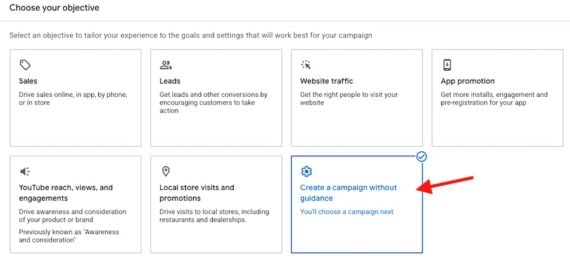
To deploy an ad sequence, advertisers must navigate the Google Ads interface with precision. The process begins by bypassing the platform’s default "guided" setups. Users must select the "Create a campaign without guidance" option and specifically choose the "Video" campaign type. A common point of friction for new users is selecting the "YouTube reach, views, and engagements" objective; this selection will inadvertently hide the sequence option. Instead, advertisers must ensure they are in the correct configuration path to access the "Ad sequence" subtype.

Once the campaign type is established, the technical parameters are rigid. Google mandates the use of "Target CPM" (cost-per-thousand impressions) bidding. This focus on impression-based pricing is essential for sequences, as the primary goal is to ensure the completion of a narrative arc rather than chasing immediate clicks. Furthermore, frequency capping is a mandatory component. Advertisers are restricted to set limits, typically once every 7 or 30 days, to prevent the sequence from feeling intrusive or overwhelming the target audience.
The Mechanics of Step-Based Transitions
The core of a sequence campaign lies in the "Ad Group" structure. In this framework, every step in the sequence is represented by a distinct ad group. If an advertiser plans a four-part video journey, they are essentially creating four interconnected ad groups.
The power of this structure resides in the transition rules. For every video beyond the first, the advertiser must define a trigger: "impression," "view," or "skip." This granular control allows for complex conditional logic. For instance, an advertiser can set the system to serve a "deep-dive" product video only to those who have already viewed the "teaser" video, while serving a "re-engagement" clip to those who skipped the first ad. This level of customization transforms the advertising experience into a personalized funnel.
Utilizing Google’s Asset Studio for Creative Optimization
One of the most significant challenges in sequence advertising is the production of multiple distinct assets. Google’s Asset Studio has become an indispensable tool in this regard, particularly the "Trim videos" feature. This tool allows marketers to take a high-quality master video—such as a long-form product demonstration—and slice it into shorter, punchy segments tailored for different stages of the funnel.
While AI-generated video tools are increasingly integrated into the Asset Studio suite, industry experts often advise caution. While AI can rapidly generate variations of a video, the continuity of a brand narrative often requires human oversight to ensure the tone and visual identity remain consistent across the sequence. Relying solely on automated creative can sometimes lead to disjointed narratives that weaken the viewer’s trust in the brand.
Practical Application: The Yarbo Case Study
Consider the hypothetical application of this strategy by Yarbo, a manufacturer of autonomous lawn mowers. The company faces a common marketing challenge: communicating the complexity of robotic maintenance while driving immediate sales.
In an "Introduce and Reinforce" sequence, the team begins with a broad, 30-second demo video designed to build awareness. The first ad, titled "Save Time," highlights the convenience of the product and uses a "Learn more" call-to-action (CTA) directing traffic to the homepage. The second ad in the sequence, which only triggers if the user has been exposed to the first, focuses on a specific promotion, such as a "Labor Day Sale," with a "Buy now" CTA.
By separating the "awareness" phase from the "incentive" phase, Yarbo avoids the mistake of asking for a purchase before the consumer understands the product’s value. Furthermore, the team can experiment with different headlines and landing pages for each step, allowing them to gather data on which part of the narrative is most effective at converting interest into intent.
Interpreting Performance Metrics
Evaluating the success of a sequence campaign requires a move away from traditional conversion-heavy metrics toward engagement-based KPIs. Key metrics include:
- Sequence Completion Rate: The percentage of users who viewed the entire sequence as intended.
- Step-to-Step Drop-off: Identifying where in the chain viewers are losing interest. A high drop-off between step one and step two, for example, suggests the initial hook is not compelling enough.
- Average View Percentage: Measuring how much of each individual clip is being consumed. If a specific video has a high skip rate or low view duration, it indicates a need for creative refinement.
While tracking clicks and conversions remains possible, these metrics should be viewed as secondary. The objective of an ad sequence is to cultivate demand and move the consumer through the psychological journey of the brand narrative. A campaign that fails to produce a high conversion rate in the short term may still be a massive success if it significantly increases brand recall and moves a large percentage of the audience through the sequence.

Broader Implications for Digital Marketing
The rise of video ad sequences signifies a shift in how platforms view the relationship between advertisers and consumers. By providing tools that prioritize narrative continuity, Google is acknowledging that the "one-size-fits-all" approach to advertising is losing efficacy.
As third-party cookies face increasing restrictions across the digital landscape, first-party data and brand-owned storytelling environments become critical. Ad sequences allow brands to own the narrative within the YouTube ecosystem, effectively insulating them from the volatility of the broader ad market.
Looking forward, the integration of more sophisticated machine learning, which could potentially adjust the sequence order in real-time based on viewer reaction, represents the next frontier. For now, however, the human-driven strategy of mapping out the consumer’s path remains the most reliable method for driving meaningful engagement. Advertisers who master the balance between technical setup and compelling creative storytelling will likely find themselves ahead of the curve in an increasingly fragmented attention economy.
Related posts: