Navigating the Complexity of E-commerce Returns in Europe A Comprehensive Analysis of Market Trends Logistical Challenges and Strategic Optimization

The European e-commerce sector has reached a level of maturity where the transaction no longer concludes at the point of digital payment. Instead, the "reverse logistics" cycle—the process of returning goods from the consumer to the merchant—has become an inextricable component of the modern retail ecosystem. As online shopping continues to dominate the European commercial landscape, the management of returns has shifted from a back-office administrative task to a critical strategic lever that influences profitability, brand reputation, and environmental sustainability. For merchants operating across the diverse jurisdictions of Europe, understanding the nuances of return behaviors and the regulatory frameworks governing them is no longer optional; it is a prerequisite for long-term viability.
The State of the European Returns Landscape: Statistical Realities
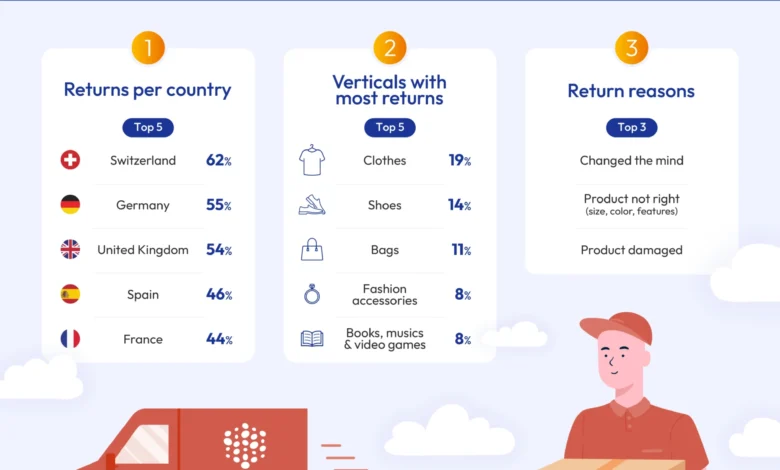
The scale of e-commerce returns in Europe is significant, with recent industry data indicating that average return rates hover between 30% and 40% across the continent. However, these figures mask deep-seated regional disparities. According to data compiled by Statista and industry observers in 2023, Switzerland currently holds the highest return rate per online buyer in Europe at 62%. Germany follows closely at 55%, with the United Kingdom ranking third at 54%.
These figures reflect distinct consumer cultures. In Germany, for instance, a long-standing tradition of "Rechnungskauf" (paying by invoice after delivery) has historically encouraged consumers to order multiple sizes or colors of a single item, intending to return the majority. This behavior, now widely known as "bracketing," has become a standardized practice among European shoppers, particularly in the fashion and apparel sectors.
In terms of product categories, the fashion industry remains the most heavily impacted. Statistical analysis shows that apparel and footwear experience the highest volatility, often seeing return rates that exceed 50% during peak seasons. Electronics and household items, while less prone to subjective dissatisfaction, still account for roughly 6% of the total return volume, often due to technical defects, compatibility issues, or damage sustained during transit.
The Evolution of Return Behaviors: From Convenience to Bracketing
The psychological profile of the European online shopper has evolved alongside the technology that enables digital trade. Initially, free and easy returns were marketed as a tool to build consumer trust in a medium where products could not be physically inspected. However, this convenience has birthed the "bracketing" trend. Bracketing occurs when a customer purchases the same item in multiple sizes, colors, or styles with the explicit intent of keeping only one and returning the rest.
While this ensures a high level of customer satisfaction regarding the final product kept, it creates a logistical nightmare for the merchant. The chronology of this trend shows a steady rise since 2018, accelerated significantly by the COVID-19 pandemic when physical fitting rooms were inaccessible. Today, industry analysts suggest that bracketing accounts for nearly 25% of all returns in the fashion segment. Other primary drivers for returns include:
- Product Discrepancy: The item received does not match the online description or imagery.
- Logistical Damage: Products arriving in a damaged or non-functional state.
- Delivery Delays: Items arriving after the intended period of use (e.g., seasonal gifts or event-specific attire).
- Change of Mind: A general shift in consumer preference post-purchase.
Logistical and Regulatory Hurdles in Cross-Border Trade
Managing returns within a single country is a straightforward logistical task; however, the European market is defined by its cross-border nature. Merchants selling across the European Union (EU) and into non-EU states like the UK or Switzerland face a labyrinth of customs regulations and transport complexities.
The 2011/83/EU Directive on Consumer Rights established a baseline across the EU, granting consumers a 14-day "right of withdrawal." This regulation mandates that merchants must provide a refund within 14 days of receiving the returned goods or proof of return. While this harmonizes consumer protection, it places a heavy financial and administrative burden on the seller.
Cross-border returns introduce further complications:
- Customs and VAT: For returns coming from outside the EU (such as the UK post-Brexit), merchants must navigate complex VAT reclamation processes and customs declarations to avoid paying duties on their own returned stock.
- Traceability: Ensuring that a parcel can be tracked from a remote location back to a central warehouse is essential for maintaining customer trust and managing inventory levels.
- Local Return Hubs: To mitigate high international shipping costs, many merchants are now forced to invest in localized return addresses or third-party logistics (3PL) partnerships within specific target markets.
The Financial Impact: The "Hidden" Costs of Reverse Logistics
The financial burden of returns is often underestimated by new entrants to the e-commerce space. The cost of a return is not merely the loss of the initial sale; it encompasses a series of "hidden" expenses that erode margins. These include:
- Shipping and Handling: The cost of the return label (often subsidized or provided free by the merchant).
- Processing and Inspection: Labor costs associated with opening packages, inspecting items for wear or damage, and re-tagging products.
- Restocking and Liquidation: If an item cannot be sold as "new" due to damaged packaging or minor use, it must be liquidated through secondary markets or refurbished, often at a 40-70% discount.
- Administrative Overhead: Managing customer service inquiries regarding refund statuses and tracking.
In response to these mounting costs, a significant shift occurred in late 2022 and throughout 2023. Major retailers, including Zara, H&M, and Boohoo, began implementing return fees for online orders. This move marks a turning point in the industry, signaling the end of the "unlimited free returns" era as companies prioritize profitability over aggressive market share acquisition.
Environmental Sustainability and the Circular Economy
Beyond the balance sheet, the environmental impact of returns has drawn intense scrutiny from both regulators and the public. The "carbon footprint" of a returned item is often double that of a kept item due to the additional transportation required. Furthermore, the packaging waste—ranging from plastic polybags to cardboard boxes and adhesive tape—contributes significantly to the environmental burden.
In Europe, where the "Green Deal" and various ESG (Environmental, Social, and Governance) frameworks are gaining legislative weight, merchants are under pressure to adopt more sustainable practices. Statistics suggest that millions of tons of returned goods end up in landfills annually because the cost of processing them exceeds their resale value.
To combat this, the industry is seeing a rise in "re-commerce" (selling returned or used goods) and "circular" business models. Companies are increasingly educating consumers about the environmental cost of their return habits, hoping to foster a more conscious shopping culture.
Strategic Optimization: Leveraging Technology and Data
To survive the "returns crisis," European e-commerce merchants are turning to sophisticated technological solutions. The goal is to reduce the return rate at the source while streamlining the processing of those returns that are unavoidable.
1. AI and Predictive Analytics:
By analyzing historical return data, merchants can identify "serial returners" or detect if a specific product has a recurring defect or sizing issue. If data shows that a specific dress is returned 80% of the time due to being "too small," the merchant can update the product description in real-time to advise customers to "size up."
2. Virtual Fitting Rooms and AR:
Augmented Reality (AR) tools allow customers to "try on" glasses, makeup, or even sneakers through their smartphone camera. Virtual fitting rooms that use AI to calculate a user’s measurements are becoming standard in high-end fashion, significantly reducing size-related returns.
3. Automated Return Portals:
Replacing the paper return slip with a digital portal allows merchants to capture the reason for the return before the item is even shipped back. This provides immediate visibility for inventory management and allows for faster refund processing, which improves customer satisfaction.
4. Batch Shipping and Green Logistics:
Consolidating returns into larger shipments and using electric delivery vehicles for the "last mile" are strategies being used to minimize the ecological impact. Some retailers are also offering "no-box" return options at physical drop-off points to reduce packaging waste.
Future Outlook: Toward a Balanced Ecosystem
The landscape of e-commerce returns in Europe is currently in a state of transition. The industry is moving away from a model of frictionless, cost-free returns toward one characterized by transparency, shared responsibility, and sustainability.
Industry experts predict that the next five years will see a wider adoption of "dynamic return policies," where a customer’s return fee might be based on their loyalty tier or their historical return rate. Additionally, as the EU’s Circular Economy Action Plan evolves, we can expect stricter regulations regarding the disposal of returned textiles and electronics, forcing merchants to find creative ways to keep products in the value chain.
In conclusion, while returns are an unavoidable reality of digital trade, they also offer an opportunity for differentiation. A merchant who handles a return with speed, transparency, and ecological responsibility can transform a potentially negative interaction into a moment of brand loyalty. The challenge for European sellers lies in balancing the high expectations of the consumer with the harsh realities of logistical costs and environmental impact. Success in this arena requires a data-driven approach, a robust technological infrastructure, and a clear understanding of the diverse European regulatory environment.