The Essential Guide to Answer Engine Optimization and Selecting the Right AEO Checker for Your Brand

The fundamental nature of digital discovery is undergoing a structural transformation as the reliance on traditional blue-link search results gives way to synthesized, AI-generated responses. For marketers and business owners, this shift represents a critical juncture: when users query platforms like ChatGPT, Perplexity, or Google’s AI Overviews, they are increasingly finding answers directly within the interface, often without ever clicking through to an external website. This phenomenon, colloquially termed "zero-click" search, has necessitated a new discipline: Answer Engine Optimization (AEO).
AEO is the practice of ensuring that a brand is not only visible but accurately represented within the generative responses provided by AI models. Unlike traditional Search Engine Optimization (SEO), which aims to secure a high ranking on a Search Engine Results Page (SERP) to drive traffic, AEO focuses on entity recognition, source citation, and the authoritative synthesis of brand information. As the digital landscape moves toward this summary-first model, businesses that fail to manage their presence in AI-generated answers risk total erasure from the modern customer journey.
The Evolution of Search: From Links to Synthesis
The rise of generative AI in search began in earnest with the rapid adoption of large language models (LLMs) and reached a significant milestone in May 2024, when Google integrated AI Overviews (AIOs) into its mainstream search experience. This move signaled a departure from the "ten blue links" paradigm that had governed the internet for two decades.
![AEO checker tools that measure answer engine visibility [2026]](https://53.fs1.hubspotusercontent-na1.net/hubfs/53/aeo-checker-1-20260903-3858273.webp)
According to industry data, search behavior has shifted significantly, with users favoring the convenience of consolidated, synthesized answers over the labor of visiting multiple websites to compare information. This creates an "answer economy" where the primary value is provided by the engine itself. For brands, the challenge is twofold: first, ensuring that AI systems possess the correct data about their products or services; and second, securing a "citation"—a link or mention—that serves as the primary gateway to their owned content.
Understanding the AEO Checker
As the complexity of AI retrieval grows, manual monitoring becomes impossible. An AEO checker is a specialized software tool designed to measure a brand’s visibility across various generative engines. These tools analyze whether an engine surfaces a specific brand, which competitors are being cited instead, and whether the information provided by the AI is accurate.
A sophisticated AEO checker performs several diagnostic functions:
- Citation Monitoring: It tracks how often a brand is cited in response to specific queries.
- Competitive Benchmarking: It identifies which competitors are capturing the "answer space" for key industry topics.
- Entity Accuracy: It monitors whether the AI engine correctly identifies the brand’s core offerings and value propositions.
- Priority Reporting: It translates raw data into actionable tasks, such as schema markup adjustments or content updates.
How to Conduct Manual AEO Audits
![AEO checker tools that measure answer engine visibility [2026]](https://no-cache.hubspot.com/cta/default/53/9dd5e54b-fbef-4dd0-bc44-1689feb1ea18.png)
Before investing in enterprise-grade software, businesses can conduct manual checks to establish a baseline. The process involves defining a list of high-value queries—including branded terms and informational questions that a target customer would likely ask.
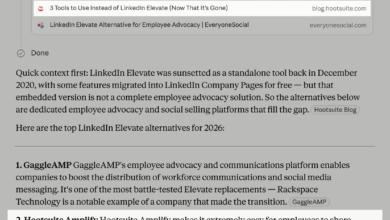
For Google’s AI Overviews, the audit requires running queries in an incognito or signed-out session to avoid personalization bias. Because AIOs are dynamic and vary by session, experts recommend multiple checks to account for the probabilistic nature of LLMs. If a brand fails to appear, the auditor must assess whether the content is sufficiently structured, authoritative, and direct.
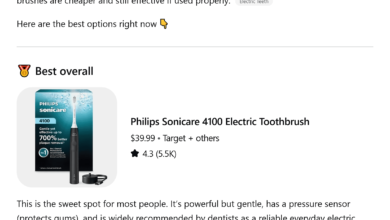
In the case of platforms like ChatGPT and Perplexity, the process is slightly different. These engines often provide a "Sources" panel or inline citations. Auditors must check if the brand is not just mentioned, but linked as an authoritative source. If a competitor is cited for a query where the brand should logically appear, the "content gap" is identified, and the business must refine its page content to better align with the AI’s retrieval patterns.
Market Landscape: Tools for AI Visibility
The software market has responded to the need for AEO with a variety of specialized tools. Choosing the right one depends on a company’s specific requirements, such as the need for CRM integration or deep technical monitoring.
![AEO checker tools that measure answer engine visibility [2026]](https://53.fs1.hubspotusercontent-na1.net/hubfs/53/aeo-checker-2-20260903-852936.webp)
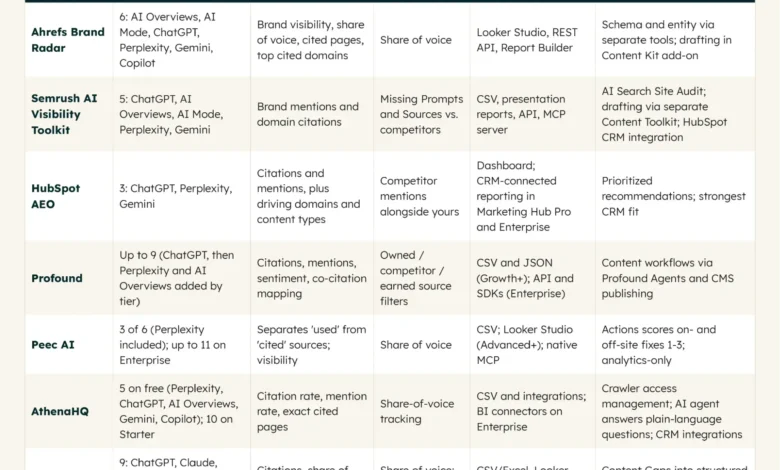
Tools focusing on AI Overviews, such as Ahrefs Brand Radar and the Semrush AI Visibility Toolkit, excel at mapping the intersection of traditional ranking data with new generative triggers. These tools are particularly useful for teams looking to bridge the gap between their legacy SEO efforts and new generative realities.
For those requiring deeper insight into conversational engines like Perplexity and ChatGPT, platforms such as HubSpot AEO, Profound, Peec AI, and AthenaHQ offer granular data on citation frequency and sentiment. HubSpot, for instance, has integrated these insights directly into its CRM, allowing marketing teams to view the impact of AI-referred traffic alongside traditional lead conversion metrics.
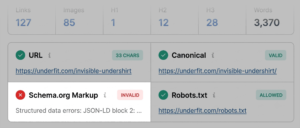
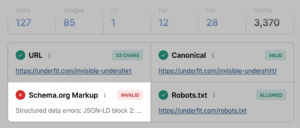
Technical tools like Scrunch AI and Conductor focus on the "readiness" aspect of AEO, ensuring that a website’s technical architecture—including schema, site speed, and entity data—is optimized for AI crawlers.
The Strategic Importance of Data-Driven AEO
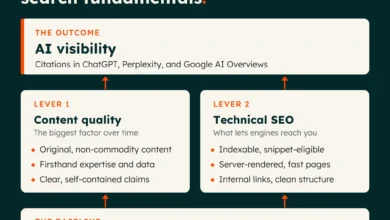
The primary metric for success in AEO is not simply traffic, but "Visibility Score" and "Share of Voice" within generated answers. As the industry matures, these metrics will likely become as standard as keyword rankings. A single data point is rarely sufficient; instead, brands must track trends over time. A steady increase in citation frequency, particularly for high-intent queries, serves as a proxy for improved brand authority in the eyes of the AI.
![AEO checker tools that measure answer engine visibility [2026]](https://53.fs1.hubspotusercontent-na1.net/hubfs/53/aeo-checker-3-20260903-8904553.webp)
Implications for Digital Marketing and Beyond
The shift toward AI-mediated discovery has profound implications for the digital marketing funnel. Traditionally, the goal was to drive a user from search to a landing page. In the era of AEO, the goal is to provide the answer so effectively that the AI cites the brand as the undisputed authority. This means that content must be more concise, structured, and factual.
Furthermore, this shift creates a new competitive dynamic. In traditional search, a brand might occupy the first, second, and third organic positions. In AI search, the engine may only provide one or two citations for a complex topic. The competition for these spots is fierce, and the barrier to entry is higher; if a brand’s content is not easily parsed or lacks clear, verifiable sources, the AI will default to more "trustworthy" or better-structured alternatives.
Broader Industry Response
Major search entities have been cautious but proactive. Google’s introduction of the generative AI performance report in June 2026 was a direct acknowledgment that marketers need transparency into how AI-driven traffic behaves. However, this report is currently limited in scope, leaving a significant gap that third-party AEO checkers are rushing to fill.
![AEO checker tools that measure answer engine visibility [2026]](https://53.fs1.hubspotusercontent-na1.net/hubfs/53/aeo-checker-4-20260903-6212698.webp)
Industry analysts suggest that we are entering a phase of "forced optimization." Companies that ignore AEO do so at the risk of losing their digital storefront. As the technology behind these models continues to evolve, the distinction between a "website" and an "answer source" will likely continue to blur.
Conclusion: Preparing for the Future
The transition to an AI-first search landscape is not a temporary trend but a permanent shift in how information is accessed and processed. For businesses, the path forward is clear: integrate AEO into the standard marketing workflow, prioritize the creation of authoritative, citation-ready content, and utilize specialized tools to monitor and adapt to the changing preferences of AI engines.
While the manual auditing process is a useful starting point for understanding the challenges of the new search era, it is ultimately unsustainable for growing organizations. By leveraging dedicated AEO software, brands can transform the threat of "zero-click" search into an opportunity to establish their presence as the primary, trusted source for their customers’ most critical questions. The winners of this new era will be those who recognize that, in the world of generative AI, being the first link is no longer as important as being the only answer.