Apple Expands watchOS 27.0.1 Rollout to All Compatible Apple Watch Models Following Initial Release

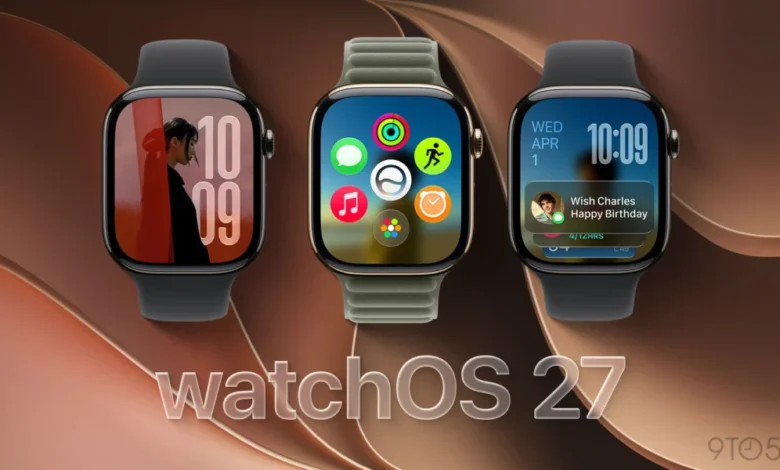
Apple has officially expanded the availability of watchOS 27.0.1 to all compatible Apple Watch models across its global user base. This broader software distribution follows an initial, limited release deployed just last week, which was strictly targeted at the newly launched Apple Watch Series 12 and the flagship Apple Watch Ultra 4. With today’s deployment, owners of older, supported watch generations can now download and install the maintenance update, bringing system stability improvements to a wider segment of the wearable ecosystem.
The core purpose of the watchOS 27.0.1 patch is to address and resolve a specific, frustrating software bug that has caused certain devices to experience unexpected reboots. While the issue did not affect every user, the recurrence of sudden shutdowns prompted swift engineering intervention from Apple’s Cupertino headquarters. By pushing the update to the broader portfolio of supported wearables, Apple aims to eliminate system instability and ensure uniform performance reliability across different hardware configurations.
Chronology of the Deployment
The rollout of watchOS 27.0.1 follows a calculated, staged deployment strategy typical of major consumer electronics manufacturers aiming to mitigate potential post-release anomalies.
Initially, on the launch day of last week’s update cycle, Apple restricted the deployment of build 24R365 exclusively to the Apple Watch Series 12 and the Apple Watch Ultra 4. These high-end devices, possessing newly minted hardware architectures and custom system-on-chip components, had exhibited the unexpected restarting behavior more prominently in early diagnostic telemetry. Confining the initial fix to these flagships allowed software engineers to monitor the patch’s stability and ensure that the corrective code introduced no secondary regressions.
Following a successful monitoring period with zero major reports of deployment failures or installation blocks, Apple greenlit the distribution for the remainder of the compatible watchOS 27 device lineup. Today’s expansion delivers the exact same build—version 24R365—to all remaining supported Apple Watch configurations.
Official Release Notes and Technical Specifications
Despite the expanded hardware compatibility, Apple has maintained identical release documentation for the software package. The official release notes provided by the company remain concise, stating explicitly:
"This update provides bug fixes for your Apple Watch including fixing an issue where Apple Watch may restart unexpectedly."
The shared build number, 24R365, confirms that no underlying code modifications were introduced between last week’s flagship-only release and today’s wider distribution. The uniformity of the build signifies that the diagnostic data gathered from Series 12 and Ultra 4 users provided sufficient validation for the broader ecosystem rollout.
For users wishing to install the update, the procedure remains standard. The Apple Watch must be placed on its magnetic charger, connected to a stable Wi-Fi network, and possess a minimum battery charge of 50 percent. Users can initiate the update manually by navigating to the Settings application on their Apple Watch, selecting General, and tapping Software Update, or by utilizing the Watch companion application on a paired iPhone running the corresponding iOS version.
Part of a Broader Ecosystem Update Cycle
The dissemination of watchOS 27.0.1 does not occur in a vacuum. It forms a single component of a massive, synchronized ecosystem-wide software maintenance push deployed by Apple across its entire product catalog. The timing aligns with updates delivered to iPhones, iPads, Mac computers, and spatial computing headsets, highlighting the interconnected nature of modern consumer technology infrastructure.
Alongside the expanded watchOS deployment, Apple rolled out iOS 27.0.1 for supported iPhones—notably fixing an isolated bug that could cause certain iPhone 18 Pro models to restart unexpectedly during Face ID authentication routines. Simultaneously, the company released iPadOS 27.0.1, visionOS 27.0.1, and macOS 27.0.1 Golden Gate. Furthermore, legacy and concurrent operating systems received parallel maintenance patches, including iOS 26.7.1, macOS Tahoe 26.7.1, and macOS Sequoia 15.8.1, ensuring robust security postures and bug remediation across both cutting-edge and mature software branches.
Industry Context and Technical Implications

The necessity for immediate post-launch point releases—often referred to in the software industry as day-one or week-one patches—has become an accepted reality of modern operating system development. As consumer hardware becomes increasingly complex, integrating advanced neural engines, biometric sensors, and intricate background health-monitoring routines, the variables influencing system stability multiply exponentially.
Unexpected system reboots, while minor in isolation, pose significant user-experience friction points on wearable devices. Because smartwatches rely on continuous data collection for health metrics, fitness tracking, and emergency features such as Fall Detection, an unexpected reboot can result in data gaps or delayed safety alerts. Consequently, even minor software instabilities receive high-priority remediation from development teams.
From an analytical perspective, Apple’s decision to stage the rollout—prioritizing the newest hardware before expanding to legacy models—demonstrates a mature risk-management protocol. By isolating the initial patch to the Apple Watch Series 12 and Apple Watch Ultra 4, the company insulated its larger, legacy installed base from potential edge-case installation anomalies. Now that the code has proven resilient under real-world conditions on high-end silicon, the broader ecosystem can absorb the update with minimized operational risk.
User Recommendations and Next Steps
Owners of compatible Apple Watch models who have experienced random reboots, interface stutters, or unexplained battery drainage following the initial upgrade to watchOS 27 are strongly advised to apply the 27.0.1 update at their earliest convenience. While devices that have experienced zero symptoms will still benefit from the underlying reliability enhancements and security hygiene, ensuring software parity across the user base remains a best practice for optimal device longevity and interoperability with paired iOS devices.
As Apple continues to monitor telemetry data from this latest wave of installations, any further adjustments to the watchOS 27 architecture will likely be integrated into upcoming developmental beta cycles or subsequent minor point releases planned for later in the product quarter.