Bridging the Cosmos and Code: NASA Astronaut Christina Koch and Google’s James Manyika Explore the Future of Space, Technology, and Human Discovery

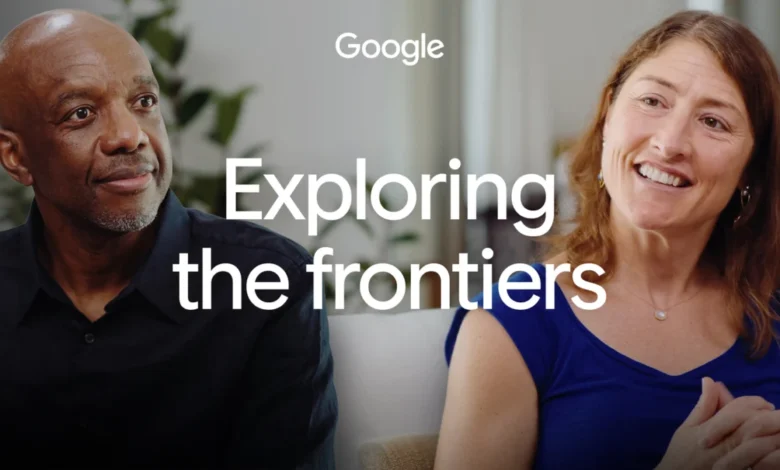
The intersection of deep space exploration and terrestrial technological innovation took center stage in the latest installment of the Dialogues on Technology and Society series. In a compelling and comprehensive conversation, NASA astronaut, engineer, and physicist Christina Koch sat down with James Manyika, Google’s Senior Vice President of Research, Labs, Technology, and Society, to discuss the profound implications of humanity’s push into the cosmos. The dialogue bridges two seemingly disparate worlds—the physical expanse of interstellar exploration and the virtual frontiers of artificial intelligence, robotics, and advanced data systems—offering a unique lens on how technology is redefining the human experience both on Earth and in orbit.
As humanity stands on the precipice of a new era in spaceflight, characterized by commercial partnerships, deep-space habitats, and preparations for crewed missions to Mars, discussions regarding the philosophical, technical, and societal impacts of these endeavors have never been more critical. Koch, whose career has been defined by breaking barriers and pushing the boundaries of human endurance, brings a rare perspective forged in the microgravity environment of the International Space Station (ISS) and shaped by rigorous engineering principles. Paired with Manyika, who oversees research initiatives at the forefront of artificial intelligence and societal transformation, the conversation provides a multidimensional look at the tools driving modern scientific discovery.
A Trailblazing Career in Microgravity and Deep Space
To understand the weight of Koch’s insights, one must examine the extraordinary trajectory of her professional career. Selected as a NASA astronaut in 2013 as part of Group 21, Koch completed intensive training that prepared her for long-duration spaceflight. Her defining achievement during her initial tenure aboard the ISS was setting the record for the longest single spaceflight by a woman, spending a remarkable 328 consecutive days in orbit between 2019 and 2020.
During this extended mission, Koch contributed to hundreds of scientific investigations in microgravity, studying everything from protein crystal growth to the physiological impacts of long-duration space travel on the human body. However, her mission is perhaps most widely celebrated for a historic milestone achieved alongside fellow NASA astronaut Jessica Meir: the world’s first all-female spacewalk. On October 18, 2019, Koch and Meir ventured outside the confines of the orbiting laboratory to replace a faulty battery charge/discharge unit, an event that captivated global audiences and served as a powerful symbol of representation and progress in STEM fields.
Building upon these accomplishments, Koch’s career has entered a new phase as she prepares for humanity’s return to the lunar vicinity. NASA officially named her as a mission specialist for the Artemis II flight, scheduled to be the first crewed mission under the Artemis program. Alongside Commander Reid Wiseman, Pilot Victor Glover, and Canadian Space Agency astronaut Jeremy Hansen, Koch will journey around the Moon, testing NASA’s Orion spacecraft and Space Launch System (SLS) rocket in deep space. This mission marks a critical stepping stone toward establishing a sustainable human presence on the lunar surface and laying the groundwork for eventual crewed expeditions to Mars.
The Paradigm Shift of Orbital Perspective
Central to the discussion between Koch and Manyika is the psychological and philosophical transformation experienced by individuals who view Earth from the vantage point of low Earth orbit—a phenomenon widely recognized by astronauts as the Overview Effect. From an altitude of approximately 250 miles aboard the ISS, boundaries disappear, geopolitical conflicts fade into irrelevance, and the fragility of Earth’s biosphere becomes starkly apparent.
Koch described the planet not merely as a celestial body, but as an electric blue lifeboat suspended in the profound darkness of the cosmos. This perspective instills a profound sense of stewardship among spacefarers, emphasizing the urgent need to protect Earth’s environment while simultaneously seeking knowledge beyond its confines. Manyika and Koch explored how this vantage point influences modern scientific inquiry, noting that the urgency to understand our home planet goes hand-in-hand with the desire to explore others. Viewing Earth as a singular, interconnected system highlights the vital role that advanced satellite monitoring, climate modeling, and data analytics play in addressing global environmental challenges.
The Symbiosis of Astronauts, Robotics, and Artificial Intelligence
As space missions grow increasingly complex and venture further from the immediate safety net of Earth, the reliance on advanced automation, robotics, and artificial intelligence becomes paramount. During their conversation, Koch and Manyika delved into the evolving partnership between human explorers and machine intelligence.
In contemporary space operations, AI and robotics are no longer mere auxiliary tools; they are integral mission partners. Aboard the ISS, robotic systems such as Canadarm2 and the Mobile Servicing System assist with complex external maintenance, payload handling, and the capture of incoming cargo spacecraft. Furthermore, autonomous systems and machine learning algorithms are increasingly utilized to analyze vast streams of telemetry data, predict equipment failures before they occur, and manage onboard life support systems with optimal efficiency.
Looking toward the Artemis missions and future deep-space habitats, the latency in communications between Earth and the Moon—and eventually Mars—means that crews must possess a higher degree of autonomy. AI-driven assistants and autonomous robotic rovers will work alongside astronauts to conduct geological surveys, monitor structural integrity, and perform hazardous maintenance tasks. Manyika highlighted how advancements developed for terrestrial applications, such as machine learning models and computer vision, are increasingly adapted for space exploration, while innovations forged under the extreme constraints of spaceflight frequently find their way back to benefit society on Earth.
The Eternal Question: Are We Alone?
Few inquiries capture the human imagination quite like the search for extraterrestrial life, a topic that Koch and Manyika tackled directly during their dialogue. The question of whether humanity is alone in the universe drives much of modern astrobiology, planetary science, and space exploration strategy.
The scientific consensus regarding the search for life has evolved dramatically in recent decades. Rather than focusing solely on distant star systems, scientists now look closely at our own solar system. Moons such as Saturn’s Enceladus and Jupiter’s Europa harbor subsurface liquid water oceans beneath thick ice shells, heated by tidal forces and potentially rich in hydrothermal activity. Simultaneously, Mars rovers continue to analyze Martian geology and organic compounds to determine whether the Red Planet could have supported microbial life billions of years ago.
Beyond our solar system, the deployment of advanced space telescopes, such as the James Webb Space Telescope (JWST), has revolutionized exoplanet characterization. By analyzing the atmospheric composition of planets orbiting distant stars through transmission spectroscopy, researchers can search for biosignatures—gases such as oxygen, methane, and water vapor that could indicate biological activity. Koch reflected on the profound responsibility and excitement of participating in an era of human history where answering this ancient question is within the realm of scientific possibility.
Chronology of Key Milestones in Modern Space Exploration and Technology
To contextualize the conversation between Koch and Manyika, it is valuable to examine the timeline of milestones that have shaped contemporary spaceflight and technological integration:
- November 2000: Continuous human habitation of the International Space Station begins, establishing a permanent microgravity laboratory for international scientific cooperation.
- March 2013: NASA selects Christina Koch as a member of astronaut Candidate Class 21, marking the beginning of her rigorous training regimen.
- March 2019 to February 2020: Koch completes a 328-day mission aboard the ISS, setting the world record for the longest single spaceflight by a woman.
- October 2019: Christina Koch and Jessica Meir conduct the first all-female spacewalk in human history, marking a monumental milestone for diversity in aerospace.
- December 2022: NASA successfully completes the uncrewed Artemis I mission, validating the Orion spacecraft and SLS rocket performance in deep space.
- April 2023: NASA officially announces Christina Koch as a mission specialist for the Artemis II crewed lunar flyby mission.
- Present Day: Integration of artificial intelligence, advanced robotics, and machine learning accelerates across both terrestrial industries and deep-space mission architectures.
Insights and Implications for Future Explorers
Beyond the technical and scientific dimensions of their dialogue, Koch shared invaluable personal wisdom derived from her trailblazing career. When asked for advice directed at the next generation of scientists, engineers, and explorers, Koch emphasized two core principles: embrace tasks and challenges that induce fear, and actively cultivate a supportive community among peers.
In high-stakes environments such as aerospace engineering and astronaut training, stepping outside one’s comfort zone is an absolute prerequisite for growth. Koch noted that fear is often an indicator of uncharted territory, signaling that an individual is engaging in work that truly matters. Simultaneously, she underscored that space exploration is never an individual endeavor; it is the ultimate team sport, reliant on absolute trust, mutual respect, and collaborative problem-solving among diverse groups of specialists.
The broader implications of the dialogue between Koch and Manyika extend far beyond the aerospace sector. As society grapples with rapid technological disruption driven by artificial intelligence, automation, and complex global challenges, the mindset required for space exploration offers a valuable blueprint. Approaching complex problems with scientific rigor, fostering interdisciplinary collaboration across engineering and the humanities, and maintaining a global—and cosmic—perspective on our shared home are essential tools for navigating the future.
As NASA’s Artemis program presses forward toward humanity’s return to the Moon and sets its sights on the horizon of Mars, dialogues of this nature serve as a vital bridge. They connect the rigorous technical achievements of engineers and scientists with the broader philosophical aspirations of society, ensuring that as we reach for the stars, we remain grounded in our collective humanity. The full discussion between Christina Koch and James Manyika remains available to the public as part of the ongoing Dialogues on Technology and Society series, offering enduring inspiration for the thinkers, builders, and dreamers of tomorrow.