Google Expands Its AI and Economy Research Initiative by Appointing World-Class Economists and Nobel Laureates to Track Global Labor Impacts

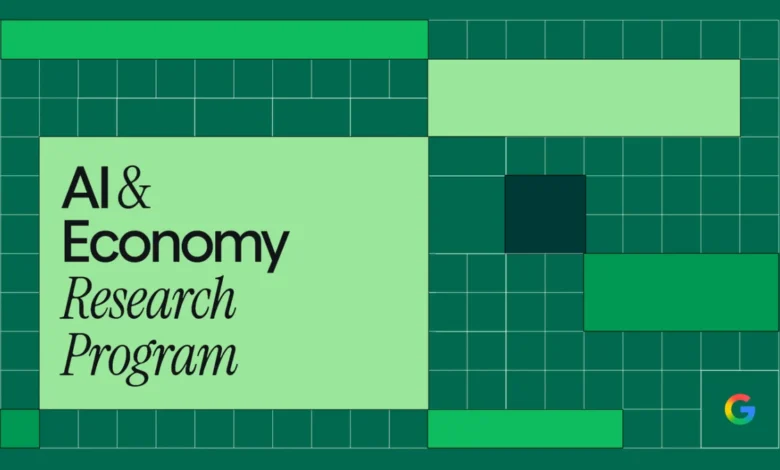
Google has significantly scaled up its economic research capabilities by welcoming a roster of elite academic minds, including Nobel Laureate Philippe Aghion and Professor Ajay Agrawal, to its expanding AI & Economy program. This strategic recruitment drive comes as the tech conglomerate aims to deepen its scientific understanding of how artificial intelligence is transforming global economic activity, labor markets, business operations, and societal structures.
The initiative, spearheaded by leadership figures such as Scott Strand, Head of StratOps and Special Projects for Technology & Society, and Zanna Iscenko, AI & Economy Lead in the Chief Economist’s Office, represents a major push toward empirical transparency. By uniting fine-grained data collection with rigorous economic inquiry, Google hopes to provide policymakers, business leaders, academics, and workers with the necessary tools to navigate the ongoing technological transition.
The Main Facts of the Expansion
The newly bolstered AI & Economy Research Program is designed to operate at the intersection of technology, labor economics, and public policy. Joining the initiative as program directors are Anu Madgavkar, a prominent global labor and economic researcher, and Daniel Rock, an expert in the economics of information technology and AI adoption. They will work alongside Alex Imas, Director of AGI Economics at Google DeepMind, and Zanna Iscenko to guide empirical projects and integrate research insights across the board.
To ensure the program maintains a multidisciplinary approach, Google is also incorporating a network of external advisors, visiting scholars, and academic fellows. Notable additions include Nobel Laureate Philippe Aghion—renowned for his foundational work on growth theory and the economics of creative destruction—and Professor Ajay Agrawal, a leading authority on the economics of artificial intelligence and machine learning commercialization.
The core mission of this expanded team is to measure and analyze the evolution of AI integration in real time. Rather than treating technological shifts as instantaneous events, the program focuses on four primary pillars: the future of work, productivity and economic growth, global technology diffusion, and the acceleration of scientific discovery through machine learning.
Chronology and Background of Google’s Economic Tracking
The roots of this expanded research program trace back to Google’s broader efforts to quantify the real-world utility of its digital ecosystem. The tech giant recently launched the AI & Economy ATLAS v1.0, accompanied by an interactive, open-access digital platform designed to track how individuals and enterprises utilize AI tools in professional and daily settings.
However, corporate leadership quickly recognized that tracking basic adoption patterns was merely the starting point. As generative artificial intelligence and large language models transition from experimental novelties to core enterprise infrastructure, the macroeconomic implications have grown exponentially. Governments worldwide are grappling with questions surrounding automation, displaced labor, wage stagnation, and productivity gains.
Recognizing the limitations of internal corporate research, Google initiated a strategy to bridge the gap between private-sector data access and independent academic rigor. By bringing in external economic heavyweights, the company is attempting to establish a transparent, evidence-based framework for studying the AI transition. Throughout the preceding months, Google’s Chief Economist’s Office laid the groundwork for this institutional partnership, culminating in the formal appointment of the new directors and visiting fellows.
Supporting Data and Methodological Framework
Understanding the economic footprint of artificial intelligence requires massive datasets and sophisticated econometric modeling. The AI & Economy ATLAS serves as the empirical backbone for many of these ongoing studies, aggregating anonymized, macro-level usage trends to demonstrate how tasks are being automated, augmented, or entirely reinvented.
According to preliminary insights from labor economists, technological transformations of this magnitude typically follow a J-curve pattern: initial productivity gains may appear muted while organizations undergo structural reorganization and worker retraining, followed by a sharp upward trajectory in output. The expanded Google research team will leverage the ATLAS data to test these economic models against real-time corporate adoption rates.
Furthermore, the program’s focus on global technology diffusion addresses the disparity in how different geographic regions and economic sectors adopt AI. While advanced economies with robust digital infrastructure may see immediate productivity spikes, developing markets face unique hurdles related to energy access, computational capacity, and workforce readiness. The inclusion of scholars with international economic expertise will allow Google’s research initiative to map these global variances accurately.
Official Responses and Institutional Perspectives
While direct public commentary from the newly appointed advisors remains part of a broader academic dialogue, institutional statements from Google highlight the necessity of public-private collaboration.
"Technological shifts are rarely instantaneous," noted program representatives in foundational research briefs. "Our program measures and analyzes this evolution in real time, focusing on core areas including the future of work, productivity and growth, global technology diffusion, and AI’s impact on scientific discovery."
Industry analysts have interpreted the recruitment of figures like Philippe Aghion and Anu Madgavkar as a calculated move to build external credibility. In an era where big tech companies face intense scrutiny regarding their market power, labor practices, and societal influence, establishing an independent-minded research arm helps validate the objectivity of the data being published. By inviting external academic scrutiny, Google is positioning its platform not merely as a corporate marketing tool, but as a public resource for macroeconomic research.
Broader Impact and Economic Implications
The implications of Google’s expanded research program extend far beyond corporate boardrooms and academic journals. As labor markets face unprecedented disruption, the insights generated by Madgavkar, Rock, Aghion, Agrawal, and their colleagues will likely inform public policy frameworks, vocational training programs, and educational curricula worldwide.
One of the central questions facing modern economists is whether artificial intelligence will act as a force for labor polarization—displacing middle-skill workers while rewarding elite technical talent—or whether it will democratize expertise, allowing lower-skilled workers to punch above their weight. The research agenda spearheaded by Google’s new team aims to answer this very question by identifying the specific organizational practices and public policies that foster inclusive growth.
Maximizing the economic opportunities presented by artificial intelligence while simultaneously mitigating worker displacement requires proactive intervention. The newly formed scientific bridge between Google’s data infrastructure and the academic community is designed to provide early warnings of labor market friction, enabling policymakers to draft targeted upskilling initiatives before systemic unemployment takes root.
Future Outlook and Next Steps
As the AI & Economy Research Program moves into its next phase, the newly expanded team will begin publishing empirical findings that directly inform future iterations of the ATLAS platform. These publications will serve as baseline metrics for central banks, labor departments, and international trade organizations trying to model the trajectory of the twenty-first-century economy.
For researchers, policymakers, and business leaders seeking to understand the granular realities of the algorithmic transition, Google’s open-access portal at ai.google/economy will continue to serve as the central repository for global data, white papers, and ongoing studies. As artificial intelligence continues to rewrite the rules of global commerce, the success of initiatives like this will be measured by their ability to turn massive technological disruption into broadly shared human prosperity.