Bridging the Digital Divide: How AudioEye Leverages AI and Human Expertise to Redefine Web Accessibility in a Global Regulatory Landscape

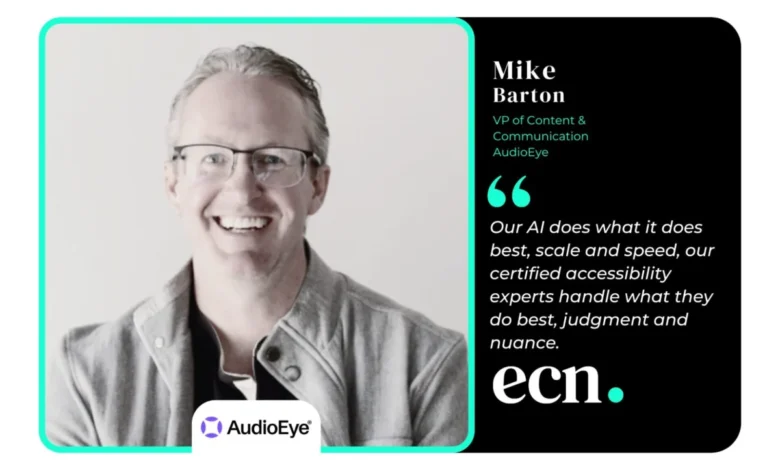
As the digital landscape becomes the primary medium for commerce, healthcare, and social interaction, the necessity for inclusive design has shifted from a secondary consideration to a fundamental business imperative. AudioEye, a leading digital accessibility platform, has emerged as a critical player in this evolution, currently serving over 127,000 organizations worldwide. Led by Vice President of Content Marketing and Communications Mike Barton, the company is championing a mission to ensure the internet remains open to the 1.3 billion people globally living with disabilities. By combining sophisticated artificial intelligence (AI) with human-led auditing, AudioEye seeks to transform accessibility from a reactive legal scramble into a proactive, default standard for the modern web.
The Evolution of Digital Inclusivity: From Niche to Necessity
The concept of digital accessibility—the practice of designing websites and applications so they are usable by individuals with various impairments—has undergone a radical transformation over the last two decades. In the early 2000s, accessibility was often treated as a niche technical requirement or a philanthropic "checkbox" exercise. However, as the global economy migrated online, the stakes for exclusion became significantly higher.
According to Mike Barton, the industry has reached a tipping point where the principle of inclusion has finally met the pressure of legal and economic reality. Data indicates that accessibility-related lawsuits in the United States have doubled since 2020. This legal trend is no longer confined to North America; the implementation of the European Accessibility Act (EAA) in 2025 has expanded the regulatory map, forcing any business serving EU customers to adhere to strict digital standards regardless of where the company is headquartered.
For AudioEye, which has been operating for nearly 20 years, this shift represents a validation of their long-term strategy. The company has evolved from a specialized service provider into a comprehensive platform that addresses the scale of the modern internet. The modern web is characterized by dynamic content, rapid updates, and AI-generated code, all of which present unique challenges for traditional accessibility audits.
The Hybrid Model: Why AI Alone Falls Short
A central pillar of AudioEye’s strategy is its "hybrid" approach, which seeks to solve the inherent limitations of both purely automated tools and purely manual consulting. Automation is essential for scale; AI can scan thousands of pages in seconds, identifying common issues such as missing alternative (alt) text for images, broken form labels, and improper heading structures. An independent 2026 study by Adience found that AudioEye’s AI detects up to 2.5 times more issues than competing tools.
However, the company maintains that automation alone is insufficient for true compliance and usability. Many accessibility barriers exist in "gray areas" that require human context and lived experience. For example, an AI might detect that a button has a label, but it cannot always determine if that label accurately describes the button’s function within a complex user journey.
To address this, AudioEye employs certified specialists, including individuals with disabilities, to perform expert audits. These professionals navigate sites using assistive technologies like screen readers to identify nuances that software might miss. This dual-layered approach allows AudioEye to resolve approximately 97 percent of accessibility issues before a client’s internal development team needs to intervene. By deploying custom fixes directly through a JavaScript integration, the platform minimizes the "fix-at-source" burden that often stalls accessibility initiatives in large enterprises.
The Economic Impact of Digital Accessibility
Beyond the ethical and legal motivations, there is a compelling financial case for digital accessibility. People with disabilities and their immediate networks represent an estimated $18 trillion in global spending power. Research suggests that 70 percent of users with disabilities will abandon a website if it is difficult to navigate, and 83 percent limit their shopping to platforms they know are accessible.
In the e-commerce sector, the impact is particularly acute. Statistics show that 78 percent of accessibility lawsuits now target online retailers. When a site is inaccessible, it does not merely result in a lost session; it often results in a permanent migration to a competitor. Conversely, businesses that prioritize accessibility often see improvements in general user experience (UX), lower bounce rates, and even better Search Engine Optimization (SEO), as many accessibility best practices align with how search engine crawlers index content.
Furthermore, a new economic frontier is emerging: AI-driven discovery. As AI agents increasingly navigate the web to find products or information for users, they rely on a site’s "accessibility tree"—the underlying structure that screen readers use. If a website is not properly coded for accessibility, it becomes effectively invisible to the next generation of AI search and discovery tools.
Legal Protection and Regulatory Compliance
For many organizations, the primary driver for adopting accessibility tools is risk mitigation. The legal landscape is fraught with "demand letters" and "drive-by" lawsuits, often initiated by parties using automated scanners to find non-compliant sites. AudioEye positions itself as a robust shield in this environment, offering what it describes as 300 to 400 percent more legal protection than traditional consulting or "automation-only" widgets.
The company’s confidence stems from its comprehensive coverage of the Web Content Accessibility Guidelines (WCAG) A and AA success criteria. Unlike many "overlay" tools that have faced criticism for failing to provide meaningful access, AudioEye’s platform integrates deeply into the site’s rendering. In the event of a legal claim, AudioEye provides expert "debunk reports" and works with legal counsel to validate allegations. The company distinguishes itself as the only vendor with a documented courtroom dismissal and offers a legal guarantee with tangible terms, rather than a limited warranty.
Integration and Technical Workflow
One of the significant barriers to corporate adoption of accessibility standards is the perceived complexity of implementation. Digital teams often fear that accessibility requirements will slow down development cycles or require extensive site overhauls.
AudioEye addresses this by utilizing a single line of JavaScript for deployment, similar to the implementation of a cookie banner or a web analytics tag. This allows the platform to monitor real-user sessions 24/7 and deploy automated fixes in real-time. For the small percentage of issues (typically under 5 percent) that require changes to the source code, AudioEye provides detailed reports for developers, ensuring that engineers can focus their time on high-impact work rather than repetitive troubleshooting. The platform is designed to be agnostic, working across various Content Management Systems (CMS), custom-built architectures, and headless setups.
Chronology of Modern Digital Accessibility Milestones
The current state of the industry is the result of a multi-decade progression of technology and law:
- 1998: The U.S. Congress amends Section 508 of the Rehabilitation Act, requiring federal agencies to make their electronic and information technology accessible to people with disabilities.
- 2008: The Web Content Accessibility Guidelines (WCAG) 2.0 are published, establishing the international standard for web accessibility.
- 2017-2018: A surge in U.S. lawsuits (notably Robles v. Domino’s Pizza) signals that the Americans with Disabilities Act (ADA) applies to websites as "places of public accommodation."
- 2020: The COVID-19 pandemic accelerates digital transformation, making web accessibility a life-critical issue for accessing healthcare and essential goods.
- 2023: WCAG 2.2 is released, adding new criteria to address mobile accessibility and cognitive impairments.
- 2025: The European Accessibility Act (EAA) comes into full effect, establishing a unified enforcement mechanism across the EU.
The Future: AI as Both Challenge and Solution
Looking ahead, the role of AI in digital accessibility is a double-edged sword. On one hand, general-purpose AI coding tools are inadvertently creating a more inaccessible internet. Because these tools are trained on existing web data—much of which is non-compliant—they frequently generate code that repeats historical accessibility errors.
On the other hand, specialized AI, like that developed by AudioEye, is becoming more adept at identifying and correcting these errors in real-time. The company’s vision is a digital world where accessibility is the default state rather than a reactive fix. As AI continues to reshape how content is created and discovered, the convergence of accessibility and AI discovery will likely become the dominant theme in digital strategy.
The broader implication for the business community is clear: accessibility is no longer a peripheral concern handled by a single department. It is a cross-functional requirement that impacts legal standing, brand reputation, and bottom-line revenue. By leveraging a combination of automated speed and human judgment, organizations can navigate this complex landscape, ensuring their digital experiences are available to every user, regardless of how they interact with the web. In the words of Mike Barton, the ultimate goal is an internet that works for everyone—a goal that is now within reach through the strategic application of technology and expertise.