Co-Creating the Future of Fashion: How Google and Designers Are Redefining New York Fashion Week with AI

The contemporary fashion industry often operates under a romanticized illusion, presenting a seamless world of glamour, immaculate runways, and avant-garde designs. However, for independent fashion designers striving to make their mark, the daily reality is far less theatrical. Administrative burdens, complex factory logistics, tight supply chain management, and exhaustive vendor coordination consume the vast majority of a designer’s schedule. Consequently, the actual act of sketching, draping, and creating clothing is frequently relegated to the margins of an overextended workday. This structural bottleneck has historically placed independent creators at a massive disadvantage compared to legacy fashion houses with deep financial reserves and sprawling operational teams.
Ahead of New York Fashion Week (NYFW), Google’s Envisioning Studio, with critical support from Google Labs, sought to confront this systemic challenge head-on. By partnering directly with independent labels, the initiative aimed to streamline the notoriously frantic creative workflow process, empowering visionaries to bring complex runway concepts to life with significantly reduced operational friction. Rather than imposing rigid, pre-packaged software solutions, Google’s engineering teams worked side-by-side with prominent designers Jane Wade and Sergio Hudson. Utilizing Google Flow—Google’s experimental AI creative studio—the collaborators built two highly specialized, custom digital tools tailored precisely to the unique operational and artistic hurdles faced by each designer. The deployment of these tools not only transformed the preparation cycle for New York Fashion Week but also signaled a potential turning point for how artificial intelligence can be practically integrated into the high-stakes world of garment production.
The Genesis of the Collaboration: Bridging Tech and Textile
The collaboration began months before the lights of the New York Fashion Week runways flickered to life. Recognizing that generalized artificial intelligence applications often fall short of meeting the rigorous, specific demands of the fashion sector, Google’s Envisioning Studio adopted a co-creation model. Instead of designing software in a corporate vacuum, Google engineers embedded themselves within the creative ecosystems of Wade and Hudson.
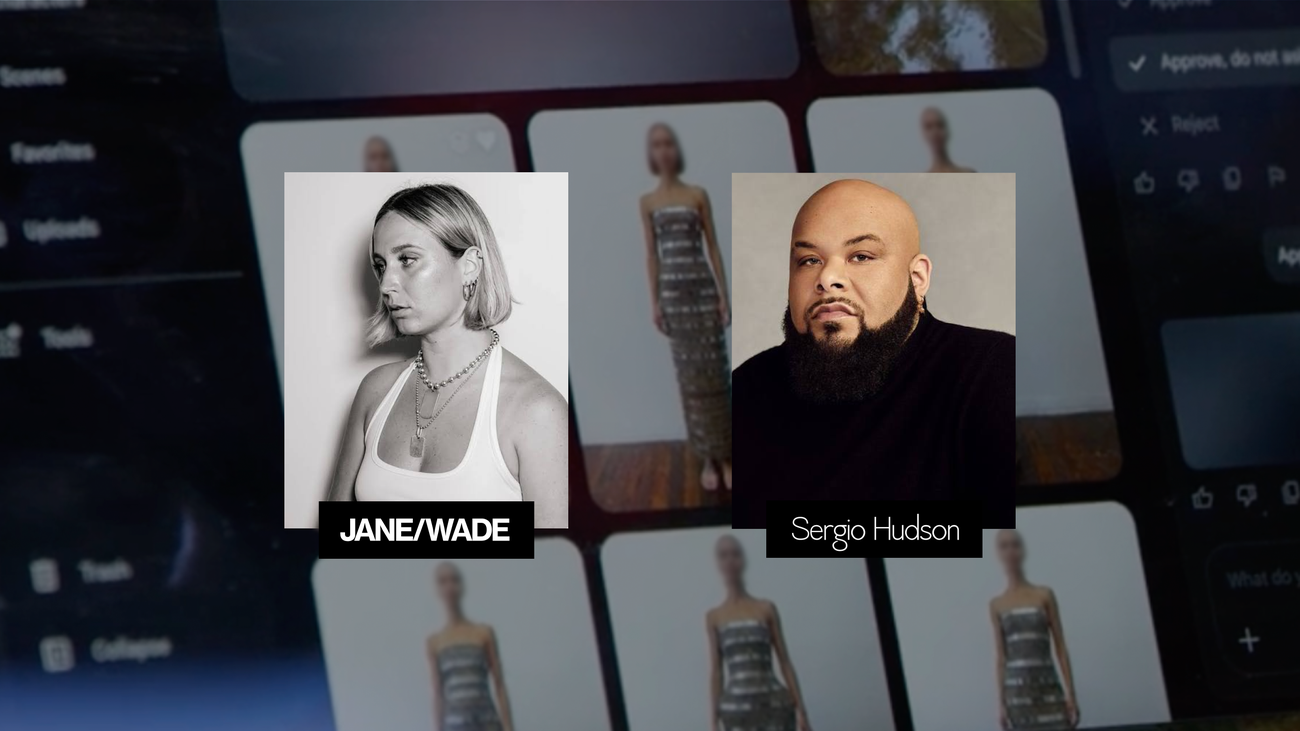
Jane Wade, known for her sharp, utilitarian tailoring and corporate-dystopian aesthetic, faced acute bottlenecks during the pre-production phase. Traditionally, putting together a cohesive runway collection requires exhaustive in-person casting sessions, physical sample creation, and grueling multi-day fitting marathons. For an independent designer operating on a lean budget, every physical sample cut and sewn represents a substantial financial investment and a massive expenditure of time.
Concurrently, Sergio Hudson—celebrated for his polished, power-dressing silhouettes, vibrant color palettes, and high-octane glamour—faced a different yet equally daunting obstacle: spatial and budgetary constraints. Staging a major runway presentation in New York City requires meticulous choreography, lighting design, and set staging. Historically, if Hudson wanted to alter the lighting scheme, test different prop placements, or change the spatial dynamics of the venue to better showcase a garment, his production crew had to generate entirely new 3D architectural renderings. Each revision incurred additional costs and introduced logistical delays that threatened to strain an already restricted budget.
By identifying these distinct pain points, Google Labs and the Envisioning Studio were able to leverage Google Flow—a platform that allows users to build bespoke tools using natural language without requiring advanced coding experience—to solve concrete business and artistic problems.
Virtually Styling a Collection: The Jane Wade Case Study
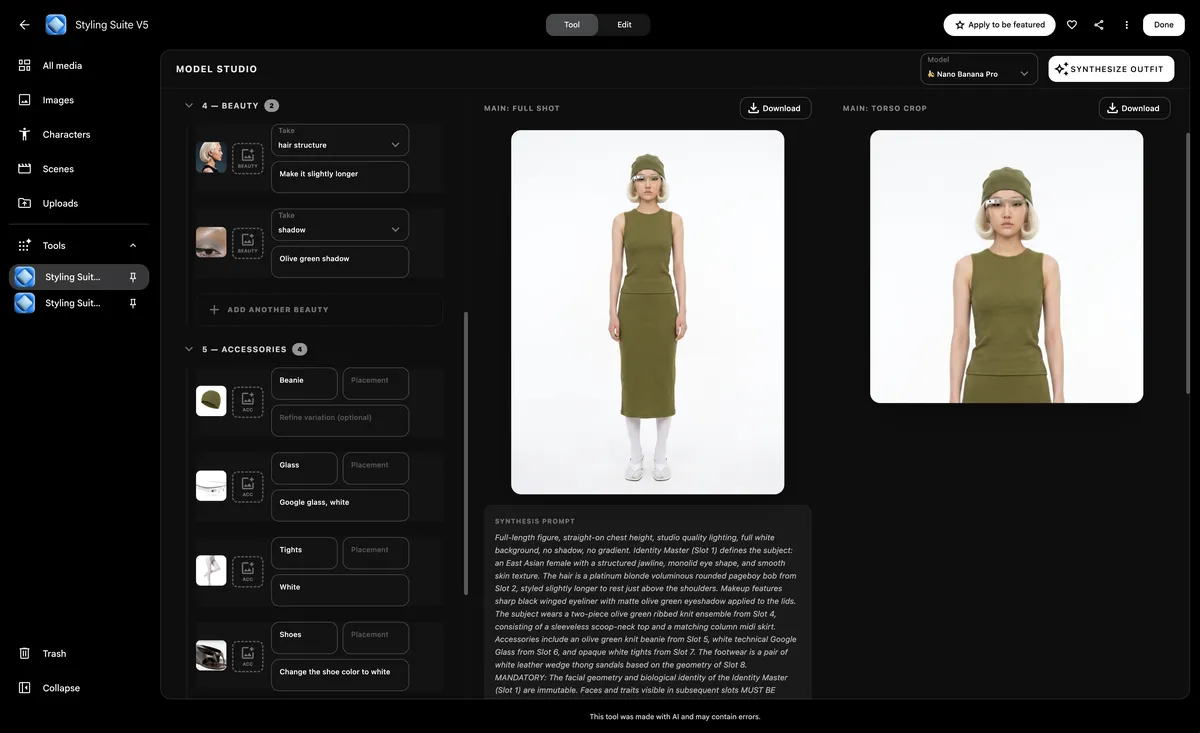
For Jane Wade, the collaborative effort resulted in the creation of a specialized digital application dubbed the Styling Suite. In the traditional fashion ecosystem, the styling phase is notoriously chaotic. Designers must visualize how head-to-toe looks will appear under harsh runway lights by physically combining garments, shoes, accessories, hair extensions, and makeup on live models during multi-day fittings. If a particular pairing fails to land, the design team must pivot on short notice, often resulting in wasted textiles and frantic last-minute tailoring.

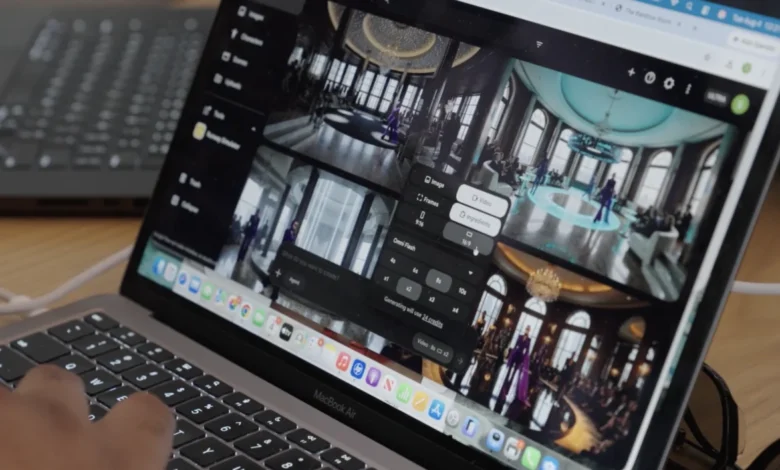
The Styling Suite tool radically upended this workflow by functioning as an advanced digital staging ground. The application allowed Wade to map every facet of her runway model looks within a virtual environment. By populating digital avatars with accurate representations of her garments, footwear, and accessories, Wade could curate and manipulate entire ensembles on-screen before a single yard of fabric was cut or a single seam was stitched.
The implications of this virtual styling suite extended far beyond mere convenience. By experimenting with styling in a digital medium, Wade could instantly evaluate the balance of each look, identify missing accessories, and ensure visual cohesion across the entire collection. This upstream optimization drastically reduced the need for physical sample iterations, saving valuable time and minimizing material waste. When Wade’s collection finally debuted on the New York Fashion Week runway, the garments bore the hallmarks of rigorous, unhurried digital refinement, proving that technological intervention can enhance, rather than dilute, tactile craftsmanship.
Grounding Runway Design in Real-World Budgets: The Sergio Hudson Approach
While Jane Wade tackled pre-production styling, Sergio Hudson focused his technological collaboration on the spatial execution of his runway show. For an independent luxury label, the financial margin for error during fashion week is exceptionally narrow. Venue rentals, lighting rigs, audio engineering, and set construction represent major capital outlays, and any miscalculation in spatial design can compromise the presentation of the clothing.
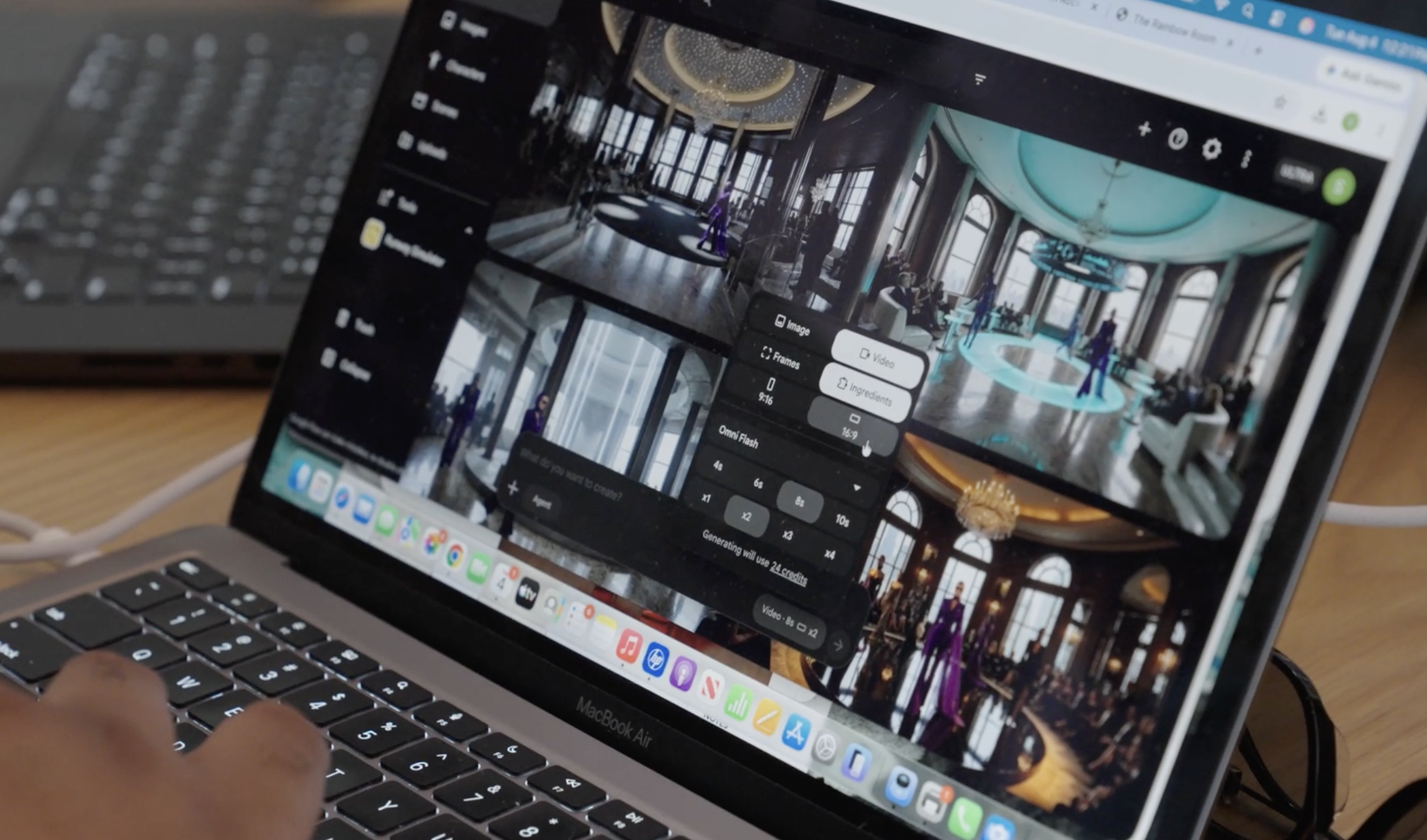
To address this, Hudson and Google’s engineers developed a second specialized tool within Google Flow: Runway Visualization. In past seasons, experimenting with different staging configurations meant relying on sluggish, expensive rendering cycles. Every time Hudson wanted to test how a shift in spotlight angles would interact with a sequined gown or how a change in the runway’s geometry would alter the audience’s line of sight, his production team had to wait for new technical drawings.
Runway Visualization eliminated this friction by providing a real-time, interactive simulation of the venue. The tool empowered Hudson to dynamically adjust the layout of the show, swapping out props, modifying ambient and directional lighting, and testing alternative floor plans that strictly adhered to his pre-determined production budget. Furthermore, the tool incorporated spatial mapping features that allowed Hudson to simulate the exact walking paths and pacing of the models. By synchronizing the physical movement of the models with the spatial and lighting dynamics of the venue, Hudson was able to harmonize the entire viewer experience, ensuring that every garment was presented in its optimal visual context without exceeding financial boundaries.
Moving Fashion AI Out of Pilot Mode and Into the Mainstream
The successful deployment of these custom tools at New York Fashion Week marks a significant departure from how artificial intelligence has traditionally been discussed within the fashion industry. For years, AI in fashion has largely been confined to theoretical pilot programs, speculative concept art, or automated trend-forecasting algorithms that often alienate designers by attempting to replace human intuition.
Industry analysts have noted that the core failure of early fashion tech initiatives was their top-down approach—tech companies building generic tools and expecting creative professionals to alter their centuries-old workflows to accommodate software. The Google Envisioning Studio model successfully inverted this paradigm. By placing the designer firmly in the driver’s seat and utilizing natural language interfaces to build bespoke applications tailored to specific operational hurdles, the initiative proved that AI can serve as a collaborative partner rather than a disruptive substitute.
The broader implications for the independent fashion sector are profound. As production costs rise and consumer demand for rapid collection turnovers intensifies, independent designers are routinely squeezed by economic pressures. Administrative tasks and logistical inefficiencies eat into creative bandwidth, stifling industry innovation at the grassroots level. If platforms like Google Flow can democratize access to custom workflow automation—enabling creators to build sophisticated staging and styling tools without writing a single line of code—the barrier to entry for independent labels could be significantly lowered.
Looking Ahead: The Democratization of Creative Infrastructure
As the fashion world digests the successes witnessed at New York Fashion Week, attention is turning toward the future accessibility of these technologies. Google has made the underlying infrastructure of Google Flow increasingly accessible, allowing creators across various disciplines to experiment with natural language tool-building. While the runway shows of Jane Wade and Sergio Hudson served as high-profile showcases, the long-term viability of this technology will depend on widespread adoption by mid-tier and emerging designers who lack the resources to commission custom software development independently.
Experts suggest that the integration of generative AI and custom workflow tools will likely expand into other operational domains of the fashion supply chain. Future applications could theoretically address inventory forecasting, sustainable textile sourcing, and automated customs documentation—the very administrative burdens that currently consume the majority of an independent designer’s working hours.
Ultimately, the collaboration between Google and New York Fashion Week participants demonstrates that the future of fashion does not lie in replacing the human touch with automated designs, but in liberating creators from the logistical friction of the modern marketplace. By harnessing technology to handle the complexities of styling simulation and budget-conscious spatial planning, designers like Jane Wade and Sergio Hudson were given what every artist desires most: more time to create.