Unitree Robotics Faces Internal Turmoil and Leadership Scrutiny Amid Aggressive Push for Autonomous Humanoid AI

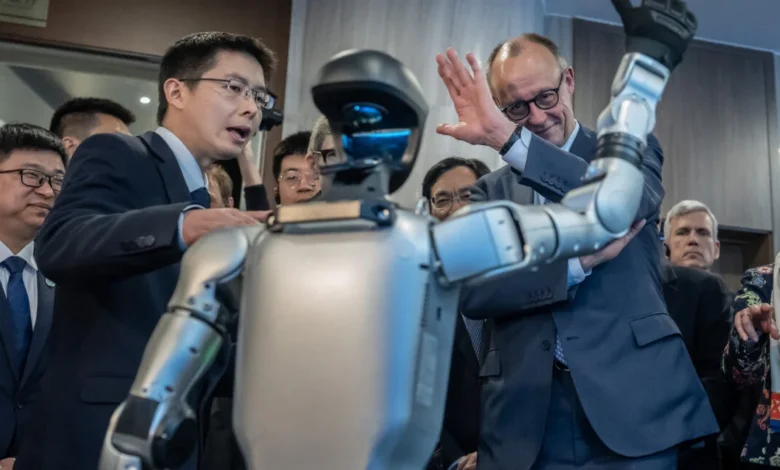
The rapid ascent of Unitree Robotics within the global humanoid sector has been nothing short of meteoric, positioning the Hangzhou-based firm as a primary challenger to industry giants like Tesla and Boston Dynamics. However, beneath the veneer of high-tech innovation and successful public market maneuvers, the company is grappling with significant internal instability. Reports from local media and former staff suggest that the firm’s founder, Wang Xingxing, is steering the organization with a style of management that is increasingly at odds with the demands of a scaling enterprise. As the company attempts to pivot toward sophisticated "physical AI," it finds itself simultaneously managing a wave of core staff attrition and allegations of a punitive corporate culture that may threaten its long-term viability.
The Technical Pivot: Betting on Physical AI
Wang Xingxing, a visionary in hardware structural engineering, has long maintained a pragmatic—and occasionally skeptical—view regarding the trajectory of artificial intelligence in robotics. For years, he expressed concerns that "large world models"—the massive neural networks currently powering generative AI—were too computationally expensive and inefficient to be integrated into nimble, general-purpose humanoid robots. These models, while impressive in their ability to simulate physics and predict outcomes, have historically required massive server farms, making real-time edge processing a formidable hurdle.
Yet, in a notable shift that coincided with Unitree’s recent initial public offering (IPO), Wang has pivoted toward a more ambitious strategy. According to reporting by Caijing Magazine, Unitree is now actively pursuing a foundation model approach for "physical AI." The objective is to create an "autonomous loop" encompassing perception, decision-making, execution, evaluation, learning, and evolution. By embedding these capabilities directly into the robot’s hardware, Wang hopes to bypass the latency issues that have plagued competitors. This technical evolution represents a high-stakes gamble: if successful, it could redefine the utility of humanoid robots in industrial and domestic settings. If the company fails to optimize these models for onboard processing, it risks being left behind in a sector where software intelligence is increasingly becoming as important as mechanical agility.
A Culture of Extreme Micromanagement
While Unitree’s technical ambition is clear, the internal management structure has drawn sharp criticism. According to accounts from current and former employees, the company’s organizational hierarchy is effectively nonexistent, replaced by a centralized bottleneck where Wang personally reviews a staggering volume of operational decisions. This "founder-centric" model, common in the earliest stages of a seed-funded startup, has proven problematic for an organization that has ballooned to at least 480 employees by the start of 2026.
The level of oversight is described as granular to the point of absurdity. Employees report that even minor expense reimbursements exceeding 100 yuan—a figure equivalent to approximately $15 USD—require the direct approval of the founder. This process creates significant administrative friction, forcing staff to queue up for approvals on trivial matters, thereby slowing down R&D cycles that require agility and rapid iteration. Wang himself reportedly maintains a grueling schedule, frequently engaging in work chats at 2:00 or 3:00 a.m. and spending weekends at the office. This "hard-charging" ethos, while once credited with establishing Unitree’s reputation for rapid product cycles, is now being blamed for a pervasive atmosphere of burnout and anxiety.
The Cost of Performance: A Culture of Penalties
Perhaps the most damaging revelation regarding Unitree’s internal operations is the shift from an incentive-based reward system to a punitive one. Staff members have characterized the company’s performance management as a environment where "success" is defined by the absence of criticism rather than the attainment of positive benchmarks.
The severity of this environment is underscored by the reported performance scoring system, where senior executives were given scores on a scale of 0 to 1.5. In such a rigid system, where the highest possible marks are rarely achieved, the focus inevitably shifts to avoiding failure. This creates a risk-averse culture that is fundamentally incompatible with the iterative nature of robotics research. Engineering, by definition, requires the freedom to fail and experiment—a luxury that does not seem to exist under the current leadership regime.
Consequently, the company has seen a significant exodus of institutional knowledge. Sources indicate that 2025 and 2026 saw the highest attrition rates of core engineering staff in the company’s history. This loss of human capital is particularly concerning for a company in the middle of an aggressive push to master the complexities of autonomous humanoid AI, as the departure of key developers often leads to "knowledge gaps" that can derail long-term projects for months or even years.
Chronology of Growth and Conflict
The timeline of Unitree’s rise and subsequent internal strife provides essential context for the current situation:
- 2023–2024: Unitree gains international attention for its cost-effective quadruped and humanoid prototypes. The company secures substantial funding, positioning itself as a leader in the race to bring affordable robots to market.
- Early 2025: As the company scales, the founder’s hands-on management style begins to cause friction. Reports of staff dissatisfaction begin to circulate within industry circles.
- Late 2025 – Early 2026: Unitree prepares for its IPO. The pressure to meet aggressive performance milestones leads to an intensification of the company’s internal "penalty" culture.
- Mid-2026: The IPO is finalized. Shortly thereafter, detailed reports in Caijing Magazine and other outlets expose the extent of the management bottlenecks and the record-high turnover among core staff.
- Late 2026: The company issues a public denial, claiming that media reports contain "misinformation," though it fails to provide specific corrections or address the internal issues raised by its own employees.
Broader Implications for the Robotics Sector
The situation at Unitree highlights a critical tension in the tech industry: the struggle between the "founder-led" startup model and the requirements of a maturing, large-scale corporation. History is replete with examples of high-growth tech companies that faltered because their founders could not transition from individual contributors to executive leaders. When a leader refuses to delegate, the entire organization eventually suffers from "founder syndrome," where the CEO becomes the bottleneck for all innovation.
Furthermore, the focus on humanoid robotics is a high-stakes arena where the gap between success and failure is measured in milliseconds and millimeters. If Unitree’s staff attrition continues, the company may find it impossible to execute the complex AI vision Wang has proposed. Developing a "physical AI" loop is a multidisciplinary challenge requiring expertise in computer vision, motion planning, mechanical engineering, and machine learning. A loss of senior talent, combined with a culture that discourages risk-taking, could turn the company’s current technological advantage into a long-term liability.
Official Responses and Industry Outlook
When confronted with the allegations, Unitree did not engage in a dialogue with Caijing Magazine. Instead, the company opted for a generalized statement sent to several Chinese media outlets, dismissing the reporting as "misinformation." By failing to provide specific rebuttals or to engage with the concerns regarding employee morale and management structure, the company has arguably left the vacuum of information to be filled by the employees’ testimonies.
For investors and industry observers, the focus will now shift to whether the company can stabilize its workforce and improve its management processes before the next generation of robots is slated for release. The robotics industry is entering a "Goldilocks" phase where market demand for humanoid labor is rising, but technical hurdles remain significant. Unitree has the hardware foundation to lead this transition, but its ability to survive the internal transition from a small team to a major player remains an open question. Whether Wang Xingxing can evolve his own leadership style to accommodate the scale of the company he has built will be the true test of Unitree’s future in the global AI race.