Dolphin X Trojan Leverages AI Profiling to Prioritize High-Value Cybercrime Targets


A sophisticated new remote access trojan, dubbed Dolphin X, has emerged on the cybercrime scene, distinguishing itself with an innovative, AI-powered profiling feature. This advanced capability allows the malware to analyze infected users, assign them risk scores, and rank them accordingly. The ultimate goal is to equip cybercriminals with a highly efficient method for identifying and prioritizing the most lucrative targets for exploitation, streamlining the often-laborious process of sifting through vast amounts of stolen data.
The discovery and initial analysis of Dolphin X were conducted by Daniel Kelley, a researcher at Varonis Threat Labs. Kelley identified the malware being advertised on a prominent cybercrime forum by a vendor operating under the alias "Kontraktnik." The vendor promoted Dolphin X as a comprehensive, all-in-one remote access trojan (RAT), suggesting a robust suite of functionalities designed to cater to a wide array of malicious activities.
According to Varonis’s in-depth analysis, the operator panel for Dolphin X boasts an extensive list of 329 features, meticulously organized into ten distinct categories. Among these features is a potent credential-stealing module that claims to be capable of targeting over 300 different applications. This broad scope of credential theft highlights the malware’s ambition to compromise a wide spectrum of user accounts, from everyday online services to more sensitive financial and professional platforms.
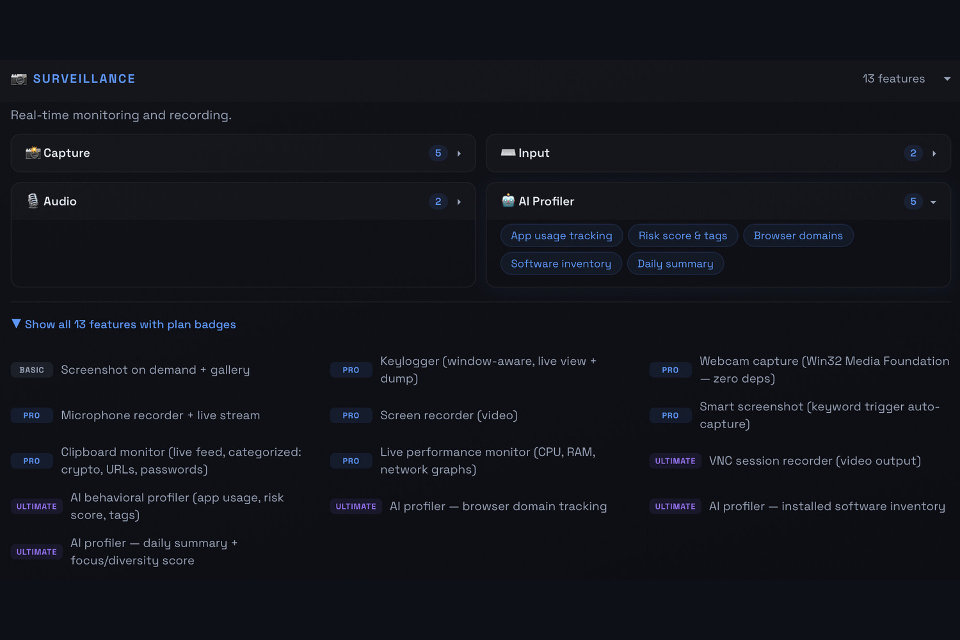
However, it is the "AI Profiler" that stands out as the most significant and alarming innovation within Dolphin X. This feature is designed to delve into the data collected from compromised computers, employing artificial intelligence to construct detailed profiles of each victim. Based on these profiles, the AI assigns a quantifiable risk score, effectively creating a tiered system of victim value.
"Beyond credential collection, the panel includes a surveillance tab containing the AI Profiler," Varonis stated in their analysis. "The seller describes it as an ‘AI behavioral profiler with app usage tracking, risk score, and daily summary.’" This description underscores the AI’s role in not just gathering raw data but also interpreting user behavior and system configurations to infer potential value.

Varonis obtained access to the Dolphin X operator panel and subjected it to rigorous analysis within a secure, isolated laboratory environment. It is important to note that Varonis’s examination focused on the malware builder and its network traffic, rather than executing a live Dolphin X agent on an infected computer. This approach allowed researchers to understand the malware’s architecture and intended functionality without posing a direct risk.
AI Profiler Revolutionizes Victim Triage for Cybercriminals
The traditional landscape of credential-stealing malware often presents attackers with a significant operational challenge: managing and prioritizing potentially thousands of stolen credentials. Manually reviewing each credential to identify high-value targets is time-consuming, inefficient, and prone to errors. Dolphin X’s AI Profiler directly addresses this bottleneck by automating the triage process.
The AI Profiler functions as an intelligent sorting system. It meticulously analyzes various data points from infected machines, including application usage patterns, identified risk factors, browsing history (specifically domain access), and the software installed on the system. This comprehensive data set is then processed by the AI to generate ranked victim profiles.
The operator panel provides attackers with daily summaries that include these ranked victim profiles. This allows cybercriminals to strategically prioritize their efforts, focusing on machines that are most likely to yield access to valuable assets. These assets can range from high-value online accounts and cryptocurrency holdings to sensitive corporate networks, cloud environments, and critical production systems.
"In practice, the feature appears designed to help operators triage victims," explained Daniel Kelley, the Varonis researcher who spearheaded the analysis. His observation emphasizes the practical, operational benefit that Dolphin X offers to its users, transforming a complex task into a streamlined, data-driven operation.
Kelley further confirmed the presence of the AI Profiler within the operator panel, citing technical strings discovered during his investigation that directly support the profiling workflow. These strings include phrases such as Auto-Start AI Profiler, ProfilerStart, ProfilerGetData, risk_score, risk_factors, and categoryusage. The existence of these internal identifiers strongly suggests that the profiling functionality is not merely a marketing claim but an integrated component of the malware’s design, capable of processing the necessary data to rank victims.

While the technical evidence points to the functionality of the AI Profiler, Varonis could not definitively identify the specific artificial intelligence engine powering the rankings without analyzing a live Dolphin X malware sample in action. The exact algorithms and machine learning models remain a subject for future investigation.
Comprehensive Credential Theft Capabilities
Beyond its AI-driven profiling, Dolphin X operates as a formidable credential stealer. The operator panel indicates its ability to target an extensive array of applications, demonstrating a wide-reaching appetite for sensitive user data. This includes credentials for:
- Web Browsers: The malware targets credentials stored in nine different Chromium and Gecko-based browsers, encompassing most popular web browsing software.
- Cryptocurrency Wallets: A significant focus is placed on cryptocurrency, with Dolphin X designed to steal information from 100 cryptocurrency wallet extensions and 65 desktop cryptocurrency wallets. This suggests a deliberate effort to target individuals with significant digital asset holdings.
- Password Managers: The inclusion of 10 password managers in its target list indicates a sophisticated approach, aiming to bypass even the most robust credential management solutions.
- Cloud Command-Line Tools: With over 30 cloud command-line tools listed, Dolphin X aims to compromise access to cloud infrastructure, potentially leading to large-scale data breaches or service disruptions.
Furthermore, Dolphin X claims to be capable of exfiltrating critical developer-related information, including .env files (which often contain sensitive configuration and API keys), SSH keys (used for secure remote access), cloud access tokens, browser login data, and various other forms of developer credentials. The theft of these types of credentials can grant attackers deep access into software development pipelines, cloud environments, and internal systems.
It is crucial to reiterate that Varonis’s analysis was based on the malware builder, operator panel, and network traffic, not on a live execution of the malware. Therefore, the full extent and success rate of these advertised collection capabilities were not independently verified by the researchers.
The Growing Influence of AI in Cybercrime
The emergence of Dolphin X underscores a broader trend: the increasing integration of artificial intelligence into the toolkit of cybercriminals. AI is no longer confined to defensive applications; it is actively being leveraged to enhance offensive capabilities and create more sophisticated and efficient attack vectors.
Examples of AI’s growing influence in cybercrime include:
- AI-Powered Spam and Phishing: Services like SpamGPT, which utilize AI to generate highly convincing and personalized phishing emails, demonstrate how AI can automate and scale malicious communication campaigns.
- Autonomous Cyberattacks: Researchers have observed AI agents capable of conducting autonomous cyberattacks, such as the JadePuffer ransomware, which used an AI agent to automate the entire attack lifecycle, from reconnaissance to payload delivery and encryption.
- Malware Development and Evasion: AI is being explored for its potential to assist in the development of more evasive malware and to automate the process of identifying and exploiting vulnerabilities.
Dolphin X, however, takes a slightly different approach by employing AI not to automate the attack itself, but to optimize the post-exploitation phase. Instead of using AI to find vulnerabilities or execute the initial infection, Dolphin X leverages it to solve a critical operational problem for attackers: efficiently identifying and prioritizing the most valuable targets from a large pool of compromised systems. This strategic application of AI highlights its versatility and its growing impact across various facets of the cybercrime ecosystem.
Broader Implications and Defense Strategies
The development of Dolphin X and its AI-driven victim profiling feature has significant implications for cybersecurity professionals and organizations worldwide. The ability of attackers to automate the prioritization of high-value targets means that even smaller-scale attacks could potentially lead to devastating breaches if the compromised individuals or systems are deemed lucrative.
The sophistication of Dolphin X also highlights the continuous evolution of cyber threats. As defenders develop new security measures, threat actors are quick to adapt and incorporate emerging technologies, such as AI, to maintain their advantage.
Organizations must therefore adopt a proactive and multi-layered defense strategy. This includes:
- Robust Endpoint Security: Implementing advanced endpoint detection and response (EDR) solutions capable of identifying and mitigating sophisticated malware like Dolphin X.
- Regular Security Awareness Training: Educating employees about the risks of credential theft and phishing attacks, emphasizing the importance of strong, unique passwords and multi-factor authentication.
- Proactive Threat Hunting: Employing threat hunting techniques to actively search for signs of compromise within the network, rather than relying solely on automated alerts.
- Continuous Vulnerability Management: Regularly scanning and patching systems to close potential entry points for malware.
- Data Loss Prevention (DLP): Implementing DLP solutions to monitor and prevent the exfiltration of sensitive data.
- Zero Trust Architecture: Adopting a Zero Trust security model, which assumes no user or device can be implicitly trusted, regardless of their location, and requires strict verification for every access attempt.
The emergence of Dolphin X serves as a stark reminder that the threat landscape is constantly evolving. The integration of AI into cybercrime tools signifies a new era of sophistication and efficiency for attackers, necessitating an equally innovative and adaptive approach to defense. By understanding the capabilities of emerging threats like Dolphin X and implementing comprehensive security measures, organizations can better protect themselves against the ever-growing tide of cybercrime. The challenge ahead lies in staying one step ahead of adversaries who are increasingly leveraging cutting-edge technology to achieve their malicious aims.