Active Exploitation of Unpatched Zero-Day Vulnerabilities in Citrix NetScaler ADC and Gateway Triggers Emergency IT Responses Worldwide

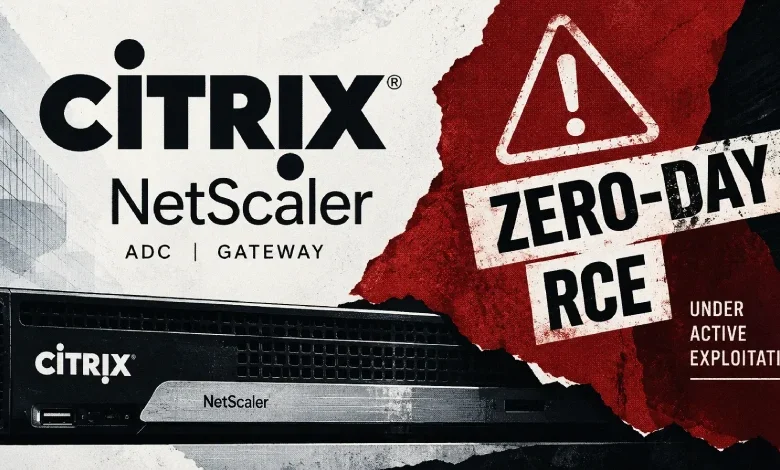
Enterprise security operations centers around the globe are facing an acute crisis following disclosures that two unpatched zero-day vulnerabilities affecting Citrix NetScaler ADC and NetScaler Gateway appliances are currently being exploited in the wild. The alarming development came to light on September 26, 2026, when security research and offensive security firm watchTowr publicized credible intelligence regarding active exploitation. Because these high-severity flaws enable remote code execution (RCE) on critical network edge infrastructure, panic has spread rapidly among enterprise IT administrators, prompting some organizations to abruptly take their infrastructure offline rather than await official guidance or security patches from the vendor.
The affected components, Citrix NetScaler ADC and NetScaler Gateway, occupy one of the most sensitive positions within modern corporate network architecture. Situated squarely at the perimeter, these appliances act as the primary gateways for remote workforce access, handling virtual private network (VPN) connections, multi-factor user authentication, secure application delivery, and complex traffic load balancing. Because they face directly onto the public internet and sit at the very edge of the enterprise trust boundary, any successful compromise of a NetScaler appliance grants threat actors a direct, highly privileged foothold into internal corporate networks, bypasses standard perimeter defenses, and exposes sensitive organizational assets to lateral movement, data exfiltration, and ransomware deployment.
Understanding the Threat Landscape and the Distinction from Prior Flaws
The gravity of the current situation is amplified by confusion surrounding previous security incidents and the absence of immediate remediation paths. Security analysts have been quick to differentiate the newly discovered zero-day vulnerabilities from earlier, well-documented security issues affecting the same product line. Specifically, these new RCE flaws are entirely distinct from CVE-2026-19490, a critical authentication bypass vulnerability that Citrix addressed previously through patches released on August 19, 2026. That earlier vulnerability subsequently drew intense scrutiny when the U.S. Cybersecurity and Infrastructure Security Agency (CISA) formally added it to its influential Known Exploited Vulnerabilities (KEV) catalog on September 9, 2026.
While patches for the August authentication bypass have been available for weeks—applied via builds such as 14.1-73.32 and 13.1-63.21—Citrix has not yet clarified whether systems running these updated builds, or any subsequent iterations, are shielded from the newly reported zero-day threats. The core issue driving anxiety across the cybersecurity community is that the newly uncovered flaws were actively exploited in the wild before any vendor-supplied patch, advisory, or workaround ever existed.
Chronology of the 2026 Citrix NetScaler Incident
The unfolding timeline of the September 2026 disclosures highlights how rapidly modern threat intelligence moves across public channels before official vendor confirmation can take place:

- Late August 2026: Citrix issues fixes for unrelated NetScaler vulnerabilities, including the CVE-2026-19490 authentication bypass, pushing out updated firmware builds to enterprise customers.
- September 9, 2026: CISA updates its Known Exploited Vulnerabilities catalog to incorporate the August NetScaler flaw, intensifying administrative urgency around patch management.
- September 15, 2026: NetScaler firmware version 13.1 officially reaches its End of Maintenance milestone under Citrix’s standard product lifecycle release cycle, casting uncertainty over whether older deployments will receive future security updates.
- September 26, 2026 (UTC Early Hours): Security firm watchTowr publishes an initial post on the X platform, signaling that it is actively monitoring unverified rumors regarding multiple unpatched remote code execution vulnerabilities in NetScaler appliances being exploited in the wild.
- September 26, 2026 (UTC Late Hours): In a follow-up advisory, watchTowr confirms the credibility of the intelligence, specifying that forensic investigations uncovered two distinct, unpatched remote code execution zero-days actively leveraged by attackers. The firm indicates that formal communications and emergency patches from Citrix are anticipated early in the week commencing September 28.
- September 26, 2026 (Simultaneous): Discussions erupt across online administrative forums, notably Reddit’s r/Citrix community, where IT managers report receiving urgent telephone alerts from their managed security service providers advising them to power down or isolate their NetScaler units immediately.
Industry Reactions and the Emergency Response Dilemma
As the weekend approached without an official security advisory or emergency hotfix from Citrix or its parent organization, Cloud Software Group, enterprise administrators were left in an unenviable tactical dilemma. With zero indicators of compromise (IoCs) published, no vendor-issued workarounds, and no technical details regarding the root cause of the vulnerabilities, security teams had to weigh business continuity against catastrophic compromise.
On online discussion boards such as Reddit, numerous systems administrators shared that their internal risk committees had authorized the immediate shutdown or physical disconnection of NetScaler appliances from the network. While this draconian measure effectively blocks active remote exploitation, it simultaneously severs remote access channels for legitimate employees, third-party vendors, and critical business operations, causing significant operational disruption.
Furthermore, security experts have emphasized a deeply unsettling reality regarding historical zero-day exploitation: simply applying a patch once it is eventually released does not guarantee safety. Because the attackers leveraged these zero-day flaws before any defensive updates existed, any appliance connected to the internet prior to discovery may have already been successfully breached. Security analysts note that threat actors frequently establish persistent backdoors, webshells, or privileged user accounts during initial compromise windows, allowing them to maintain unauthorized access even after the underlying software vulnerability is remediated.
Historical Precedents and Lessons from Past Citrix Incidents
The current panic surrounding NetScaler mirrors similar critical events from previous years, highlighting a systemic risk associated with edge-network appliances. In 2025, a severe Citrix zero-day vulnerability was weaponized in sophisticated attacks targeting high-profile organizations, most notably prompting urgent warnings from the Netherlands’ National Cyber Security Center (NCSC).
During the 2025 incident, the Dutch NCSC explicitly cautioned system administrators that standard patch deployment was insufficient for incident recovery. The agency stressed that because attackers routinely establish deep persistence mechanisms prior to patch cycles, organizations must perform thorough forensic triage. To assist in this effort, the NCSC released specialized check scripts designed to scan live appliances, core memory dumps, and full system images for anomalous files and unauthorized modifications.
However, security researchers note that these forensic tools come with inherent limitations. The live-appliance bash scripts provided by safety authorities are generalized diagnostic aids rather than silver bullets; they look for historical indicators of compromise, are not tailored to every specific zero-day variant, and carry no absolute guarantee of catching sophisticated, fileless, or zero-footprint malware variants. As of late September 2025, those scripts had not seen major updates, leaving modern administrative teams with a heavy reliance on manual log auditing and memory analysis.

Compounding the administrative burden is the software lifecycle status of the NetScaler platform. Under Citrix’s established firmware release schedule, NetScaler version 13.1 officially reached its End of Maintenance date on September 15, 2026. This administrative milestone raises severe compliance and security questions for thousands of global enterprises still running version 13.1 environments. It remains entirely unconfirmed whether Citrix will issue backported patches for end-of-maintenance firmware branches or if organizations will be forced to urgently upgrade complex production environments to newer, fully supported major versions under emergency conditions.
Broader Implications for Enterprise Security and Edge Infrastructure
The active exploitation of unpatched zero-day vulnerabilities in Citrix NetScaler products underscores a broader, systemic vulnerability within modern corporate IT architectures: the heavy reliance on complex, closed-source edge security appliances. Because devices such as load balancers, VPN gateways, and identity proxies sit at the outermost boundary of the network and handle unauthenticated or semi-authenticated traffic, they represent high-value targets for nation-state advanced persistent threat (APT) groups and financially motivated ransomware syndicates alike.
When a zero-day vulnerability strikes this class of device, the traditional patch-management paradigm collapses. Organizations can no longer rely on the comfortable sequence of vulnerability disclosure, patch testing, and scheduled deployment. Instead, they are forced into reactive crisis management, where defensive choices are reduced to a binary option: accept the ongoing risk of unmitigated remote code execution, or sever network connectivity and accept immediate operational downtime.
As the cybersecurity community awaits formal technical disclosures and emergency software patches from Citrix, the incident serves as a stark reminder of the limitations of perimeter defense. Security architects are increasingly advocating for a Zero Trust Architecture (ZTA) model that minimizes the blast radius of edge device compromises. By ensuring that a breach of an edge VPN gateway does not automatically confer unrestricted network-wide access to internal enterprise resources, organizations can better insulate themselves against the inevitable discovery of zero-day flaws in critical infrastructure.
As of Sunday morning, Cloud Software Group had not released a formal security bulletin or public statement addressing the watchTowr allegations. Enterprise security leaders are strongly advised to monitor official Citrix support channels closely, review authentication and gateway access logs for anomalous behavior, prepare for emergency maintenance windows, and ensure that robust incident response protocols are ready to be invoked the moment official remediation guidance becomes available.